Friday, March 23, 2018

Earl Dee Buster and Decendents

by Sharon Kay Welch Blankenship     

*Earl Dee Buster was the grandson of John Milton Buster who was indentured, or "bound out" when he was 6 years old in 1844, two years after his father's death. To learn more about "binding out" for children of the Buster children, read here.

When I first began thinking of writing about the Buster family I realized I look at them almost as an oddity, the family was almost too good to be true. They seemed to always get along; they all loved each other, and the strangest of all they showed it. In my family, my brothers and I showed expressions of love by who could take the hardest hit in the arm, without crying. This memory brings a tear to my eyes.
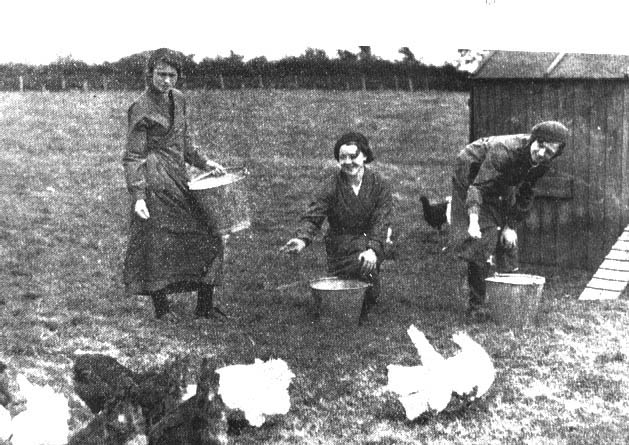
Photo of sharecroppers
     
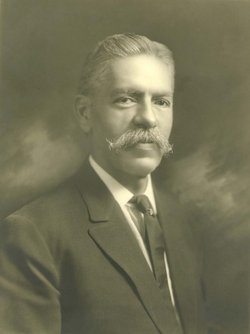
https://www.findagrave.com/memorial/82281836/earl-d.-buster
The Buster’s were very poor, the father Earl Dee Buster was a sharecropper, so the family always had a place to live. I remember mom telling about how her mother would make glue and glue newspaper to the wall, this served many functions, it helped keep out the cold drafts in the winter, it was cheaper than paint, and she said that if you got bored you could always sit and read the wall. The family raised all kinds of animals, chickens, pigs, cows, ducks and geese. My grandmother would take eggs to the market and sell them. They always had a large garden and canned almost everything. I remember mom telling me that her mother could make large pans of fresh sausage, make it into patties, fry them and then can them for later use. They didn’t have electricity, or indoor plumbing. In the summer food had to be kept in a springhouse, it was much cooler there and food could be kept longer. The family always had enough to eat, it may have just been beans and cornbread, but there was always enough. Mom said that every once in awhile she would get to take a special lunch to school, salmon patties on biscuit, again in the summer months the children would take their lunch pails to the creek and weigh them down with a big rock to keep everything cool, until lunch, Oh how we all take refrigeration for granted.
     
The family grew up in church; it was their entertainment, their way of socializing, with lots of dinners on the ground following services. But most of all it was also their way of life, their strength to get through the rough times to come, and rough times would come to the Buster family.
     
Earl Dee Buster was born on Feb. 4th, 1897 in Adair County Ky. His parents were Allen Buster and Annie Virginia Elizabeth Tinsley. Earl was only two days old when his mother died of complications of childbirth. He was later sent to live with his aunt and uncle, the Rev Thomas Tinsley and his wife Kitty G. Tinsley. This was not uncommon in those days, many families lived on farms and without the mother to care for the children……well we all know how that usually turns out.
     
At the ripe old age of seventeen Earl married Hessie Taylor Pitcock who was almost over the hill herself at age fifteen. I tease, but in those days kids grew up fast, children had most of the skills and knowledge needed to run a household, and farm. They were married on Sept. 23rd, 1914 by the Rev. Tinsley. I truly admire my family, my grandfather managed to raise a good honest, hardworking family on very little if any formal education. Just to be able to survive the season’s, droughts, sickness and hard times, and be able to get by is more than just admirable.
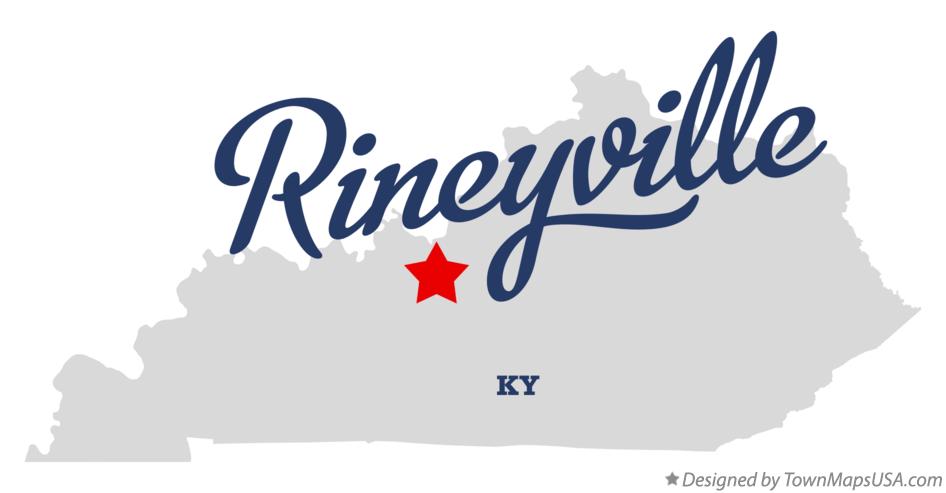
     
As I mentioned earlier, Earl was a sharecropper most of his life, so that meant that the family lived on several different farms mostly in and around Hardin County Ky. He was finally able to buy his own farm in 1941. I think it was located in Rineyville, KY I have heard many times that Earl was a very tender hearted person and enjoyed his family a great deal. Once there was a Halloween party and most of the children were going, and they begged my grandmother and grandfather to go with them. They declined saying it was for the children in the community. Earl was tall and slim, and my grandmother who was short and plump, each dressed up as the opposite sex, and showed up at the party unannounced. It took quite a while for everyone to figure out who the tall lady with the short squat man really were. In those days, people would have “pound parties”; everyone would bring a pound of their favorite party food.
     
Earl who was known as daddy by his children had a kind and giving heart, even if it wasn’t his to give. My mother told me that one time when she was little she became ill, and her father promised that if she got better that he’d give her the big white goose, the only problem was that it was her mother’s goose. He loved to go to auctions that must be where I get it from. HE came home from an auction one time with an organ in the back of his truck; my grandmother evidently became pretty upset because he spent money on such a thing. He told her it was pretty and it would look nice in the living room, it didn’t matter to him that no one in the family knew how to play it. Anytime my mom or anyone in the family would recall that story her family would get so tickled and just laugh and laugh.
   
Mom was the baby of the family and she apparently had her father wrapped around her little finger. When it was time to kill chickens for supper, mom would say, “Oh daddy I just can’t”, he’d make one of the older girls to do it instead. Annie and Hazel held a grudge for quite some time over this injustice. Mom said that the only time that she ever remembered her father getting irritated with her was when they were striping tobacco and tying it into bundles to get it ready for market. She said it was such dirty, dusty work that she couldn’t stand to do it. So she got creative and tied her bundle up using a tobacco leaf to tie a pretty bow, when she showed her father he told her to just go to the house. I’ve seen pictures of my grandfather and he looked like he’d had a hard life. But he was a wonderful man, and I wish I had been able to know him. Family members say that my brother Mike looks like him. 
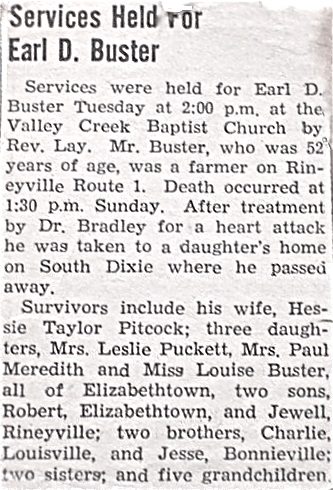
Earl Dee Buster died on June 26th, 1949, he and my grandmother were on their way to celebrate Hessies’ birthday when he began having chest pain, they were able to make it to their daughter Annie’s house where he died there of a massive heart attack. At the time Annie and her husband Leslie lived at 1674 Sportsman’s Lake Road. That house is just down the road from where I live, I pass it often and I always think of him and my grandmother and what it must have been like for them on that day. I never got to meet him and I always hated that, he sounded like a wonderful man. My mother said, he loved to sing and he had a beautiful voice.
  
Hessie Taylor Pitcock was born on June 27th, 1899 in Allen County Ky.  Her father’s name was William Louis Pitcock, and her mother was Rebecca Shockley.  I always thought the names of the girls of the family were………ah……..different.  They were Hessie, Essie, Bessie, and Effie. Can you imagine the parents in the heat of an argument, trying to keep the names straight? Hessie! Bessie! Messie, I mean, Essie! I don’t remember hearing much about her childhood, but many of the family are buried in Scottsville, Ky. That’s where Essie lived, I went to see her with my mom, Annie and Hazel once for what the family called Decoration Day, (Memorial Day).Essie took one look at me, and said, “Oh you’re a big stout girl.”It’s what every girl hopes to grow up and hear one day. That’s me big and stout, I felt as though I was about to be shipped off to market.
     
Hessie and Earl married very young and had six children. James Louis (Louis), Robert Douglas (Jack), Arvin Jewell (Jewell), Rebecca Annie (Annie), Carrie Hazel (Hazel), and my mom Mildred Louise (Louise).  And no I don’t know why they all went by their middle names, except Jack, and his name wasn’t even Jack.
     
1950's seamtress
I remember my grandmother well, everyone called her Ma, and she was pure Americana, she wore her hair up in a bun and wire rimmed glasses, she made almost all her own clothes. She was an excellent seamstress, who loved paisley prints, so many of her dresses and aprons were made of paisley prints. And in case you didn’t know, no woman worth her salt made a dress and not a matching apron.  Heaven help you if you invited company over for dinner after church, and you didn’t have an apron that matched your dress. Ma was an excellent gardener, and cook.  Mom told me that when she was young, that Ma would tell her to look through the Sears and Roebuck catalog and find a dress she liked, and Ma would lay out brown paper and sketch out the pattern fit it to mom and proceed to make a dress to match the catalog.  Animal feed used to come in cloth bags, and the women would use those to make quilts and clothing.
     
I used to spend the night with Ma every so often, and in her living room were two portraits, one of her mother or grandmother and one of a baby. The story was that the baby was dead when the picture was taken, I never believed it, but my brother’s never failed to tell me that right before they went home, leaving me there to think about that all night. They would tell me that the eyes of the old woman in the other portrait would follow you around the room. I tried not to make eye contact with that one.  Ma lived on Helm Street in Elizabethtown, Ky. Her last residence was 333 Helm St., the home is no longer there it was torn down and another home moved in its place.
     
Ma was so much fun, she loved to play games, checkers, Chinese checkers, and her favorite was the card game Rook. It was so funny because if she got the Rook she didn’t have much of a poker face and she would smile or giggle. Everyone would say, “Ma’s got the Rook”! She always had cookies that she kept in a big round tin, in her kitchen and she almost always had fudge stripped cookies, the round one with the hole in the middle. Leave it to the big stout girl to remember where the cookies were. Ma was a Christian and always tried to go to church. She was always piecing a quilt or crocheting something.  I loved to go there to visit, she had a party line phone, and when she was outside in the yard, or taking a bath, I used to listen to the ladies in the neighborhood talking to each other. On a party line everyone shared a phone line, but each person had a different ring. One ring was for one person, two rings for someone else, and so on. I learned a lot.   
        
Ma was plump and that made for the softest lap in the world. I’ve slept many a sermon with my head on her lap. It’s why I cuss today. Ma had this little giggle that was very contagious, we had so much fun with her; I was only twelve when she died, and naturally at that age I didn’t realize how permanent it was. To never see how long her hair really was again (past her waist, and very thin) to never be able to ask about quilt patterns, and the old days. I’ve grown up to enjoy a lot of the same things that she enjoyed, and I think often how I would love to be able to talk with her one more time, To see her smile when she was holding the Rook. To lay my head in her lap and sleep, while she fanned me with one of those old fans with the funeral home advertisement on it.
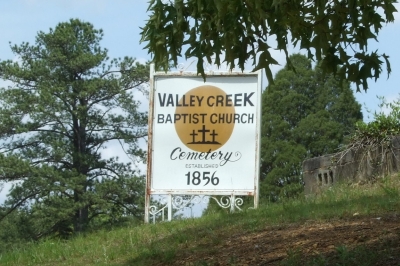
     
Ma suffered on and off with diverticulitis for many years, she had colostomy years before her death, she died on Jan. 27th, 1972 of diverticulitis, she died during surgery. Her funeral was on such a cold, horrible day there was a layer of ice on everything. She was buried next to her husband Earl Dee at Valley Creek Baptist Church Cemetery in Elizabethtown; their graves are very near the parking lot on the upper end. Many other family members are buried there too.

_______________________________________________________________
     
Rebecca Annie Buster, Puckett better known to all of us as Annie. My dear aunt Annie. I have to tell you, I loved all of my mother’s family and was very close to many of them, but Annie and her husband, my uncle Leslie were two of the best people I’ve ever known. They were true Christians in every sense of the word. Annie was born on Aug. 23rd 1915 in Allen County Ky., she was the first born for Earl Dee and Hessie. She often spoke of helping with the other children as they grew up. She evidently had a lot of responsibility as child, and she worked hard all her life.

Puckett Rd
Annie married Leslie Puckett on Dec. 1 1933, and as far as I know he farmed all his life. I think they lived in several different places and farmed for others, for many years before getting their own farm on what was eventually named for them Puckett Road .It was your typical two story farm house with a porch swing and huge shade trees in the front yard and an absolutely worthless pear tree in the back yard. That thing would just hang full of pears nearly every year but they were always hard as rocks. Oh well, they were fun to feed to the hogs. I wish I could express the love I had for that farm. I love animals and it was heaven on earth to me. I can see Leslie now laying back on his lounger on the screened in porch with his hat down over his eyes, dozing after a huge dinner(that’s lunch for us city folk),before he would return to work till dark. He’d push his hat way back to where you could see his white forehead that had been shielded from the sun. He’d point to one of the barns and tell me to go see what was new. I’d run like crazy because I knew that meant a new baby pig, pup, calf or kitten. I loved Leslie so much; he was such a sweet man. He used to call me baby.
     
After Annie and Leslie married in Larue County Ky. They settled down to a life of hard work and heartaches. Not just the usual, rough times that goes along with farming, but with trying to have a family as well. On July 27th 1935 on what should have been a joyous occasion, Maxie Puckett was born and died the same day. I’m not sure if it was as a result of a stillborn birth or not. But on Nov. 4th, 1936 they were blessed with a healthy son Charles and then again on Jan 13, 1942 when Jerry was born. Two boys, everything was going well for the family, but tragedy would strike again, this time twice as hard. On June 5th, 1946 Annie gave birth to twins John and Joan, they both died shortly after delivery as I understand. Every Memorial Day we put flowers on those little graves along with the rest of the family. I can’t help wondering what they would have been like had they lived.

     
Annie was a force to be reckoned with; she had a huge garden every year and canned dozens and dozens of jars of everything from tomatoes, beans and even blue pickles. I’m sorry, I’m sure they were delicious, just like everything else she cooked but I just didn’t trust a blue pickle. She could pull a cast iron muffin pan full of cornbread out of the oven with one hand. Mom was always impressed by that feat.  She made huge dinners for the farm hands every day, and many times on Sunday would have the preacher and his wife or visiting preachers for dinner after church. She kept house, at one time they had chickens and sold eggs, she too was an excellent seamstress and an avid quilter. She was known for her famous fried apple pies (my brother Steve would have given me away to the gypsies for one of those fried pies.)Her cornbread was to die for, and oh my gosh her fried chicken……insane.
     
Once an insurance salesman showed up at supper time, and that was usually the smallest meal of the day for them. Annie and Leslie had just sat down to eat, and instead of sending him of his way, Leslie invited him in to eat I’m sure Annie could have just beaten him right then and there because they only had two pork chops and left over veggies. They went on to share what they had with him, each giving him half of their already cut up pork chop , it was at this point in the story that mom and Haze would clutch their chests and scream, YOU HAD ALREADY CUT UP YOUR MEAT AND HE SAT DOWN AND ATE WHAT YOU HAD ON YOUR PLATES!!!!!!!!! You would have thought this man was an alien from Mars or something. I couldn’t help thinking of the salesman when he told the story to his wife and she clutching her chest screaming, YOU ATE THE MEAT OFF THEIR PLATE, WHAT’S WRONG WITH YOU!!!!!! That poor guy, I bet he thought long and hard before accepting another invitation. But that was who Annie and Leslie were they were so sweet and generous.
     
I have such great memories of family reunions, on the farm. Leslie would pull a hay wagon around under the tree’s everyone would bring out bowl, after bowl and huge platters of food. We would all sit under the big shade trees out front and talk and laugh and I’d listen to the stories being told. All my aunts and uncles would be there, cousins running everywhere it was a perfect day for a kid.
     
After things slowed down on the farm as Annie and Leslie got a little older Annie decided to get a job in town. She took a job at the Goodwill in downtown E-town. Once Annie had to work and she had corn that needed to be “put up”, so my mother, Hazel, my cousin Yvonne and I came to the rescue. We froze corn for hours I have yet to see that much corn in one place since that day. Mom and Haze had picked it, and Yvonne and I shucked and silked it. We froze more corn that day than Green Giant. Mom was getting so tired cutting the corn off the cob, and was complaining about her hands when Yvonne mentioned that she would love to help, but her mother (Alma) would never allow her to because she was afraid she might cut herself. That was music to mom’s ears she quickly handed her the knife saying “Just be real careful”. Yvonne and I still talk about that day, and all that corn.
     
tractor from the 1970's
Leslie began having health problems and had a heart attack which ultimately led to the sale of the farm. That was one of saddest day I can remember for our family. I never will forget driving down the lane to the house and seeing all of Leslie’s tractors and farm machinery all lined up in a row ready to sell to the highest bidder. When we got to the house the furniture was in the front yard and a crowd was gathering, Mom had already started to cry and told me to go on in so that she could compose herself. We all wanted to be strong for Leslie, but in the end he was the rock for us. It was horrible to see; bit by bit their whole lives being whittled down and sold off piece by piece. Leslie did real well, I was amazed, I thought it was going to be alright, but then they started selling the livestock, it became too much for him. He went inside to be alone for a while.  So many people think that farmers don’t care about their animals, that they are just to be fattened and sold. But not this farmer, not Leslie Puckett.
     
I thought this will be too much for them, this is all they’ve ever known, and how will they ever adjust, to an all new way of life. Boy was I wrong. It didn’t take long at all for Annie she loved her new home on Bardstown Road in E’town, it is directly in front of Lincoln Trail Elementary School. It was a sprawling brick home with a two car garage and basement, a first for Annie. It was a beautiful home. Annie used to say they were like the Beverly hillbillies. I remember when she showed Mom and I her central vacuuming system. We were all like the Clampett’s, we oohed  and awed, it was hysterical.
     
Leslie did adjust; he liked his recliner a lot. It was good to see him relax for a change. But his health began to betray him his heart finally gave out on Aug.11th 1980. He was buried at Valley Creek Cemetery, near Maxie, John and Joan. He was an absolutely wonderful man, and I miss him greatly.  Annie was shaken to her core by Leslie’s death, and it took her a long time for her to get back on her feet and be able to carry on. Her faith got her through the lonely times. She began going on vacations something that as a farmer’s wife was almost impossible. She went on a cruise, and would visit her children and their families for days. She went on many trips, even camping with Haze, Paul, mom and I. She had spent all her life working on a farm, but now was the time to enjoy life and she did. 
     
Annie was quiet but very funny, she could tell the best stories .But boy she had a competitive side too. I didn’t play partners in Rook with her, it was too much pressure. I always played partners with my aunt Haze, neither one of us cared if we won or not, we just liked being together. Don’t get me wrong Annie liked being together too she just liked it better if she was holding a winning hand. Many nights were spent at her kitchen table playing cards; we would sometimes laugh so hard that we would cry. I loved going to her house, but when we would just sit and talk I always got so sleepy. I wasn’t bored at all; it was just that she made you feel so welcomed and relaxed. That funny little giggle of hers, and her simple sweet smile. 
     
Annie began having light strokes, she had someone living with her and helping, but her health kept deteriorating, she eventually had to go to a nursing home. My mom often spoke of Annie’s strength about having to live there. She quickly made new friends; she was the life of the party at her lunch table. All the nurses and aides loved her. I remember visiting her often, I worked at the ambulance service and my station was less than a mile away. Whenever we would take a patient back to her facility, we would stop and see her. My husband was also my partner at work. Every time we would walk into her room she would say in a high pitched “Oh, there’s my little ole niece”. I went to see her on New Year’s Day 2000, I asked her if she knew what year it was, she was trying to figure it out when I told her it was the year 2000. She looked at me as though I’d celebrated the New Year a little too much. She said she never thought she’d live to see that day. I guess she really didn’t her headstone had to be redone it already had 19__ on the death year and not 20__.
     
My mom and my aunts were all very strong female role models for me. They would thank my mom for having me. We spent so much time together and I have so many wonderful memories. I will never forget my little ole aunt…..Annie.
_______________________________________________________________
     
Bernheim Arboretum
Carrie Hazel Buster Meredith was known as Haze to all of us. She was one of my favorite people on earth, but how do I describe Haze, hmmmm let me see, how can I say this, she was crazy. But crazy in the best way, she was so much fun, so unpredictable and was always up for anything. I always loved Haze, she was about five foot three or four, had auburn colored hair, and wore glasses. She also carried a purse that never weighed less than five pounds, it always had tissues, her lucky rabbits foot, a pocket knife, finger nail clipper, a sewing kit and once while on a hike enough moon pies for six people. Haze seemed to know every bird, she called herself a “bird brain” She knew both species of the bird, where the nested, what they ate, and she knew many species by sound. She could grow anything. She had such a green thumb. She loved to go to Bernheim  Arboretum  where she would collect  seeds  from different trees and shrubs, which by the way is strictly forbidden, but she said that was just silly that they were just going to run over them with a lawnmower anyway. 
     
Hazel also inherited the seamstress gene, something that apparently skipped me. Mom would tell how Haze and Ma (my grandmother) could look through catalogs and make dresses just  like  the picture in the book. She quilted, crocheted, cross stitched, reupholstered her furniture with a pedal Singer sewing machine and even made Christmas ornaments. She too was a wonderful cook, her corn, oh my her corn…….there are no words to describe it. She made the best potato , tuna, and pimento cheese salad. She could make a cobbler out of anything, we camped together a lot and she would find a wild apple, cherry, or mulberry tree and we knew that cobbler would be for dessert that night. At one time the government would give out free five pound bricks of cheese to senior citizens, she laughed about us staying in a Holiday Inn once on a trip and eating pimento cheese from the government. 
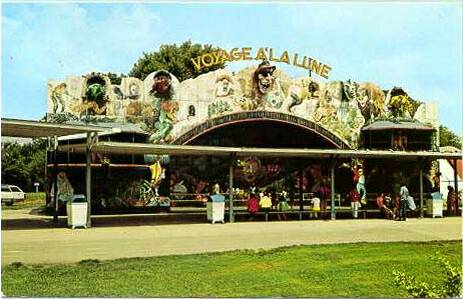
Beech Bend Park
Hazel seemed to be so interested in everything , she was so knowledgeable about so many things. She was willing to help with any questions , I had on cooking, canning or gardening. Mom, Haze and my brothers and I would go camping together. Once at Beech Bend Park we were to leave the next morning and it came a torrential rain. The  worst thing to do when camping is pack up your gear wet. But we had no choice, so everyone was soaking wet and muddy . But the picture in my head of mom and Haze in there pj’s and shower caps to keep their hair dry, is something I hope I never forget. We camped all over Kentucky, my uncle Paul would sometimes go too, some of my fondest memories are of those camping trips.

I had been working on this little book of mine for a while but when it was time to write about Haze I found myself postponing sitting down to write, so far it has been the hardest to write, not that Haze wasn’t an Interesting person, or that I couldn’t think of enough to say, but I couldn’t stand to sit down and write about her in the past tense, I try not to think of Haze as being gone forever, it’s too hard for me. Haze was my second mom, and Paul my second father. Many children wonder what would happen to them if they lost both parents, I never did because I always knew that Haze and Paul would take me and raise me as their own. Haze was the kind of crazy aunt that every child wants. Crazy in the best way.

She shared one of her first memories with us once, about the birth of my mother Louise. Haze told that Annie had to take her to a nearby farm house to stay for awhile and it was a heavy snow on the ground. She said it was the middle of February and too cold for her to be out, and she didn’t know why my mom couldn’t have waited to come some other day.  Hazel was a wonderful big sister despite this though, my mom loved her dearly, and we were all devastated when she left us.
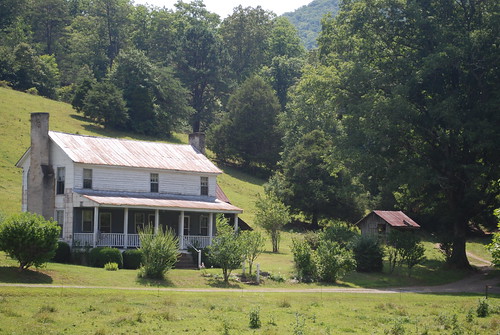
Sample of KY farmhouse
Hazel married Paul Meredith and they had one child, a daughter named (and she is going to kill me) Judy Sue Meredith. She has since married and changed her name to Meredith Kelly. I sometimes feel like I’m in a family of mobsters with all  the name changes in the family, but I digress. Meredith was with us on many of our illegal escapades. We trespassed on Mom and Haze’s old farmhouse site, so we had to pull up a post and move a chain to get the car back out, who cares. That was the time it was so terribly hot that they all took off their shirts and walked around in their bras. My Lord I thought we were all going to hell that day. Like I said Haze had a true green thumb and her yard on Holman Ave. in E-town was full of stolen……I mean acquired plants that we had gotten all over the place. There were the Mammoth Cave daffodils (that’s federal property) The Bernheim Forest Oak tree. The My Old Ky. Home money plant and on and on and on.

Did I mention she was part witch doctor too? Haze worked for my father (Charlie Welch) at the Dairy Chef, she cooked and kept the place lively. My oldest brother Steve came to work one day and made the mistake of telling Haze that a wart had appeared on his hand. Haze took a chicken gizzard, (they didn’t sell as well as the livers) and placed the gizzard on the wart, spoke a couple of strange things and waved her hand over his, then she took the gizzard and threw it down the garbage disposal. Steven laughed and walked off. In less than a week the wart was gone. I can just imagine someone reading this who never knew Haze.
She was so funny, once we were at Pine Mountain State Park and my brother David had walked in his sleep the night before and left the door of the cabin open. The next night Haze sprinkled flour all over the floor, so we could see if it really was Dave or an intruder, so before she got up we all walked in the flour to confuse her. We were camping once and a raccoon came up and stole the marshmallows right away from Haze and ran into the woods, she told us to be quite and said she could hear them sitting around the campfire roasting our marshmallows and laughing. When hiking we would stop to rest, and she would find these little holes in the dirt, and she would say “doodle bug, doodle bug, come on out”. Never in all those years did I ever see the doodle bug. She loved to play aggravation, Rook, Chinese checkers, and crazy eights. She swung on grape vines with my brothers, she climbed trees. She just loved life. I could go on and on.

Hazel had a car accident in October of 1998 and never left the hospital. She had broken several ribs and got several different infections and died in December. Carrie Hazel Buster born August 9th, 1919 and died December 9th, 1998. I will never forget the impact she made on my life.
_______________________________________________________________

Arvin Jewell Buster was born on August ,23rd 1924  My uncle Jewell was just that a jewell. He was a big man, tall and stocky; he was mostly bald with a little band of hair that went around his head. His voice was deep and came from the back of his throat. He had the most contagious laugh in the world.

My mother idolized her big brother; he was her favorite brother, and her best friend growing up. He would often play with her, when the others were hard at work. Mom used to tell a story about she and Jewell  were told to pick the corn worms off the corn in the garden. They picked them and put them in a coffee can and when they were finished they lit a fire and cooked them. I found the story disgusting but she thought it was cool. She said that he would play dress up with her and would entertain her for hours on end.

Jewell farmed with his dad for years, he joined the Navy, and married Alma Gertrude Wurst on February,16 1949, my father said that when he returned from the Navy that he continued farming for a while. Later in life he became a plumber by trade, he was very knowledgeable about his profession.

1950's Louisville, KY
Alma and Jewell lived in a small house in Louisville that was filled with children and love. They had three children, Jewell Thomas (Tommy) on Sept. 20th 1950, Daryl Wayne (Daryl) Oct. 12th 1955, and Wanda Yvonne (Yvonne) July 2nd 1962. I used to love to go to their house to visit, they were the most welcoming family I knew. We always had fun together. My family had three boys and me, and they had two boys and one girl, we were very close in ages with Jewell’s kids, so we always had someone to play with.

I used to envy how much they loved each other and showed it. It was so different from my family. They would hug each other hello and goodbye, my brothers would look on in horror, afraid that my mom would one day make us do that. I tease about it but it really was very sweet. It was such a nice laid back place to visit, Alma was such a sweet person and always wanted us to stay a little longer. 

Jewell always had a joke at the ready. I don’t know where he got all of them, but they were always funny. He would tell a joke and then somewhere deep, deep down in his belly this laugh would start coming, he laughed in kind of waves. Almost like you would imagine Santa Claus would laugh.

I don’t know when Jewell’s health began to fail him but he started to have a lot of problems. He was a heavy smoker and emphysema plagued him for years. Then like his father, he began having heart problems too. I think he had several heart attacks, and work just wasn’t possible. He began having a lot of shortness of breath with the slightest activity. I look back on that time and wonder how he stayed so cheerful. As the head of the household, with children and a wife depending on him, how that must have been so hard on him, and yet he was so happy. It was like he didn’t want to burden anyone with his problems.

Daryl worked at a landfill as a heavy equipment operator and would bring Jewell old lawnmowers or shovels, rakes and hoes that needed repair. Jewell would fix them and sell them. Alma always had a beautiful quilt going, which she would sell and she quilted for others as well. They made it, and quite nicely I might add. As a child I never knew the financial issues they must have had, because it was such a fun, loveing home. They were so proud of their family and rightfully so. Tommy was so sweet, always with a ready smile and lots of interesting stories. He was slim with that dark hair and eyes, handsome. Daryl the big teddy bear, was like Jewell, a big man with a big laugh. Daryl was so easy going and make friends easily. He loved to just sit and listen to the family’s stories and laugh. Yvonne was three years younger than I and the apple of her daddy’s eye. He would just light up when she came into the room. He was so proud of her and she was daddy’s girI ,I remember her sitting on his lap with her head on his shoulder, I was so jealous but happy for her at the same time.

I always hated that Jewell’s family lived In Louisville, for me it seemed like a state away. We didn’t get to visit as much as we would have liked. But when we did get together it was always fun. It’s just insane to think that Jewell, Alma , Tommy, and Daryl have all passed away. It just doesn’t seem possible that I’ll never hear that hearty laugh or hear anymore jokes as only he could tell. That I won’t hear Alma’s southern drawl or see her loving eyes. I won’t see Tommy’s dimple when he smiled or the way he talked king of out of the side of his mouth because he was always smiling. That I’ll never be with Daryl and his sweet spirit.

My cousin Yvonne is an amazing lady, and I have told her often how I admire her. Her strength and faith are incredible. The way she just keeps going after having such adversities to deal with, is truly inspirational. She is just like her mom; she keeps in touch with everyone, and is always there with an encouraging word. When I talk to her it’s like I’m back in their living room, she is sweet like Daryl, always smiling and has a dimple like Tommy, always laughing like her daddy and she has her momma’s eyes. Our family misses your family.
_______________________________________________________________
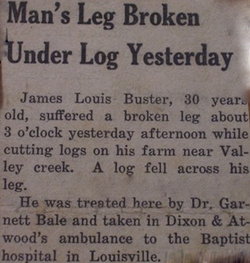
James Louis Buster was born on May 17th 1917 I’m sorry to say that I know very little
about Louis. What I do know is that he had many health problems in his short life. Mom said that he was a very good person, and that he was kind and soft hearted like his father. He apparently had some type of seizure disorder which limited him greatly. She told me several times about an accident that Louis had, while he was helping his father log some land. He apparently had a seizure while riding a horse or mule, and fell causing the log to roll over his leg, breaking it badly. He was seen by the local Dr. and transferred to Baptist Hospital in Louisville. When he returned home he never fully recovered. Mom said he was always hindered by that accident.

In my records I’ve found where he married a woman named Geneva Metcalf, but I have never heard this myself. I think it was some information that Yvonne sent me, and I’m not sure where she found it. But he never had children.

I hope to find out more about him one day. I wish I could have known him. He sounded very sweet. Louis died on December, 2nd 1941 and he too is buried at Valley Creek Cemetery in E-town near his mom and dad.
_______________________________________________________________
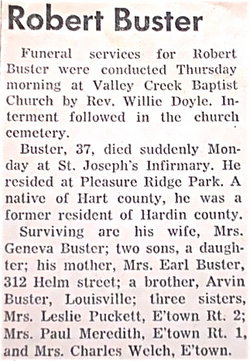

Robert Douglas Buster (Jack) as he was known to everyone was born on May 9th 1922. I don’t know much about my uncle Jack. He seemed to be a handsome man by looking at his pictures. He married Virginia Meredith who was Paul Meredith’s sister, (keep up with me here) Paul was married to my aunt Hazel Buster. I’m just glad I don’t have to map out the Meredith and Buster family trees, whew talk about confusing. Anyway…… he was married to Virginia who I heard was a real sweetheart, and they had two children together Phil and Pat.

Remember earlier I said I sometime feel like I have family from the mob because everyone changed their names or went by another name later in life, well here goes. Turns out Pat’s name isn’t even Pat. It’s Priscilla, but now she goes by Ann. When I started on Facebook a person named Ann McDaniel wanted to be my friend, so being confused I called on old reliable, Yvonne to clear things up. I asked if we were “kin” to an Ann McDaniel’s and just to mess with me she told me yes it’s Pat, of Phil and Pat.

Are you shaking your head now? Let me recap. Robert Douglas AKA (Jack) was married to Virginia Meredith who was a sister to Paul who married Hazel . Virginia and Jack had Phil, and Pat AKA Priscilla AKA Ann McDaniel .  And Haze and Paul’s daughter Judy is now Meredith Kelly. Whew!

Let’s see where was I, Jack divorced Virginia, and later married Geneva Buckingham and they also had two children Johnny and Robin. Johnny was always so quiet but took everything in at the family get togethers. He has an easy going personality and a funny little laugh. I was always very fond of him. His sister Robin is the spitting image of her momma, dimples and all. I hear she is living in Kansas now; I would love to reconnect with them.

I didn’t see much of Phil and Pat growing up, but my family was very fond of them, and asked about them often. I’m very thankful for Facebook for helping me find long lost family. It turned out that Pat’s son lived in my neighborhood while stationed at Fort Knox and she had come and visited him. She was less than a quarter of a mile away and we didn’t know it. It truly is a small world.

Jack was in the Army in World War 2 , and he too died of a heart attack on July 6th, 1959. I was less than a month old when he died so I never knew him either. I wish I knew some interesting stories about him, but I don’t. But I do know that he had some really sweet children.
_______________________________________________________________

Mildred Louise Buster was born on February 19th, 1928, and was the last member of the Earl Dee Buster family. Earl and Hessie’s baby girl would grow up to be my momBorn in Larue County, mom went to school at several one room schools, Rineyville and Howevalley.  She would be the first in her family to graduate high school, something she was very proud of and thankful for. She received a watch from her parents and that and her class ring were always two of her prized possessions.

Mom loved her family so much and was always proud of them. Never was she embarrassed that she couldn’t buy the nice dresses that she saw in the stores. Or that her clothes were made of feed sacks. She was amazed that her parents always managed to provide for them and one thing that was always in great supply in their home was love. Mom adored her family. The death of her father shook her and the rest of the family hard, and she spoke lovingly of him many, many times over the years.


Religion was always very important to my mom. She joined Valley Creek Baptist Church at age twelve,and is the oldest living member to this date. Mom went on  to raise her children in church, I don’t think she thought it make much of an impression on us, but it did and I am forever thankful for this. 

Before she was married she worked as a clerk in the Hardin County Courthouse and while she was employed there she lived with Annie and Leslie in the house on Sportsman’s Lake Road, (old Dixie Highway) it was the same home where her father had died.

My mom was just meant to be a mother, she was a natural. My oldest brother Steven Charles was born on December 19th, 1951, he was spoiled rotten, and I think there must have been a billon pictures taken of him. Oh look he’s looking to the left, isn’t that cute quick get the camera.

Michael Glen Welch came into the world on June 8th, 1953 and as the second child all the pictures of Mike could fit into a wallet.

David Keith Welch (the golden boy) was hatched on May 28th, 1955. David never did anything wrong in his life and was the pride and joy of my mother, but……I’m not bitter. Really though David did lead a charmed life, lots of friends, popular, good in sports, good grades, tall, handsome, and boy scout. I’m getting nauseous. Mom and Dad didn’t have to take pictures of Dave; his picture was always in the paper. Don’t get me wrong, I love him; it was just a tough act to follow.

After three boys my mother must have prayed and prayed for a beautiful, sweet little baby girl. A little princess to dress up in pink frilly dresses, fix her hair, and pick out the latest fashions. Unfortunately she got me. Sharon Kay Welch born on June 29th, 1959, mom used to call me her morning glory because I was born early in the morning. She never once acted disappointed that I was a tomboy, that I hated to wear dresses, and TIGHTS (who on earth came up with those things) when I’d wear them the crotch would always be at my knees. Try playing kick ball like that. As for childhood pictures….I think I broke the camera.


Sample 1960's hairstyle
Mom got up every morning, and while having her morning coffee she would fix her hair and makeup. In the sixties and seventies ladies would tease their hair to the size of a bushel basket and use a half a can of hairspray on it. Mom would never go to town without looking her best. Ladies would wear dresses and heels downtown to by towels and underwear. It was nice that people took pride in their appearance and everyone spoke to others and smiled. I wish things could be like that again. Not the dresses and heels part.

I don’t know how mom did it, I can’t imagine having four children to get up, dressed, fed, off to school, homework sports, piano lessons, and scout meetings etc.etc. Our clothes were always clean; we were on time, our projects finished, cupcakes delivered, and all without missing a beat. Mom was the disciplinarian, our soft shoulder to cry on, our confidant, she was everything we needed when we were growing up.

I remember the drama that always went on at school, and crying when I didn’t have a boyfriend when all my friends did. She told me that there wasn’t anything wrong with me, it was that I just had higher standards than my friends, It worked I stopped crying. She always had a way to make all of us feel special. Everyday there were arguments (and that is putting it mildly) among us kids. Everyday. The only time we got along was during the Andy Griffith Show. Poor mom, only a half an hour of peace, a day.

My dad never wanted to go on vacation with us much, I can’t imagine why. Don’t get me wrong we went to Florida a few times, but it was nonstop so we could make “good time”. It didn’t matter that we were killing each other in the back seat, or that we were starving, or that mom and almost ended up with permanent bladder damage, we make “good time”. So mom and my aunt Haze decided we would all start going camping. Dad didn’t go; he said he had enough of sleeping on the ground in the Army. (We slept on cots)Sometime my cousin Meredith would go and my uncle Paul.


Some of my fondest memories were our camping trips, we went to almost every state park in Kentucky, and we camped or stayed in the cabins. It was an inexpensive, vacation and for some reason we got along most of the time. There was only one problem, I used to get terribly car sick. We loved our camping trips, fishing, horseback riding, miniature golf, hiking, campfires. The boys would play golf and we’d swim in the lakes. It was some of the best times of our lives.

Mom and I had a lot in common, we were both the babies in our families and we both had great mothers to look up to. Mom taught me to be strong and to always stand up for what is right. I remember being so embarrassed when she would stand up to a teacher that she didn’t feel was treating one of her children right. Or when she would pick up trash on her walks and carry it until she got to a trash can. Now I find that I do the same things. I got so involved in my youngest stepson’s education that his father and I homeschooled him for three years.

I find myself saying the things that mom used to say when we were growing up, and oh my Lord, I grunt now every time I get up or sit down. Mom was everything to for us; she loved her kids with everything she had. Family was everything to her. It was so hard on her when she lost her mother, I was twelve when Ma died and it devastated my mom. If it hadn’t been for Annie and Haze being there for her to talk to I don’t know what would have happened. She cried for months every time she would think of her. Being the youngest my mom had to live through the deaths of her entire family one by one. But nothing would prepare her for what would come on day. The death of one of her children.

Mom came to every piano recital I had, every school open house. She went to every baseball game, every scouting event, and every teacher conference. She is an amazing woman and my greatest role model. Mom and I were very, very close. My dad worked a lot and mom was alone, so instead of letting it get her down, we would do something together. We could be up and packed and on the road within an hour, and did so quite often. We both enjoyed auctions and for years we would map out sales on the weekends to go to. We enjoyed antiques and historical places. Mom was my best friend.
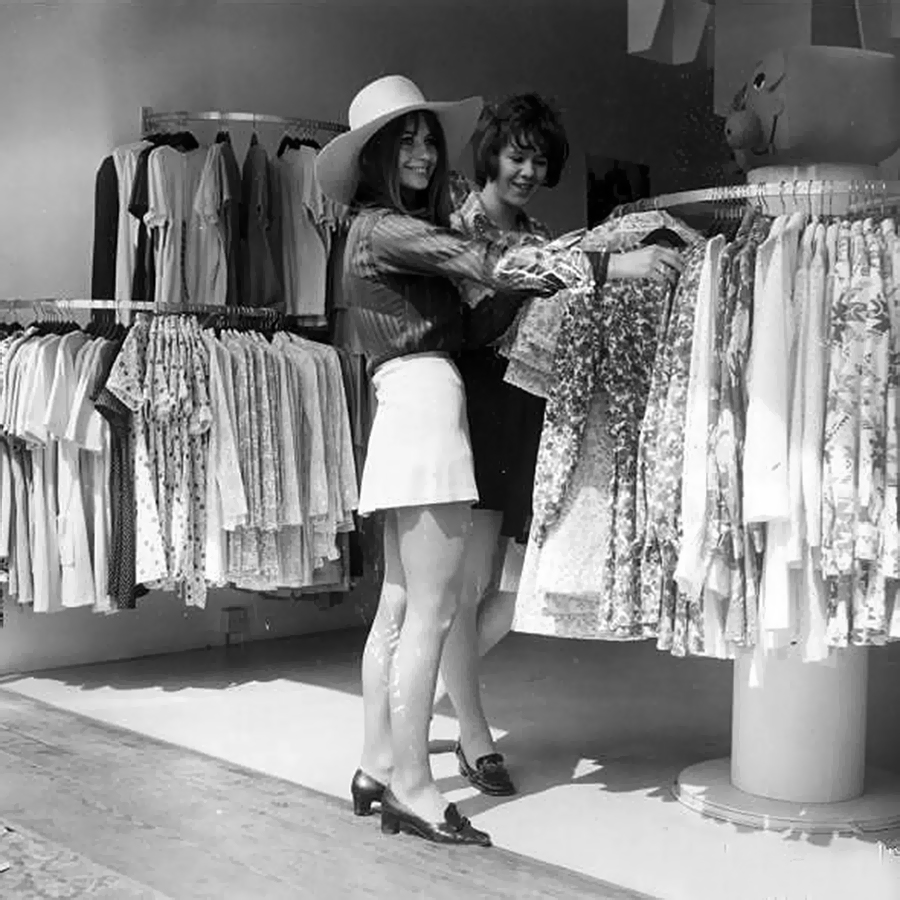

1973 was a very hard year for mom. My brothers Steven and Michael both married and David graduated and went to college at Eastern Ky. University. I saw my mother just sitting and crying at times just lost that her family had gone from six to three in a blink of an eye. Mom gradually came out of her depression, she had worked outside the home off and on as we got older, and this helped her make it day to day. She worked at clothing stores and a fabric shop.

In 1974 mom’s first grandchild was born. Chad Michael Welch came into the world on June 2nd, and made our lives so happy. Mom couldn’t wait to hold him when they came over; she loved when he spent the night. Mom was back in full force; she had a grandbaby and loved every minute. Many more grandchildren were to follow. Each with a special place in her heart. My brother Michael and his wife Chiquita had two sons, Chad Michael, and Jeffrey Glenn. My brother Steven and his wife Karen had two sons, Brian Steven and Benjamin Charles. And my brother David and his wife Starla had two sons Quinton Davis, and Cameron Mitchell. I married Michael Blankenship and I have two stepson’s Roger Glenn and Jesse Tyler. That’s right I’m the only original Welch girl. Two great grandchildren have now been added. Chad and his wife Becky have, (yeah, you guessed it), two sweet little boys. Dylan Michael and Donovan Wayne. Our family has been very blessed.

The years that followed were unbelievably hard on our family. So many deaths, we practically lived in funeral homes. Paul died on April Fools Day in 1998, six months later Haze died. In June of 1999 my brother Steven died from a sudden heart attack, I was the one who told mom that he was dead. I can still here her screaming, “Not my baby, not my Steve”, It was the worst day for our family. Steven was always there for all of us. If your car got stuck in the snow you called Steve. If the basement flooded you called Steve. If you needed to remember any family facts you called Steve. Always with a ready smile and a helping hand. 

Steve loved family get togethers. He loved history , especially the Civil War. He and my brother Mike would go metal detecting together for relics. He loved his boys Brian and Ben and was a very good dad. He and Mike built out House. My brothers built several homes in their spare time, they also built mantels, and furniture too. They were so close and Steve’s death was especially hard on Mike.
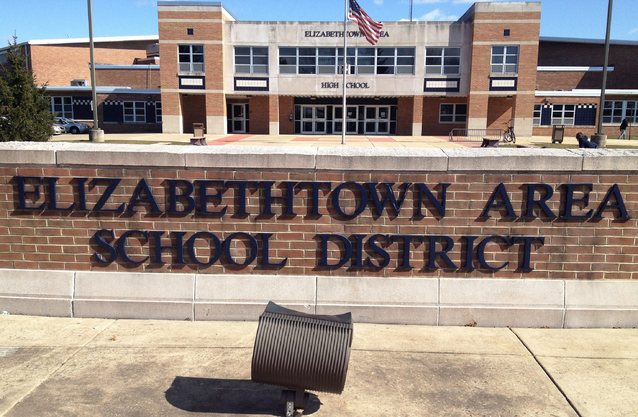

Three months after Steven’s death his ex wife Karen died of complications of cancer. Steve’s youngest boy Ben was only eighteen when he lost both parents. One of the last things Steve did was watch Ben graduate from Elizabethtown High School. He was just beaming and grinning from ear to ear. Mom never did get over Steve’s death, I don’t think that’s possible for a mother.

I married on November 16th 1994, and unfortunately mom didn’t approve of my husband. I don’t think she could get used to the thought of not having me there all the time. We were so close, and the thought of being without any of her children was too hard for her to bear. This was the hardest thing I ever went through with mom, second only to Steve’s death. It simply broke my heart that she couldn’t accept him into the family. The two people I loved most in this world, and it just didn’t work, it was a horrible experience. I know that every family goes through hard times; there are illnesses, deaths, marriages divorces, and disagreements in every family. It’s how you come out in the end that matters most.

Mom began having problems with her memory, I took her to have her tested, it was early dementia. Dad took care of her for quite some time, but the disease was advancing. Michael (my hubby) suggested she come live with us. I’m so blessed to have such a forgiving husband. I remember the day I explained it to mom and she agreed it would be best. I had been blessed to be able to retire just two weeks before she started getting much worse. Mom came to live with us in August of 2007. 

It’s so hard living with someone who has Alzheimer’s, she looks like mom, she sounds like her, and her laugh is the same. But she asks for Ma and daddy, Haze and Annie. She sometime looks at me and knows who I am, but most of the time she doesn’t recognize me. At times she just laughs and laughs and we all get tickled and laugh too, not having any idea what is so funny, but if she’s happy, I’m happy. I’ve said this before, I still have my mother with me, but oh how I miss my mom. 
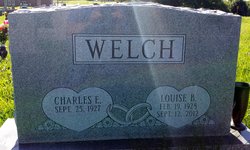

My mother is the last of Earl and Hessie’s family, but the Buster name lives on. We all have a little bit of Buster in us.

The reason I wrote this little book was to write down the memories that I have, and share some stories that I remember. I wanted the family members who didn’t know our relatives to be able to get a little glimpse of what they were like.

I write like I talk, I love to laugh and joke like Jewell and Steve and Haze. And I hope and pray that nothing that I’ve written offends anyone. I didn’t plan this and didn’t take notes, I just put pen to paper. Some dates may be wrong and there’s tons that I know I’ve left out but I hope you can get a feeling about what it meant to be a Buster. 

If you have stories to share, I’d love to hear them and maybe we could add on some more chapters.
_______________________________________________________________
Earl D. Buster's Family Tree

father: Allen Morton Buster (1864-1938) KY
gdad:  John Milton Buster (1838-1875) KY- one of the 5 indentured children
ggdad: Charles Woods Buster (1794-1841) KY/VA
2ngdad: David Buster (1766-1806) NC/VA
3rd gdad William Buster (1729-1795)
4th gdad  William Buster/Bustard (??-1749)

Tuesday, March 13, 2018

Virginia Buster Martinez

Virginia lived to be almost 100 years old, just shy of six months of hitting her century marker.  Born on August 20, 1866 in Virginia, she died on February 28, 1966 in El Paso, Texas.

*Recited by great-grandson Ron F. Hagquist

In the early 1870's a wagon train heading for the territory of New Mexico was attacked by Indians, one man of the party killed before they were repulsed. In one of the wagons was Judge Issac Newton Buster, a widower bringing his three young daughters out west. He sought a new life while attempting to leave behind the heartbreak of his beloved wife's untimely death in Virginia.

"Smile, you must smile, you are so beautiful, smile!" implored the photographer as the flash powder exploded. The hand-colored photograph from 1880 shows a poised and radiant 14-year old girl in a gold brocade dress, with bright hazel eyes, long luminous flaxen hair, and with the subtlest hint of a shy smile. The dress was a gift from her father in celebration of her upcoming wedding in just a few days -- when she would become Mrs. Felix Martinez. At age 25, he was already a widely respected businessman in Las Vegas, Territory of New Mexico and the local leader of the Populist Party. he was incredibility handsome, always well groomed, and with dark brown eyes that could pierce like a dagger or melt warmly as a puppy's -- as the occasion warranted. But what she loved best was his soft melodious sigh when he spoke of his feelings -- and the way he looked at her!

The wedding was in Las Vegas, Territory of New Mexico (some years hence Felix would be a member of the Statehood Delegation) on September 24, 1880. It was preformed by Father Conduit. One single precious wedding gift survives -- a small painting of the ceremony by an old artist friend of Felix who was too poor to purchase him a present, so he made this for his dear compadre.

Another good friend of Felix wrote a gently humorous newspaper account of their wedding titled, "Better Late Than Never."

"He never mixed much with the opposite sex and his friends thought he all but made up his mind to live a single life to the end of his days. But at last he succumbed. A fair lady commenced to fire Cupid's darts at him with success. She hit him hard and he surrendered on the spot..."

Virginia Buster Martinez lived a long, full life -- born in the last year of the Civil War, she was 37 when she read the startling news of the Wright brothers' first flight and 75 when the horrors of the Second World War began.  And at 97 she sat watching television with he family, electrified as a dashing young President on a wintry day in Washington  said, "this nation shall go to the moon and return within this decade." She was four months from 100 when she passed.  I was 18, blessed to have known her long and well.

________________________________________________________________
MARTINEZ, FELIX (1857–1916). Felix Martinez, businessman, publisher, politician, and diplomat, son of Felix and Maria Reyes (Cordova) Martinez, was born at Penasco, Taos County, New Mexico, on March 29, 1857. He studied for five years at St. Mary's College at Mora, New Mexico. In 1871 he began work as a store clerk, first in Trinidad, Colorado, and, after a few months, in Pueblo, where he also took private business courses for three years. He moved to El Moro, Colorado, in 1876 to work as a clerk but was soon part-owner of a mercantile business. He moved to Las Vegas, New Mexico, in 1879 and entered a business partnership. On September 24, 1880, he married Virginia Buster, who was fourteen years old. They had six children. He sold his business in 1886, feeling that the sedentary nature of the mercantile trade did not agree with him. In its place came efforts in politics, publishing, and real estate. In 1884 Martinez ran for San Miguel county treasurer on the Democratic ticket. Although he lost, he cut sharply into the traditional Republican majority in the county. He won a close race for county assessor in 1886, and he was elected to the territorial House of Representatives in 1888. In 1890 he purchased a small Santa Fe newspaper, La Voz del Pueblo, and moved it to Las Vegas. It became the foremost Spanish-language newspaper in New Mexico. At about this time, he was beginning to take notice of a fast-growing populist party in San Miguel County, el Partido del Pueblo Unido (the United People's party). He soon assumed leadership of the party, but by 1892 he had used his influence to effect a fusion between the Populists and the Democrats. In 1892 he was elected to the Territorial Council (upper house of the Legislative Assembly), where he sponsored legislation to establish what is now New Mexico Highlands University and the state mental hospital, both in Las Vegas. In December 1893 Martinez became clerk of the United States and Territorial Courts for the Fourth Judicial District of New Mexico, located in Las Vegas.

He resigned this position in 1897 and moved to El Paso, Texas, where he found numerous opportunities to use his financial and organizational talents. He owned and published the El Paso Daily News from 1899 to 1909. He was the founder of El Paso Realty Company and the organizer of the Southwestern Portland Cement Company, as well as a small railroad that served the El Paso area. He was the president of the Central Building and Improvement Company and participated in the construction and operation of the Plaza Block and the White House stores. He was on the board of directors of the First National Bank of El Paso but later resigned to accept a position as one of the original directors of the Federal Reserve Board, Dallas District. Martinez's most lasting contribution was his strong support for the construction of Elephant Butte Dam, which still provides irrigation water for the Rio Grande valley in the El Paso area and southern New Mexico. He helped to organize the El Paso Valley Water Users' Association and served as its board chairman.

Although he focused his financial talents on El Paso, his political interests were still in New Mexico. He maintained control of La Voz del Pueblo in Las Vegas, owned the Tribune-Citizen in Albuquerque from 1909 to 1911, and supported the Democratic party through the editorial pages of these newspapers. Martinez lost his bid for a United States Senate seat after New Mexico statehood in 1912, but in the following year, his friend William Jennings Bryan (secretary of state under President Wilson), offered him the presidency of the Panama-Pacific Commission. Commission members had diplomatic status and toured South America with the purpose of inviting each country to participate in the Panama-Pacific Exposition in San Francisco in 1915. Martinez died in El Paso of pneumonia on March 22, 1916, and was buried on his ranch at Trinchera, near the New Mexico-Colorado border. Although he was probably the most prominent Hispanic in the United States at the time of his death, he would not have liked that designation. He considered himself an American, and he often spoke (as he did at his commencement address at the University of New Mexico in 1915) against race prejudice and race promotion of any kind.

Sunday, June 25, 2017

Brody Buster: Celebrated Blues Artist


BY TIMOTHY FINN
tfinn@kcstar.com, Feb. 2017

Brody Buster is only in his early 30s, but he is already a music industry veteran, one preparing to give success a second chance. “I started so young,” he told The Star recently. “I played ‘The Tonight Show,’ I played with B.B. King a bunch of times. But I was just a kid. And then I didn’t want to do it for a while. When I was a teenager, I wanted to play rock ’n’ roll. I wanted to skateboard and party. And then I had kids.”

These days, Buster, 32, is the father of a 5-year-old and a 2-year-old. He’s also trying to revive a career that started when he was 9 and a blues-harp prodigy from Paola, Kan. His career included several moments of celebrity and fame, with guest appearances on “The Tonight Show With Jay Leno,” the TV shows “Full House” and “Baywatch,” and an endorsement from King, who called the young Buster “one of the greatest harmonica players of our time, despite his age.” Music remained a consistent component of his life, but not the primary focus. “I’ve always played music, but I wasn’t really pursuing it,” he said.

He is now, and at the 2017 International Blues Challenge in Memphis, Tenn., this month, his pursuit received a significant boost after Buster placed second in the solo/duo category and won best harmonica player. “It has already kick-started my career,” he said. “My email and phone have been flooded with too many offers to get back to. I’m looking for an agent to help me get through it all. I’ve had offers all over the U.S. and Canada to play blues festivals.”

Buster advanced to Memphis after winning a spot through the Kansas City Blues Society’s local competition. Fellow Kansas Citians Amanda Fish and the trio the Old No. 5s also competed in Memphis. Neither made it past the semifinals. It was Buster’s second attempt at the IBC. The first attempt inspired him to change his approach from working in a trio to performing as a one-man band (drums, guitar, harmonica, vocals). “I entered the challenge two years ago as a full band but didn’t make it out of Kansas City,” he said. “All the judges said, ‘You’re really good, you’re just too much rock.’ So I started this one-man-band thing Monday nights at the Westport Saloon. And I built it there. It’s pretty much the same music, but it’s toned down, not so loud and in-the-face. It’s a lot bluesier.”

Buster has released an album on Mudstomp Records as Brody Buster’s One Man Band, and he performs regularly around Kansas City beyond his regular Monday night gig at the Westport Saloon. He also has a weekly Wednesday night gig at the Oak Bar in the InterContinental Kansas City at the Plaza.

_____________________________________________________
reprint from LA Times

A Harmonica Prodigy : Brody Buster, 10, has seen his star soar since B.B. King praised his talent.

April 21, 1995|STEVE APPLEFORD
UNIVERSAL CITY — Janet Buster understood things would somehow never be the same for her son after that night last fall at the Universal Amphitheatre.

She and 9-year-old Brody had been given backstage passes to a concert by blues guitar master B. B. King, and the two found a spot at the side of the stage, hoping for a chance to say hello again to King when the show ended.
That's when King saw the boy, raised his hand to stop the concert, and directed the spotlight to suddenly fall on young Brody. "Ladies and gentlemen," King announced, "I'd like to introduce to you one of the greatest harmonica players of our time, despite his age, believe it or not."
A stunning pronouncement, and from a man who should know what he's talking about. Here was the great B. B. King, who has led the charge on more than one blues revival, landing this tow-headed child squarely within some esteemed company. Howlin' Wolf. Sonny Boy Williamson. Shakey Horton. Brody Buster?
This surely has not been some passing fancy, either, since Brody Buster and his band, the Bluesbusters, perform every other weekend at B. B. King's Blues Club on the Universal CityWalk. At the club's grand opening in June, young Brody was even invited on stage to blow his harp alongside King himself.
"You see your 9-year-old stand up there and play with B. B. King and the crowd goes wild, you take notice," his mother says now. "I could never have dreamed of such a thing happening."
This career of Brody's has been an unexpected detour in the life of the Buster family of rural Paola, Kan. What began as a nice hobby for the boy has within two years exploded with unexpected consequences. There was his appearance on ABC-TV's sitcom "Full House." And this week, Brody began filming a guest spot on the syndicated hit television series "Baywatch."
Six months after arriving in Los Angeles, Brody is represented by the same management firm (Morra, Brezner, Steinberg and Tennenbaum) that handles the massive careers of Robin Williams and Billy Crystal.
But Brody, who is now 10, seems the least surprised of anyone. Even before he first picked up a harmonica, Brody would watch the Grammy Awards with his parents and practice his own acceptance speeches, thank ing Mom and Dad.
"He can actually play," says guitarist Vincent Labauve, 37, musical director of the Bluesbusters. The veteran sideman for such artists as Ike Turner, Solomon Burke, Barry White and the Coasters, adds, "We're not lacking musically. I wouldn't care if he was 2. The musical content is what I go for. I go for the talent.
"I don't feel any kind of stigma because we've got a 10-year-old kid in front of us. That doesn't bother me in the least. I'm more relaxed on this gig than I am on the big professional gigs that I've done."
On one recent Friday night, the self-taught Brody stomped to the stage in a purple double-breasted suit and with a case full of harmonicas, ready to blow through the standard blues repertoire. Among those songs was Willie Dixon's "(I'm Your) Hoochie Coochie Man," where the boy was most convincing as both player and singer, actually finding a grinding edge in his voice, and blowing his harp with real force.
"It's a novelty to a lot of people," says Labauve. "But what's so cool about it is that he delivers. He's not just 'Oh, how cute!' He's actually playing. That puts a whole other slant on things."

After his shows at B. B. King's Blues Club, Brody and his band stroll over to Lucille's, King's sports bar next door, where the young musician plays another three sets that last half an hour or so.
While waiting for his band to set up, he's asked who his favorite musician is. Brody does not hesitate. "B. B. King," says Brody, his blond hair neatly combed. "I also like Eric Clapton."
But it was his mother's collection of old blues, country, and rhythm and blues records that first fascinated Brody. His father, Curtis, one day brought home an acoustic guitar from a garage sale. Then his mother brought out her old harmonicas for Brody to try.
Suddenly, Brody, who was then 7, was playing the thing everywhere: in the car, in the grocery store, on the porch, in the treehouse.
"I quit playing," remembers his mother. "Brody put me to shame. In a couple of months he could do everything I could do.
"He has the music in him. He's always banging on something, in a rhythm or a pattern, making music somehow. And when he's not making music he's drawing designs for stages. He says that relaxes him."
Brody's guitar teacher soon recommended that Brody try out his blues harp chops at the various jam sessions and talent contests in nearby Kansas City.
"He never had any stage fright," says Janet Buster, 40. "I didn't know what would happen the first time he got up. I didn't know if he would start crying and run and sit down. I was really nervous about it. I didn't want him to have a bad experience. But he just really enjoyed it."
The family eventually decided to spend last year's spring vacation in Memphis, where Brody could find audiences amid the euphoric atmosphere of Beale Street. There, he blew his harp on street corners and in the occasional club, while other kids danced.
Spring break ultimately stretched into summer, with Brody's father commuting on weekends--which he continues to do--from his car dealership back in Paola. Fans were throwing money at Brody, who earned a couple hundred dollars a night, enough to buy himself a fine electric guitar at the end of the summer.
The family's extended vacation away from their old life finally led late last year to Los Angeles, where Brody was soon booked at B. B. King's club. He prepares for his late-night schedule by taking afternoon naps. Along with his 9-year-old sister, Brody attends fourth grade at a public elementary school in Burbank and insists, "I get straight A's and Bs," which his parents make clear is a prerequisite for his music career.
His parents say they have also been careful to have Brody perform only in the least rowdy of clubs. (So far, the most unpleasant experience has been Brody's arm growing tired from too many autographs.) Only venues that serve food--as opposed to bars that just serve alcohol--are considered.
"I think it holds no glamour for him," says Janet Brody. "When he's 16 and his peers are cruising and out drinking, I don't think that will hold any attraction for him because he's seen what it really does. We always point out the artists who ended their careers sadly and too soon by overdosing or drinking too much."
To that end, the Busters were determined to form a backing group for their son, free of drugs, alcohol and cigarettes. The Bluesbusters--which also includes bassist Jerry Chambers and drummer Cheron Moore--are determined to "shield him from the crap that goes on, the negative part of the show business world," says Labauve, the father of three. "We definitely want to shield him from that, because it's really not necessary to expose the kid to that."

For now, Brody Buster and the Bluesbusters continue to play their mix of blues classics and blues-rock covers from the 1960s. Brody today says he's only interested in the blues, while the more modern rock sounds of MTV have so far failed to impress him.
But Brody is still only 10, and Labauve, for one, is expecting some changes in the coming years. "You know when Brody hits his teens, he's going to want to rock a lot more," he says with a laugh. "That's just something that happens to you."

USA Cartoon Express: In a Minute - Brody Buster

Thursday, June 22, 2017

Bobette Buster: Hollywood's Secret


Bobette "Bobbie" Buster was born on September 4, 1953 in Ohio, raised in a small town of Leitchfield, Kentucky until 1958 when her father, Bob Buster, moved the family to to Cincinnati, Ohio. Her father  taught US and World History at Sycamore High School in Blue Ash. During his 25 years, and he became Asst. Superintendent, facilitating the rise of the Sycamore Township School System to city, state and national prominence. Growing up in Ohio, she would collect stories in her youth about the older generation, which included her own family members, and has the oral histories preserved at the Kentucky Museum. She graduated Northwestern University with a B.S. in Speech and USC Film School with an M.F.A. in the Peter Stark Producing Program. Currently she is the Special Projects Adj. Professor of Storytelling at Tufts University, while writing/producing documentaries. She is also writing her third book.

Currently living in Los Angeles, she has been working as a part-time lecturer as a Stark adjunct professor since 1992. Her lecturing and consulting experiences have comprised of Pixar, Disney, Le Femis (Paris), DFFB (Berlin), 20th Century Fox, Sony Animation, Screen Training Ireland, North By Northwest (Denmark), and more. Her area of expertise in the film industry focuses on the development of storytelling for all cultures, incorporating corporate, nonprofit, and academia. Her influences extend to writers like, Josh Goldsmith (EP, King of Queens, What Women Want), Pete Chiarelli (The Proposal), Elizabeth Klaviter (Producer/Writer, Grey’s Anatomy), Dana Fox (EP, Ben and Kate), Miles Millar & Alfred Gough (EPs, Smallville), Garret Lerner & Russell Friend (EPs, House), John August (screenwriter,) documentary producer Karen Johnson (Double Dare,) and many more. She focuses on principles such as The History of Hollywood Economics, Violence in Entertainment, The Purpose of Happily Ever After, Epiphany, and The Ten Stages of Transformation, among other important storytelling principals.

Aside from lecturing, Bobette is also a screenwriter and documentary producer. "There is phenomenal work being done in documentaries," she praised. "The constraints of raising funds and delivering ideas that can be marketed worldwide have created a really taut story discipline among documentary makers." Her works include Deadly Code (2013), Making Waves: The Art of Cinematic Sound (2016) and Weapons of Mass Distraction (1997). She also has written a book that is apart of the “Do” series, entitled, Do Story: How to tell your story so the world listens that engages and connects the craftsmanship of storytelling. She is a member of the Writers Guild, and in December of 2007 while picketing outside of Paramount during the writer's strike, she reinforced, "Writers took the lead here because we're contrarians, independent thinkers."
(c. 1971, high school senior year)

Saturday, October 15, 2016

Archibald Buster

*The history of Archibald Buster (1802-1894) was compiled many years ago by Lottie Buster, a daughter of Claudius Green Buster, and grand-daughter of Archibald.  Many, many thanks must go to her for writing down these facts about Archibald’s life, with which we would otherwise be without and they would be lost in the pages of past history. (originally shared on Ancestry.com Feb. 13, 2008)

Nolichucky River Valley
Archibald, one of nine children born to Claudius & Isabella (Woods) Buster, was born on March 22, 1802 in Greene Co. Tennessee.  He was born along Nolichucky River, near Greeneville, where his parents had settled in 1789. Archibald grew up on the new frontier of eastern Tennessee and on August 18, 1829 was united in marriage to Elizabeth Black Henderson, daughter of David & Isabel (Libby) Black Henderson.  Elizabeth wad born in Kentucky on January 30, 1809.  Archibald and Elizabeth lived in Tenn. About 5 or 6 years after their marriage, three children were born to them in Tenn. Before they migrated west to Missouri and were pioneer settlers in this vast new land.  Eight more children were born in Missouri. Three of their children died in infancy.   Martha Ann, their first child, was born in Greene Co. Tenn., on June 13, 1830.  Samuel on Feb. 29, 1832.  On March 8, 1832 they were deeply sorrowed by the death of Martha Ann. She was buried in Tennessee.  On March 10, 1834, their third child, Mary Jane was born. 

In or about 1835, Archibald moved his family west by covered wagon to Missouri.   Their next child, Sarah Elizabeth, was born in Johnson Co. Missouri on Feb. 20, 1836.  On Oct. 11, 1838, William Marion was born.  On March 20, 1841 Paulina was born.  On Sept. 4, 1843 they became the proud parents of twins when James and Margaret E. were born.  But their joy was not to last, for on June 25, 1844 James passed away aged 9 months and twenty-one days.  On Nov. 30, 1846 their home was again brightened by the birth of Claudius Green.  Then on June 26, 1847 sorrow again struck their home with the death of the remaining twin, Margaret E. age 3 years nine months and twenty-one days.  This the third child they had laid to rest.  On April 24, 1849 David Elzy was born and five years later, on March 26, 1854, Eliza was born. 

The Platte Purchase region (highlighted in red)
When Archibald and Elizabeth first reached Missouri they seemed to have lived in several different places, always searching for better land and a better place to raise their family. They lived at various times in Saline, Petis, Platte, Johnson and Atchison counties. Sometime during these years in Missouri, we know not the date, they moved south into Texas, but their stay was of short duration.  They lost all their cattle with Texas Fever. Grand-mother, Elizabeth, traded a feather bed for a yoke of oxen and they moved back to Missouri.  They seemed to have settled, first in Platte County, later moving to Atchison County where they entered on 180 acres of Government land at $1.25 per acre.  This was before the Homestead Act was passed.  They came into what was then called, “The Platte Purchase” seeking cheap land, but land also rich in natural resources.  

Missouri was considered way out west in those days and life was rough.  They suffered many hardships in those pioneer days.  All water had to be carried from a spring or creek. They had to cut and split rails with which to fence their land and protect it from marauding animals. They lived in log or dirt houses which they most often had to build for themselves.  They built fireplaces along one inside wall of these houses where their winter cooking was done.  These fireplaces were also used for heating their homes, and often for light to do their evenings work.  In the summertime they would build what was called Dutch-ovens out in the yard and under the trees, here their summer cooking was done.  Their cooking utensils consisted of various pots and pans and a big deep skillet which had a lid two inches wider than the skillet and a long handle.  This they used for making corn-bread, etc.  They would place the batter in the skillet, bury it in the live coals, and let it bake.  It was said that daughters Sarah Elizabeth and Mary Jane both owned cook stoves long before their mother did.  People, at that time thought they were living too fast and extravagant  to last long with such modern conveniences. 

In 1861 when the Civil War erupted, the fact that the Busters were former southerners made life quite difficult for them.  They did sympathize with the southern cause, but opposed slavery and had not supported Bell, the southern candidate, but had supported Stephen Douglas who also opposed slavery.  The State of Missouri was divided along the imaginary Mason-Dixon line and the Buster home was near this line.  Many of them felt safer in the Army than they would have felt at home.  Neighbor was pitted against neighbor over the question of slavery.  Their homes were under constant attack from marauding bands of raiders, cattle and horses were stolen and many times, their homes were burned. Many raiders, often raiders from Kansas, made life pretty unpleasant for them all over the northern part of Missouri.  These marauding bands of thieves under the guise of soldiers, pilfered, robbed and intimidated the defenseless women and children of the men who were fighting for the southern cause.  Some times houses were burned over the women’s heads, with little ones in their arms.  These bands were of the lowest type, not brave enough to face real battles but did their warring on women and children.  

The following story is told about grand-mother, Elizabeth Buster.  “Quote” from Lottie Buster’s files.

Once when grandma was weaving homespun for her children’s winter clothing, one of these bands came, prowled around the barn and then came to the house.  Not finding any “Rebels” around they took what they found loose.  One man took out his knife and started to cut the wool from her loom.  Grandma told him to stop because that wool was to be her children’s winter clothing, but he kept right on and paid no attention to her.  Grandma reached for her dogwood stick, a heavy stick with which she poked up the fire with, and brought it down across his arm with all her strength.  It broke his arm in two places.  One of his comrades cocked his gun and shoved it against her breast and threatened to kill her, but the Captain, who knew grandma, ordered him to put down his gun.  Then he said, “Aunt Betty, if you tell me what we want to know, where the things we are looking for can be found, I will protect you and your children.”  Grandma had little choice in the matter, but her quick wit came to her side.  “All right”, she said, “What do you want to know?”  He replied, “We know that you have some valuable horses and saddles.  If you will tell me where they are I will protect you, even with my life if need be.”  “We know too that you know where they are.”  “Yes” said  grandma, “I know where they are and I will tell you if first you rid this house of your men and send them on about their business.”  The Captain ordered his men to leave the house.  Grandma looked him straight in the eye and said, “Those horses and saddles are in Price’s Regiment, in the Rebel Army, and my two sons are riding them. If you want them, go get them.”  She had outwitted him but he kept his promise and departed with his men, without molesting her further.  Some one later wrote a poem of the incident, one verse going like this:

     The little old lady with the poking stick 
     Broke his arm in two places with one mighty lick
     The brave soldier swore, and all was a fluster     
     This little old lady was “Aunt Betty Buster”.

One time during the Civil War, Grandpa Archibald was taken prisoner by a band of these marauding soldiers.  He managed to escape from them and started to walk back home.  In some way he had gotten hold of a Union coat.  He was stopped once.  “Who Goes there?” demanded the sentinel.  Grandpa replied, “Captain Drydon”.  “Pass on” said the sentinel and grandpa was safe because he was quick witted enough to give them their own Captains name.    
                                              
Civil War Guerilla Raider
After a disastrous raid by Guerilla raiders, William Marion & Sam, the two older Buster boys, rode south to the Confederacy.  It has been told that an aunt of theirs was killed by these raiders.  She had a beautiful new rag rug on her floor, a very prized possession in those days.  When the raiders began to tear up the rug, in search for a trap door which might lead to guns or other valuable possessions, the aunt protested and asked for time to pull out the tacks and take the rug up without ruining it.  She was refused time, hit over the head with a gun butt and killed.  A nephew, herding cattle near by was also killed.  Rocks were tied around his neck and he was thrown into a pond to drown.  All the cattle were stolen. (NOTE: My father, Albert M. Buster, son of William Marion Buster told this story many times, but we were not able later to verify who this aunt and nephew were.  It is believed that they were relatives on Grandma Buster’s side of the family, Hendersons.) The Dave Henderson Jr. and George McDowell families had come to Missouri and Archibald from Tennessee, settling in Missouri, just cross the river from Fort Leavenworth the main trading post in that part of the country at that time.  The Henderson and McDowell families later moving into Fort Leavenworth where many of them worked for the railroad later. 

It is said that it was because of these dastardly acts by Guerilla raiders, that the Buster boys rode south to the Confederacy.  We do not have any record of Sam’s service in the Confederacy but on the following pages, there is an account of William Marion’s service. In 1864, Archibald sold the farm and moved north to Nebraska City, Nebraska.  Shortly after this move, Grandmother Elizabeth’s health began to fail.  Also at this same time, the big muddy Missouri River began to flood an daughter Mary Jane and her baby were in danger of the flood waters.  Archibald went to their aid, (Mary Jane’s husband, James Goodman, being away in the Army at that time.)  Because of the rising flood waters, Archibald was not able to return home immediately.  Grandmother Elizabeth became worse and died on March 1, 1865.  It was thought that she had contracted Yellow Fever, so was buried at once, before Archibald could return home.  She was buried at Wyuka Cemetery in Nebraska City.  Some of Aunt Paulina Latham’s children are also buried near by.  


Archibald was a school teacher, he taught a subscription school.  Most of his wages were in corn, meat, potatoes, or whatever people could spare.  School teachers were scarce and terms were short.  School was only carried out in the winter time when there was little else to do.  Archibald stayed on in Nebraska City after Elizabeth’s death where he made ox yokes and saddle trees.  These his partner covered with rawhide and then sold them to freighters of the plains.  Freighting from Nebraska City to Denver was a very thriving business before the coming of the railroads.  Some of the Buster boys made good money driving ox teams and freighting long before they came of age.  Thomas J. Hamilton, who married Sarah Elizabeth Buster, daughter of Archibald, was one of those freighters.  He had three rigs, or wagons, pulled by oxen and hauled about five ton per rig.  He made two trips to Denver in 1865 and one trip in 1866.  They were getting ready to make another trip in 1866 when William Henry Hamilton, oldest son of Thomas and Elizabeth, was killed while herding cattle.  All the cattle were stolen except one yoke of oxen belonging to James Goodman.  As the story was told by Lottie:  It seems the cattle were stolen by two men and two women and driven to Nebraska City for sale.  
Among the cattle was  a big white bull, easily recognizable.  A friend or neighbor recognized these cattle and reported it to Thomas.  This lead led to their capture and the two men were caught an executed.  No report on what happened to the women.

After Archibald’s children were all married, he spent a great deal of his time traveling around and visiting amongst them.  He used to travel from place to place driving a yoke of oxen hitched to a light wagon.  His oxen were Duke and Dan and most always carried a homemade chair with a rawhide seat in his wagon.  During the last years of his life, he quit traveling around so much and spent much of his time with his daughter Lizzie (Hamilton) north of Rockport on the farm.  This time, when he did visit, he drove a little dark gray mare, Old Kitty, hitched to a single buggy.  His visits were always short as he was anxious to return to the Hamilton farm.  During the last years of his life, at abut age 89, he regained his eyesight and could read newspaper print without the aid of glasses.  In the summertime you could often find him out north of the house, under the lilac trees, sitting in his little old fashioned rocker, reading his papers or his bible.  He was deeply religious and well prepared for the day that was to come.  In the wintertime, his favorite spot was near the west window of the house, reading and waiting for the call, which he knew would not be far off.  A short description of Archibald, written by one who knew him goes like this:  He had snowy white hair, dark blue eyes & heavy shaggy white eyebrows.   He was a short stocky man.  The Busters were a thrifty hard working clan with enough Irish in their blood to give them a keen sense of humor, quick wit, and a lovable disposition.  

The call came for Archibald on April 22, 1894.  He had taken a walk out to the barn to see his faithful old friend, “Old Kitty”.  On his return he fell as he crossed the door sill coming into the house.  A heart attack had put an end to his long and useful career.  He was the oldest living man in Atchison County and one of it’s first settlers.  He had served six weeks as a Justice of the Peace in Benton Township and after his first case, a particularly trying time, he filed his report and handed in his resignation, he had had enough of that.  During this tenure he had performed several marriages and at least one inquest.  He was laid to rest in the Hunter Cemetery, south of Rockport, Missouri. 

Several other members of Archibald’s family have passed away in a similar manner, quite suddenly.  His daughter, Mary Jane, on the evening of July 18, 1908 apparently in good health, ate her supper and suddenly became quite ill and passed away before a Doctor could be summoned   Sarah Elizabeth passed away quite suddenly at the breakfast table on January 14, 1912.  Claudius Green Buster ate his supper and then left the table to sit in his favorite rocking chair when he was stricken with a heart attack and died on the evening of May 12, 1918.  On the morning of August 13, 1913, grand-daughter Martha Blevins arose to get breakfast, again in apparently good health. When her husband came in from doing chores he found her, partially dressed, but sitting in her chair dead. 
_______________________________________________________

1996
Keith Davidson Buster
(1912-1997)


During the latter years of his life, Archibald lived with his daughter, Sarah Elizabeth Hailtonon the farm north of Rockport, Missouri.These times, when he did visit, he drove a little dark gray mare, named Old Kitty, hitched to a single buggy.His visits were always short now, and he was anxious to return to the farm. It is said that, at the age of 89, he regained his eyesight and could read the newspaper print without the aid of glasses. In his early nineties, he always boasted, and proved, that he could jump up in the air and crack his heels together three times before coming down. In the summertime, you could almost always find him out north of the house, under a lilac tree, sitting in his little old-fashioned rocking chair, reading his papers and Bible. He was a deeply religious man, having claimed to have read the Bible through nineteen times, and well-prepared for the day he knew was to come. In the wintertime, his favorite spot was near the west window of the house, reading and awaiting the call, which he knew could not be far off.

A short description of him, by one who knew him well, went like this: Archibald had snowy white hair, dark blue eyes, and very heavy white shaggy eyebrows; a short stocky man. He came from a hard-working clan; thrifty, but with enough Irish in his blood to give him a keen sense of humor, quick wit, and a lovable disposition. The call, for which he waited, came on April 22, 1894. He had taken a walk out to the barn to see his faithful "Old Kitty". On his return to the house he fell as he crossed the doorsill. A heart attack had put an end to his long and useful career. He had been the oldest living man in Atchison County, and one of its first settlers. He was laid to rest in the Hunter Cemetery at Rockport, Missouri.

Archibald had served six weeks as Justice of the Peace of Benton Township in Missouri. After his first case, a particularly trying one, he filed his reports and handed in his resignation. He said he had had enough of that. During his tenure, he had performed several marriages and at least one inquest.

One time during the Civil War, Archibald was taken prisoner by a band of the guerrillas, dressed as Uniion soldiers. Archibald managed to escape from them and started to walk back home. In some way, he had managed to secure a Union coat. He was stopped once; "Who goes there?" demanded the sentinel. Archibald replied "Captain Dryden". "Pass on" said the sentinel, and Archibald was safe because he was quick-witted enough to give them their own Captain's name, which he had remembered.

Sunday, October 2, 2016

A House Divided: Kentucky during the Civil War

Senator Judge Milton Pope Buster (1824-1864)
When the next senator did not want to replace the void in the Kentucky senate house, Milton, who was already a judge, stepped-up and was sworn in by autumn of 1861, just six months after his father's death. (His father was Joshua Buster, who also was a senator of Kentucky during the 1830's-1850's, and according to the 1860 census, he had 7 people still enslaved.)  Although having Union loyalties during this period, Milton had 3 children enslaved—ages of 4-11 and he served the senate until his death in 1864.  He was not quite 40 years old at the time of his death.  In the Journal of the Senate, he was mentioned as such: "we are called to mourn the loss of another friend and companion—Judge Milton P. Buster, Senator from Wayne county, departed this life yesterday morning.  In respect for his memory—therefore... the death of Judge Buster the legislator has lost one of its most valuable members and the State a patriotic and enlightened citizen."  The legislature in June 3, 1865, appropriated money to erect a headstone at the grave of Milton Buster.

Private John David Buster (1826-1909) 6th Company Calvary, 3rd Regiment
John was shot in his left foot and received a pension of $12 per month beginning in 1889. The 3rd Regiment Kentucky Volunteer Infantry was an infantry regiment that served in the Union Army during the American Civil War. It was organized at Camp Dick Robinson and mustered in for a three-year enlistment on October 8, 1861 under the command of Colonel Thomas Elliott Bramlette. The regiment lost a total of 301 men during service; 6 officers and 103 enlisted men killed or mortally wounded, 192 enlisted men died of disease. It mustered out of service at Louisville, Kentucky by company beginning October 13, 1864 and ending January 10, 1865.  After the war, John did not return to Kentucky, moving to Illinois, Missouri, and finally to Kansas where he was finally laid to rest.

BY GARRY ADELMAN WITH MARY BAYS WOODSIDE; HALLOWED GROUND MAGAZINE, SPRING 2010


Situated between three slave states and three free; connected by railroad arteries into Tennessee and Ohio; and bounded by rivers accessing the Deep South and the East Coast, Kentucky was where North and South converged — where, as historian Bruce Catton said, they “touched one another most intimately.” But when those two philosophies collided over slavery in 1860, the impact shook Kentucky to its core.

The presidential election of 1860 deepened a growing chasm between divided Kentuckians. Southern Democrat and Kentucky son John C. Breckinridge won 36 percent of the state’s vote with a pro-slavery platform and Northern Democrat Stephen Douglas, champion of popular sovereignty, received 18 percent, while Constitutional Unionist John Bell, who stood simply for preserving the Union, carried the state with 45 percent. Abraham Lincoln, promoting Republican opposition to slavery’s expansion swayed less than one percent of Kentucky voters. But when Lincoln’s victory brought secession and war, the state was too divided to rally behind either side. Torn geographically, ideologically, economically, politically and militarily between North and South, Kentucky was the physical embodiment of the Civil War era’s “brother against brother” strife.

Slave or Free

Slavery was first introduced to Kentucky during its territorial days, and for nearly the first 40 years of its statehood, Kentucky’s population of slaves grew faster than that of whites. By 1830, slaves constituted 24 percent of all Kentuckians, although this ratio dropped to 19.5 percent by 1860. Slave owners in Kentucky numbered more than 38,000 in 1860, the third highest total behind Virginia and Georgia. Like most slave states, Kentucky was not a land of large plantations: 22,000 of its slave holders — or 57 percent — owned four or fewer slaves.

Kentucky’s most ardent proponents of slavery came from the state’s south and west sections, where the lifestyle most resembled that of the Deep South. The primary differentiation came in terms of crop distribution. In the Deep South, slavery-based cash crops such as cotton, rice and sugar were the norm; in southern and western Kentucky, tobacco was the cash crop, accounting for one quarter of the nation’s tobacco output and requiring nearly year-round labor to produce. Another prominent crop was hemp, the growing of which involved the hardest, dirtiest and most laborious agricultural work in the state, making it desirable for slave labor. Together, tobacco and hemp firmly bound southern and western Kentuckians to the preservation of slavery.


In the north and east, Kentuckians were ideologically and economically moving away from slavery. Economically, the area was diversifying. More and more of these Kentuckians broadened their traditional tobacco-and-hemp livelihoods by cultivating grains and cereals, breeding horses and livestock and manufacturing goods. By 1850, they had given Kentucky the South’s second broadest economic base. Generally, a more diversified economy meant less reliance on slavery, which helps to explain Kentucky’s rising emancipation ideology. Already, diversified Kentucky had a profitable market in the excess slaves sold to the Deep South. It was only a step further, then, to support emancipation, which called for a gradual and compensated end to slavery.

A third faction of Kentuckians was ambivalent about slavery. Although not economically bound to the institution themselves, they justified it for several reasons. Some called it a “necessary evil” for life in an agricultural state. Others, prejudiced against or wary of a large free-black population, regarded slavery as a means of control.

Kentucky v. Kentucky

As one southern state after another seceded between December 1860 and May 1861, Kentucky was torn between loyalty to her sister slave states and its national Union. One month after the opening shots at Fort Sumter in April 1861, Gov. Beriah Magoffin issued a formal proclamation of neutrality and advised Kentuckians to remain at home and away from the fight. Although Magoffin did not believe slavery was a “moral, social, or political evil,” he opposed immediate secession on two fronts. First, he believed the sectional differences could be worked out through mediation. Second, he feared an invasion of Kentucky if the state seceded.

 At the individual level, Kentucky Unionists, largely those who supported Bell and Douglas in the 1860 election, favored neutrality because they disapproved of both southern secession and northern coercion of southern states. Confederate sympathizers backed neutrality because they feared that if Kentucky chose a side, she would choose the Union.

But neutrality in principle was much less complicated than neutrality in practice. Army recruiters from both sides entered Kentucky to enlist volunteers, and each army amassed troops along the state’s borders. Within Kentucky, the rival factions organized militias — Confederate sympathizers called themselves the State Guards, while Unionists became the Home Guards.

Lincoln, meanwhile, governed Kentucky with a light hand during her neutrality. He worried that any demonstration of force would prompt her secession. For a time, Lincoln even turned a blind eye as Kentucky allowed horses, food and other military supplies and munitions to enter the Confederacy. But just a month after Magoffin proclaimed neutrality, Kentuckians delivered important political victories to the Unionists, when those candidates won nine out 10 of the state’s congressional seats. Later, on August 5, Unionists also won control of the state legislature. Their success was partially due to outspoken claims that the South only wanted Kentucky to stand between it and danger. However, the success was also bolstered by a boycott by pro-Confederates, who refused to participate in elections for a government they did not recognize.

In response to the Unionists’ growing political power, the state’s Southern sympathizers formed a rival Confederate government. On November 18, 200 delegates passed an Ordinance of Secession and established Confederate Kentucky; the following December it was admitted to the Confederacy as a 13th state. The state capital was at Bowling Green, and George W. Johnson — who only supported Kentucky’s secession because he hoped the new balance of power would end the war — became governor. Governor Magoffin eventually resigned and cast his lot with Confederate Kentucky, as did John C. Breckinridge.

Kentucky’s dual governments and military forces caused many divisions between Kentucky families. Kentucky-born statesman John J. Crittenden’s son George was a general in the Confederate Army; his son Thomas was a general for the Union. Robert Breckinridge, John C. Breckinridge’s uncle, had two sons fighting for the North and two for the South. Three grandsons of the late Kentucky statesman Henry Clay fought in Union blue while four fought in Confederate gray.


In total, about 100,000 Kentuckians served in the Union Army. After April 1864, when the Union Army began recruiting African American soldiers in Kentucky, almost 24,000 joined to fight for their freedom. For the Confederacy, between 25,000 and 40,000 Kentuckians answered the call of duty. Their most celebrated unit was the First Kentucky “Orphan” Brigade. The Orphans fought hard on many western battlefields, and their heavy losses — especially in commanders — may have led to their nickname. In mid-1862, Benjamin H. Helm took command of the brigade and led it until his death the following year at the Battle of Chickamauga. Helm was President Lincoln’s brother-in-law.

Partitioning the State

For the first few months of war, the Union and Confederate armies stayed out of Kentucky. That changed when Maj. Gen. Leonidas Polk ordered a Confederate invasion of Columbus for September 4, 1861. Columbus was a port town on the Mississippi. Its high bluffs and railroad terminal made it valuable militarily — so valuable that Polk seized it to preempt a Union occupation. Two days later, Brig. Gen. Ulysses S. Grant responded by occupying Paducah and then Smithland. Because the Confederates invaded first, they were branded the aggressor. Although Governor Magoffin called for both sides to leave Kentucky, the Unionist legislature only asked the Southerners to withdraw. All pretenses of neutrality were gone.

After staking their initial claim, Union soldiers came down from Cincinnati to take control of northern Kentucky, while Confederates moved in through Tennessee to claim southern Kentucky, including the Cumberland Gap situated near the convergence of Kentucky, Tennessee and Virginia. With nearby railroads and access to ardently Unionist East Tennessee, the Gap was a strategically important site, but the ambitious Brig. Gen. Felix Zollicoffer, who seized the Gap, was discontent to remain there. Accordingly, he planned to extend his line further north and west into central Kentucky. As Zollicoffer and his men moved north along the Wilderness Road, they encountered a Union force sent to halt their progress. On October 21, the two sides clashed at Camp Wild Cat, and the Union troops sent Zollicoffer backtracking in defeat.

After another retreat, Kentucky was in Union hands for the remainder of the war, but Confederate raiders continued to wreak havoc and foster division behind enemy lines. One of the most famous raiders operating in Kentucky was Brig. Gen. John Hunt Morgan. Though born in Alabama, Morgan spent most of his life in Kentucky. He had no formal military education but was immensely successful with hit-and-run strikes to disrupt the Union supply line, occupy Union troops away from the front and secure supplies for the Confederacy.

In December 1862, Morgan undertook his famous Christmas Raid. During this two-week period, he rode 400 miles in central Kentucky, tore up 20 miles of railroad, destroyed an estimated $2 million worth of supplies and took nearly 1,900 prisoners. Another of Morgan’s exploits was less successful — his Kentucky- Indiana-Ohio Raid of July 1863. Granted permission to raid Louisville but not to cross the Ohio River, Morgan disregarded orders at great cost to his men. Morgan was captured in Ohio (though he later escaped), and only a few hundred of his more than 2,400 men made it home.

Invasions, raids and guerilla warfare worsened toward the war’s end as defiant Confederates rebelled against the Union presence in their state. When Confederate armies finally surrendered in April 1865, one Kentuckian recalled that “pandemonium broke loose and everyone acted as if the world was coming to an end.” But the South’s surrender did not unite a divided Kentucky. Many Kentuckians balked at freedom for blacks, and hatred often prevailed. For the first five months after the Confederate surrender, U.S. troops imposed martial law in Kentucky. Even after the military left, the state was a violent place through the 1860s and beyond. The war’s political aftermath also left the state deeply divided as former Unionists, former Confederates and former Whigs fought bitterly for power.

Post-war Kentucky needed healing. Families, communities and entire regions of the state had been ripped apart by the war, and more than simple animosity was prevalent throughout. Yet as the North and South healed their wounds and settled their differences, surely Kentucky would, as well. For in Kentucky, where such division had resulted from North and South’s convergence, there was also great promise, because, as historian Bruce Catton wrote, “where North and South touched one another most intimately” was also where they “came closest to a mutual understanding.”


Garry Adelman is the author, co-author or editor of numerous Civil War books and articles. He is a senior historian at History Associates in Rockville, Maryland, vice president of the Center for Civil War Photography, and a longtime Licensed Battlefield Guide at Gettysburg. Mary Bays Woodside serves as a consultant to History Associates.

Genealogy Gophers: Free Genealogy Book Search Digital Archives: Free Book Search