Sunday, August 28, 2016

Major Claudius Buster legacy

Greenbrier County, West Virginia
This biography was submitted by Sandy Spradling,
E-mail address:  SSpradling@aol.com

This file may be freely copied by individuals and non-profit organizations for their private use. All other rights reserved. Any other use, including publication, storage in a retrieval system, or transmission by electronic, mechanical, or other means requires the written approval of the file's author. This file is part of the WVGenWeb Archives. If you arrived here inside a frame or from a link from somewhere else, our front door is at


History of Greenbrier County

J. R. Cole

Original print: Lewisburg, WV 1917, p. 125-127

MAJ. CLAUDIUS BUSTER (1733-1807)
Owner of the Ivy Tavern in Albemarle, VA. More information about THIS Claudius:

http://www.genealogy.com/forum/surnames/topics/buster/190/


THE OTHER MAJ. CLAUDIUS BUSTER (1764-1842)
Maj. Claudius Buster, son of John, born 1764, descended from one of the earliest Scotch and Irish families of Virginia, according to the Government reports of Revolutionary War pensions, issued in 1841, drew a pension for service with the Colonies. He was one of the most prosperous and most prominent men of his county, and died in 1842.

His grandson, George Washington Buster (1801-1867) was sheriff of Kanawha county and afterwards became the owner of the once famous resort, the Blue Sulphur Springs, where he died in 1868. These springs are yet in the possession of his descendants. His son, Charles Blackwell Buster, born October 22, 1838, in Charleston, W.Va., moved with his parents to the Blue Sulphur when a child. The Blue Sulphur was his home, although many times, for short periods, in business elsewhere, until elected county clerk of Greenbrier in 1884 necessitated his moving to Lewisburg. He had this office for twenty-four years, having continuously been elected to it until he retired from business in 1909, and has lived a quiet retired life in Lewisburg ever since. During the Civil War he served as a second lieutenant, Company B, Wise Legion; was in service six months and was then retired on account of ill health.
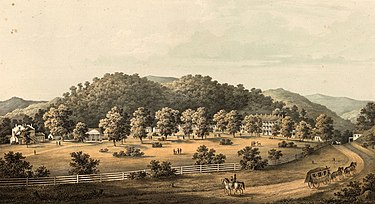


The Blue Sulphur Springs Pavilion is a historic Greek Revival structure in Blue Sulphur Springs, West Virginia, United States. The Pavilion is the only surviving structure from the Blue Sulphur Springs Resort, a 19th-century mineral spa, and was built to shelter the sulphur spring at the resort. The Pavilion consists of twelve columns holding up a square roof, and is primarily built with brick. It was built in 1834 along with the resort and was added to the National Register of Historic Placeson October 29, 1992.


The Pavilion began construction in 1834, but the year the Blue Sulphur Springs Resort opened June 1, 1838. The Blue Sulphur Springs Pavilion lies about 9 miles north of Alderson, West Virginia in a bucolic cattle pasture surrounded by mountains. The pavilion was originally built around 1834 by Dr. Alexis Martin in the Greek Revival style. Made of marble slabs five-feet wide, the sides enclosing the mineral spring are covered with brilliant pink sandstone. The pavilion was the heart of a nineteenth century resort complex, Blue Sulphur Springs, where Dr. Martin was the resident physician and administered the first mud baths. George Washington Buster owned the resort; it was named Blue Sulphur Springs for the iridescent color of the springs. The original resort included, along with the Pavilion, a three-story hotel with 200 rooms and a bathhouse. The resort was visited by several noteworthy guests in the 1840s, including Robert E. Lee, Henry Clay, and Presidents Andrew Jackson and Martin Van Buren. The resort was a prime spot for the promotion of relaxation and health, as the sulphur spring at the resort was considered to be a remedy for numerous diseases. 

Blue Sulphur Springs Resort began to decline in the 1850s due to competition from other resorts such as The Greenbrier and an economic downturn. The resort closed in 1859 and became Allegheny College, a school for Baptist ministers; the college closed in 1861. The resort buildings were used by both sides in the Civil War as a camp and hospital. In 1864, the Union Army burned the resort to prevent the Confederate Army from utilizing them; only the Pavilion survived the fire.

Charles's mother was Ann Chilton, born 1809, married in 1833, died in 1884, the daughter of Dr. Samuel and Lucinda Blackwell Chilton. Lucinda Blackwell was the daughter of Capt. Samuel Blackwell of the Revolution. The Chilton and Blackwell families repeatedly intermarried until they virtually became the same family.  Dr. Samuel Chilton was the son of Col. Charles Chilton, of Hereford, born 1741, and his mother was Elizabeth Blackwell. Col. Charles Chilton is likewise the ancestor of the famous Charleston Chilton family, to which belongs the present United States Senator, William E. Chilton. The Chilton family, back to the first settler from England, is given in full detail in McKenzies Colonial families of the United States, in which is also a cut and description of the Chilton coat of arms. The Blackwell family has been written up in the Times Despatch, October 1, 1910, and it gives a long line of ancestors.

Charles married Virginia W. Hamilton, daughter of Jacob and Delilah (Jarrett) Hamilton and the granddaughter of Maj. William Hamilton (his wife was a Miss Clemmons), who was one of the first settlers of Greenbrier, having been a soldier in the Revolution and having come from Augusta and settling near the Blue Sulphur Springs when there were no white men west of that Section. 

Five children were born of this marriage, two of whom are now living (as of 1917): 
  • Annie Hamilton Buster, who was married in 1890 to Louis Pitzer Housman, the son of Housman and Fannie Pitzer Housman; they now live in Pueblo, Col., and their children are Virginia Chilton, Robert Louis and Charles McFerrin. 
  • Emma Bernard Buster, who was married in 1895 to Henry Arthur Henderson, a civil engineer, of England, the son of Gen. John Henderson, of the English army, and Ellen Lushington Harris (see Burke's Peerage). Of this marriage three children were born; the eldest died in infancy. The two living are Cohn David Henderson and Eleanor Virginia Hamilton Henderson. 

  • Charles Blackwell married a second time to Mattie W. Cooper, the daughter of the Rev. A. W. Cooper, of the Methodist church, and Martha Gabbert, and from this marriage his children were Blackwell Chilton, born October 28, 1890, married August 27, 1910, to Mary Lillian Livesay; and 
  • Mary Evelyn Buster, born January 19, 1898

  • Charles Blackwell Buster has brothers and sisters as follows: 
  • Samuel, died young; 
  • Alexis Martin, born July 12, 1836, married Sarah Emma Hamilton, daughter of Maj. William Hamilton; 
  • Lucy Ann, born in 1840; Thomas Bernard, born 1845, and died in the service of the Confederacy as a member of Company B, Sixtieth Virginia Infantry, C. S. A.

  • Charles has always been an enthusiastic citizen of the best type, with a broad horizon of friends and acquaintances.  At present he lives quietly, enjoying the remembrance of a long life of local prominence and prestige. The two-volume work, Men of West Virginia, published in 1903, gives a great deal of space and detail of the life and family of Mr. Buster, with an excellent portrait of him.

William Buster/ Bustard (b.1694)
Major Claudius Buster (b.1733) Claudius Buster Jr.(b.1779) George Washington Buster (b.1801, VA) Charles Blackwell Buster (b.1838, VA)

Sunday, August 21, 2016

John E. Buster: The doctor that helped create embryo transfer


Computers weren’t the singular mind-blowing science reveal that came out of the 1980’s. As an alternative option for infertility, to that of test tube babies, was the embryo transfer. Dr. John E. Buster and his team not only grabbed headlines, but defined history. John Edmond Buster was born on July 18, 1941 at the seaside city of Oxnard, west of Los Angeles, and was named after his uncle and father. His grandfather, Edmond Sr., left rural Texas for urban California, during the height of the Roaring Twenties, to find steady pay and extended education for John’s father and uncle. Because his father, Edmond Jr., was a mechanical engineer, John had the encouragement and accessibility to attend college. He graduated from Stanford University within three years instead of four in 1962, and earned a medical degree and completed his residency at the University of California. His areas of specialties: obstetrics, gynecology, reproductive endocrinology and infertility.

In 1973, he took on two more life progressions. In late January, he married his sweetheart, Frances Bunn.  And, despite the tragic downturn of the Vietnam War unceremoniously ending with the withdrawal of troops in April, he patriotically joined the military as a lieutenant colonel. Serving out his two years, in part treating military wives, he left his yearly $11,434 salary to start earning about $60,000 a year when he returned to UCLA.  His pursuit in seeking improvements in women’s health led to a medical breakthrough.

John and his research team began to develop the embryo transfer procedure in 1982. For women who had unhealthy ovaries, carried genetic disorders, or couldn’t produce useful eggs, they were providing an additional option. What that entailed was an egg donation and insertion of a fertilized egg, or zygote, from a glass vessel, (the in virto tube,) into a syringe that pushed the zygote through a thin hose to deposit it into a fallopian tube. The differences between this procedure to that of other in vitro fertilizations “test-tube babies” at the time were that, one,  it required no surgeries to extract and insert the eggs, and, two, that the baby would not be biologically related to the mother. Instead, mothers would have the zygotes easily inserted, and donors would “flush out” their mature egg during their cycles.  The flushing out is a delicate procedure which a double-lumen needle extracts follicular fluid that holds the egg while saline fluid is exchanged in another channel into the follicle; a small, fluid-filled sac in the ovary that contains one immature egg. 

After forty-six attempts, on February 3, 1984, the Harbor-UCLA Medical Center announced the first live birth of a human baby, and three months later, a second birth followed. While the Dallas Morning News casually underrated the success as a “milestone,”  the Today Show, Good Morning America, Oprah Winfrey, Phil Donahue, the New York Times, People Magazine, and Time Magazine said otherwise.  

This exposure reinforced his goals. For the next forty years as he constructed his career, John was a professor of obstetrics and gynecology at UCLA, University of Tennessee, Baylor College of Medicine, and Warren Alpert Medical School of Brown University, and served on the Board of Directors and Scientific Board. He invested his experiences to help create a Silicon Valley medical device company, Previvo Genetics, Inc. His series of patents as one of his partners for Previvo Genetics, Inc. include a method for producing an in vivo environment suitable for human embryo transfer recovery and processing of human embryos formed in vivo, and uterine lavage for embryo retrieval.  In addition to infertility, he specializes in other female challenges such as ectopic pregnancies, hormone replacement, mood disorders, and so on.  Since the 1984 via in vitro fertilization, John and his team have been accredited to over 200,000 live births as recorded by the Centers for Disease Control.   In 2017, he has been inducted into ACOG Hall of Fame and the second Buster listed in America’s Who’s Who.

Today, John has only slowed down just a little bit. The aging doctor, who resembles the aging actor, Jonathan Banks, but without the facial hair and the intensely stern stare, maintains his connection in researching and consulting.  


INFERTILE WOMAN HAS BABY THROUGH EMBRYO TRANSFER
By SANDRA BLAKESLEE
The New York Times
Published: February 4, 1984

embryo transfer
LONG BEACH, Calif., Feb. 3— The birth of the first baby conceived in one woman's womb and carried to birth in another's without the use of ''test tube'' fertilization was announced here today by a team of California physicians.

The baby, a boy born about two weeks ago, ''is just beautiful,'' said the team leader, Dr. John E. Buster of the University of California at Los Angeles School of Medicine. He described the embryo transfer technique, long used in cattle but just now applied to humans, at a news conference at Long Beach Memorial Hospital. The technique does not require surgery, anesthetic or test tube fertilization of the egg, Dr. Buster said. A report of the birth appears in today's issue of The Journal of the American Medical Association.

In the procedure, an embryo that was just beginning to develop was transferred from one woman in whom it had been conceived by artificial insemination to another woman who gave birth to the infant 38 weeks later. The sperm used in the artificial insemination came from the husband of the woman who bore the baby.

Dr. Buster said the technique was different from ''test tube'' fertilization, which involves surgical removal of an unfertilized egg from a woman, fertilization of the egg in a laboratory dish, and implantation of the fertilized egg into the womb. Technique Is Described

Australian researchers last month reported the first successful birth in which an egg donated by one woman was fertilized and then implanted in an infertile woman. It was similar to the procedure announced today in that it used a donor's egg that had already reached the embryo stage and then was implanted in another woman. But the Australian case still required fertilization of the egg in a glass dish rather than in the donor's body.

Along with a half-dozen colleagues, Dr. Buster described the technique and his plans to establish the first ovum transfer clinic at Memorial Hospital this spring.

The hormonal cycles of the egg donor and recipient must be well matched, the physicians said. Five days after a donor is artificially inseminated, her uterus is flushed out and if a healthy embryo is present it is inserted immediately into the recipient's uterus. The embryo may consist of only 8 to l0 cells and would not be visible to the naked eye.

Donors and recipients are also matched by blood type, Rh factor, and hair and eye color. Beneficiaries of Procedure

transfer technique
The embryo transfer technique should prove desirable to women who have defective ovaries and thus produce no functional eggs of their own, who are tired of surgery attempts that have not yet worked or who may carry genetic disorders, Dr. Buster said. As long as the infertile couple is willing to accept a donated egg, the technique can be carried out in a doctor's office. Fertility and Genetics Research Inc., a Chicago-based company that helped develop the technique, announced plans to establish a national computer base to handle a stock of fertilized eggs. It has also applied for patents on the instruments used in transferring human embryos.

The company's right to such patents and to set up clinics across the country has been challenged by Jeremy Rifkin, president of the Foundation for Economic Trends in Washington, because the technique ''reduces the process of human reproduction to a commercialized product to be bought and sold in the marketplace.'' Mr. Rifkin said he planned a suit in patent court.

But Dr. Buster said the recipient mother, a woman in her 30's who had an eight-year history of infertility, is not upset over such issues. ''She is very happy and has a beautiful baby,'' he said.

The research team has attempted 46 transfers and had two successes. The second woman pregnant by the technique will be ready to give birth soon, he said, adding, ''We are very proud.''


(Standford University Yearbook, 1962)

Edmond Beatty Buster Jr (b.1918, Parker Co, TX) FATHER

Edmond "Bate" Beatty Buster Sr (b. 1891, Parker Co, TX,) GRANDFATHER

Green Newton Buster (b. 1858, Lawrence Co, AR) GREAT-GRANDFATHER

John Francis Buster (b. 1831, VA) 2ND GREAT-GRANDFATHER


Francis Beatty Buster (b. 1818, Scott, VA) 3RD GREAT-GRANDFATHER

John Buster Sr. (b.1755  Orange, NC ) 4TH GREAT-GRANDFATHER

William Buster Jr. (b.1729  Albemarle, VA ) 5TH GREAT-GRANDFATHER

William Buster Sr. (b.?? ) 6TH GREAT-GRANDFATHER


Sunday, August 14, 2016

Sheriff Sanford David Buster

Birth: Mar. 29, 1870

Death: May 20, 1938
*Sheriff Buster is noted for having been the first to “motorize” the Sheriff’s Office, in 1914 he purchased four Excelsior motorcycles for the deputies to use in performing their duties. And it looks like he may have known J.C. Penney! The Penney family lived in the same town Sanford was born, Hamilton, MO. It was, and still is, a small farming community where Penney's father was a Baptist preacher whom everyone knew. The Busters moved to the outskirts of Boulder, CO in Longmont when Sanford was 9. J.C. Penney ALSO moved to Longmont for health reasons as doctors feared he was on the verge of contacting TB. For a year, Penney worked for the Golden Rule dry goods store... the biggest one in the county... when Sanford lived in Allenspark, 30 miles apart, at the same time... more than likely being served by Penney before Penney moved to Wyoming to start his own business in 1899. Penney returned to Longmont in 1917 to open his J.C. Penney store on main street!


Sanford Buster was a farmer from Hygiene who made something of a career in local politics. Following his two terms as Sheriff, he served as deputy County Assessor and three terms as a County Commissioner. Sheriff Buster is noted for having been the first to "motorize" the Sheriff's Office, in 1914 he purchased four Excelsior motorcycles for the deputies to use in performing their duties. Sheriff Buster died in 1938. He and his wife Pearl are buried in Longmont's Mountain View Cemetery. Sanford and Pearl had the following children: Eston Louden, Sanford David Jr., Bernard Royal, Orion Ruth.

OBIT
Sanford D. Buster, prominent boulder county citizen, pioneer of the Longmont district, and former county commission and sheriff of Boulder county, died at his home near Hygiene Saturday, May 21, at 2:45 a.m. While he had been in poor health for some time and only recently returned to his home from the hospital, his death was sudden, and comes as a shock. During the night he suffered a heart attack and physicians were summoned, but before they could reach the bedside of the sufferer he had passed away.

Sanford David Buster was a native of Hamilton, Missouri, where he was born March 28, 1870, being 68 years, one month and 28 days of age at the time of his death. When the deceased was nine years old, the family came to Colorado, taking up their home at Pleasant View, southeast of Longmont, in 1870. The Buster children attended Pleasant View school and Sanford later graduated from the old Longmont college.

In 1893 Sanford Buster claimed as his bride, Miss Pearl Boyd, the wedding taking place in Erie. Some years later he moved into the Hygiene section and for the past 30 years the family has resided on the present Buster farm. In 1912 the deceased entered politics and was elected sheriff. He served with distinction and in 1914 was re-elected, serving in this capacity four years and declining the nomination for a third term. He returned to the farm after leaving office and in 1922 was elected county commissioner from the Longmont district and served in this capacity until 1934.

As a county commissioner Mr. Buster established an enviable reputation as a road builder, Boulder county roads being classed as the best in the state. It was through his efforts that the Longmont-Lyons road was oiled many years ago, the first road in northern Colorado to be so improved. Public Spirited Sanford Buster was interested in various public enterprises and for years was one of the directors of the the Boulder County Fair association; he was keenly interested in boys and girls rural club work, was instrumental in the construction of the club building at Roosevelt Park, and brought about the employment of a county agent for Boulder county.

The deceased was affiliated with the Congregational church, was a member of the A. F. & A. M., No. 14, Boulder, and the Boulder Knights Templar. Surviving relatives include his wife, Mrs. Pearl A. Buster; three sons, Eston L. Buster, Hygiene, Sanford D. Buster, Jr., San Francisco, and Bernard R. Buster, Milwaukee; one daughter Miss Orian R. Buster, Hygiene and one sister Mrs. Martin Gorce, Boulder. Three grandchildren also survive, Eston Louden Buster, Jr., Hygiene; Sanford David, Jr. and Phyllys Elaine, San Francisco. Funeral arrangements have not been completed.


William Loudon Buster (b.1838, Pulaski, KY) FATHER
Charles David Buster (b. 1809, Pulaski, KY) GRANDFATHER
Michael Sr. Buster (b. 1757, Russell, VA) GREAT-GRANDFATHER
William Jr. Buster (b. 1735, Albemarle, VA) 2ND GREAT-GRANDFATHER


Sunday, July 31, 2016

The Woods Clan: Mixing with the Busters

William Sr. had two of his sons marry into the Woods clan: William Jr. Buster, his oldest, married Jane Woods, and John, his third son, married Elizabeth Woods. William's grandson, Claudius Woods Buster- son of John- married his first cousin, Isabella Woods.


The Woods had altered their name from du Bois, whose ancestors came over from France sometime during the late 16th century, to the Anglican version of the name, which translates to "Woods". They were a family who came from a long line of nobility which gave them access to land grants and marrying into other noble families from England and Scotland during the two centuries prior to their last journey to the New World. Historically, the Woods WERE NOT IRISH NOR FULLY SCOTTISH despite living in Ireland, much like the Buster Clan. The Woods originated from France, to Yorkshire, England and then had immigrated to Meath, Ireland. Before the Woods made this migration, a significant attempt to establish English control in Ireland began by Henry VII in 1494. When the English king dismissed the earl of Kildare from his post as lord deputy, and Henry VII sent Sir Edward Poynings in his place with a full contingent of English administrators. Poynings summoned a parliament at Drogheda in December 1494 which passed legislation to assert English supremacy, including the forbiddance of marriage between English colonists and the Irish. These acts, subsequently known as the Statutes of Drogheda (or more informally as Poyning's Law), remained in force until 1782.


Interesting contuer arugument about the myths regarding Tropper Woods, and the Woods linage. Click here for full document


So, John Woods Sr. (1628-1710) married Isabella Bruce (1628-1686), who was of Scottish decent, and which the Bruce clan can trace their roots, back to Edward the Bruce, former high King of Ireland, brother of Robert the Bruce, King of Scotland. The Woods family members, who married in Ireland, only wedded others who were also of English, as well as Scottish, heritages, including the Campbells. Immigrating to Meath just before the mid 17th Century, they only produced two generations prior to leaving to the New World. They, like the Busters, WERE NOT SCOT-IRISH, nor hereditarily Irish despite living in a community with this mixture such as Ulster, because of their English roots as forbade by the English laws. Culturally, however, no doubt they picked up some Irish habits which included the language, the dialect, food, and music, which made their American descendants come to the conclusion that the Woods and Busters were of Irish decent. But based on Woods' Presbyterian and nobility status, one could envision the division still among the Gaelic and Celtic populace.

When politics infringed on them finically, with taxes that were increased in the early 18th century during a series of droughts that harbored little profit, and infringed religiously, especially being surrounded by the Anglican and Catholic churches, the pragmatic Woods migrated to America, first arriving in Pennsylvania, then to the Shenandoah Valley, Virginia. It was in America that the Woods finally could marry outside of the English laws. Because of their background, the Woods were a prominent family who had dinned with Thomas Jefferson's family in Albemarle, County. But don't be fooled by their privileged background into presuming that were not a hardy group. Living on the American frontier they toiled to survive and fought for their beliefs. And although they were not the typical Scot-Irish, but their migration in America followed the trails of the Scot-Irish and even German migrations.


MICHAEL MARION WOODS:
He came to Albemarle County about 1734 and settled near Woods Gap, now called Jarman's Gap in the Blue Ridge Mountains. He received land patents for 1,300 acres near Lickinghole, Mechum's River and Beaver Creek, embracing the present Mechum's Depot and Blair Park. At the same time he also purchased 2,000 acres from Charles Hudson on Ivy Creek. The first Presbyterian Church as built at Mountain Plains and named for Michael's home. His remains were buried about 100 yards from his home; however, during the Civil War the stone was broken. A chip was found which confirms his birth date.

His will mentions 3 sons and 3 daughters: Archibald, John, William, Sarah (wife of Joseph Lapsley of Rockbridge), Hannah (wife of William Wallace) and Margaret (wife of Andrew Wallace). Sons Archibald and John were the executors.

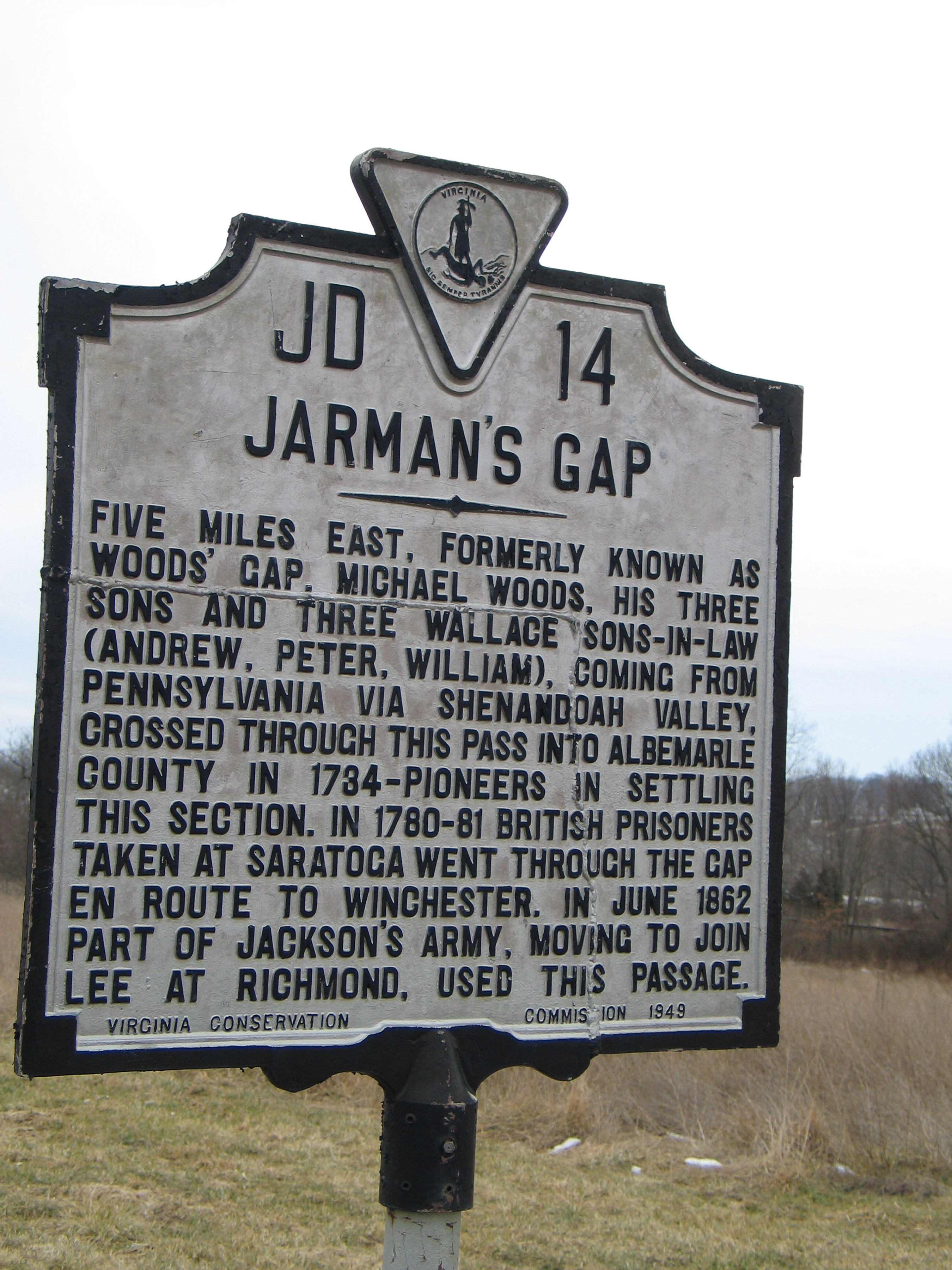
(JD14) JARMAN'S GAP

Five miles east is Jarman's Gap, formerly known as Woods' Gap. Through this pass Michael Woods, his three sons, and three sons in law (Andrew, Peter, William Wallace), coming from Pennsylvania via Shenandoah Valley, crossed into Albemarle County in 1734; pioneers in settling this section. In 1780 to 1781 British prisoners taken at Saratoga went through the gap en route to Winchester. In June, 1862 part of Stonewall Jackson's Confederate army, moving to join Lee at Richmond, crossed the mountain here. (Route 340, 1.2 miles north of Waynesboro).

From a book "Pioneer Strength, etc" page 26 is an account of the early Woods Family.

"The Woods family of Ireland in early 18th century became involved in a time of great movement. The family being dissenters and Presbyterians like many in the same place and time, longed to escape persecution and the religious bigotry of England. To make a new life in the American colonies became the dream in so many minds because it was a promise of freedom. This particular family named Woods are thought to be of pure English or Anglo-Scotch blood who, prior to 1650 were connected with the English Established Church. Life for them in Ireland was eventually unbearable. So it was that in 1742 did Michael Woods along with his brothers and sister set sail for the New World."

From "The Daily Progress" Charlottesville, Virginia, 1762-1962.
Michael Woods Led a Band of Settlers
Most of Albemarle's first settlers followed a gradual westward movement from the Tidewater.  Mighty Michael Woods did not.

Jarman's Gap

In 1734 this ancestor of countless local residents and scores of western pioneers brought a band across the Blue Ridge Mountains from the Valley of Virginia.  They had come from Pennsylvania traveling over 200 miles and are believed to have been the first whites to come through Woods' Gap - now Jarman's Gap - by the old Indian trail. There were 25 or 30 of them. Michael's wife, Mary Campbell, his sons and his sons-in-law and their families. They took up large holdings from Greenwood to Ivy. In 1737 Woods entered a claim for 1,300 acres on Mechum River and Lickinghole Creek. He also purchased 2,000 acres on the head waters of Ivy Creek.  Woods was born in the north of Ireland in 1684 and came to this country "sometime in the decade of 1720. Landing on the banks of the Delaware, he spent some years in Lancaster County, Pa., thence ascended the Valley of Virginia and crossed the Blue Ridge"  His home was near the mouth of Woods Gap and there he was buried in 1762 in the family burying ground a short distance from the dwelling. His will mentioned six children, three sons and three daughters. Historians say there is evidence that there were four other children, two sons and two daughters.

Miss Mary Rawlings, in her books "Ante-Bellum Albemarle," wrote that the family was Scotch or Scotch-Irish, a family of education and refinement.  One of Michael's daughters, Hannah, was married to William Wallace who settled on the Piedmont plantation in the Greenwood neighborhood. This land remains in the hands of the Wallace family. While many of the family descendants remained here, many more joined the westward movement. They went to the other areas of Virginia then being settled, and they went west and south-to Missouri, Kentucky, Mississippi, Tennessee and Ohio-where they were prominent in the early affairs and government of those areas. Of Michael Woods Home, Miss Rawlings wrote "the original name of the plantation was Mountain Plains, the Mountain Plains Church having been built on a part of the land and named in commemoration. "With the passing of the property to Chief Justice John Blair prior to 1788, the name of the home was changed and it has since been known as Blair Park."

CHRONICLES OF THE Scotch-Irish Settlement IN VIRGINIA EXTRACTED FROM THE ORIGINAL COURT RECORDS OF AUGUSTA COUNTY 1745-1800
AUGUSTA COUNTY COURT RECORDS. ORDER BOOK No. XXIV.
page 304
Samuel Smith vs. Beaty.--Mr. Michael Woods, formerly of Paxtunk, Pennsylvania. Account dated 1733. Thomas Renich, on 1st September, 1750, deposed: About 8 years ago, at his own house, he saw and spoke with said Smith and Robert Buchanan, the then Sheriff of Lancaster County. He heard Smith (then merchant at Connoy) say, &c., several accounts: Smith vs. James Cathey, 1737; Smith vs. Adam Thomson, 1736-7-8; Smith vs. William Robinson, 1739; Smith vs. Richard Woods, 1738; Smith vs. Mrs. Margaret McDowell, 1737; Smith vs. Mrs. Mary McDowell, 1737; Smith vs. Michael Woods, 1738-9; Smith vs. John Maxwell; Smith vs. Samuel Woods, 1734-5-8; Smith vs. Francis Beaty, 1735-6; Smith vs. John Christian, 1737; Smith vs. Robert Christian, 1733-4-5-6; Smith vs. Randell McDaniel; Smith vs. William Hutchinson; Smith vs. George Hutchinson. All sworn to by Samuel Smith, late of County of Lancaster, before a Justice, in Philadelphia, 13th October, 1743.

More About MICHAEL MARION WOODS:
Census: Bet. 1725 - 1726, Listed as paying tax in Donegal Twp., Lancaster Co., PA; tax rate of 2 shillings
Christening: 1684, Ulster, Ireland
Immigration: 1724, To Pennsyvania
Movement: 1732, To Virginia
Probate: Jun 1762, Albemarle Co., VA
Will: 24 Nov 1761, Albemarle Co., VA
Daughters of the American Revolution Magazine about Michael Capt "of Botetourt" Woods

More About MARY CAMPBELL:
Alt. Name: Margaret
Cause of Death (Facts Pg): Killed by Indians; the first white woman killed in the Shenandoah Valley
Christening: Cannongate, Edinburgh
Title (Facts Pg): Lady
Dunbarton Castle

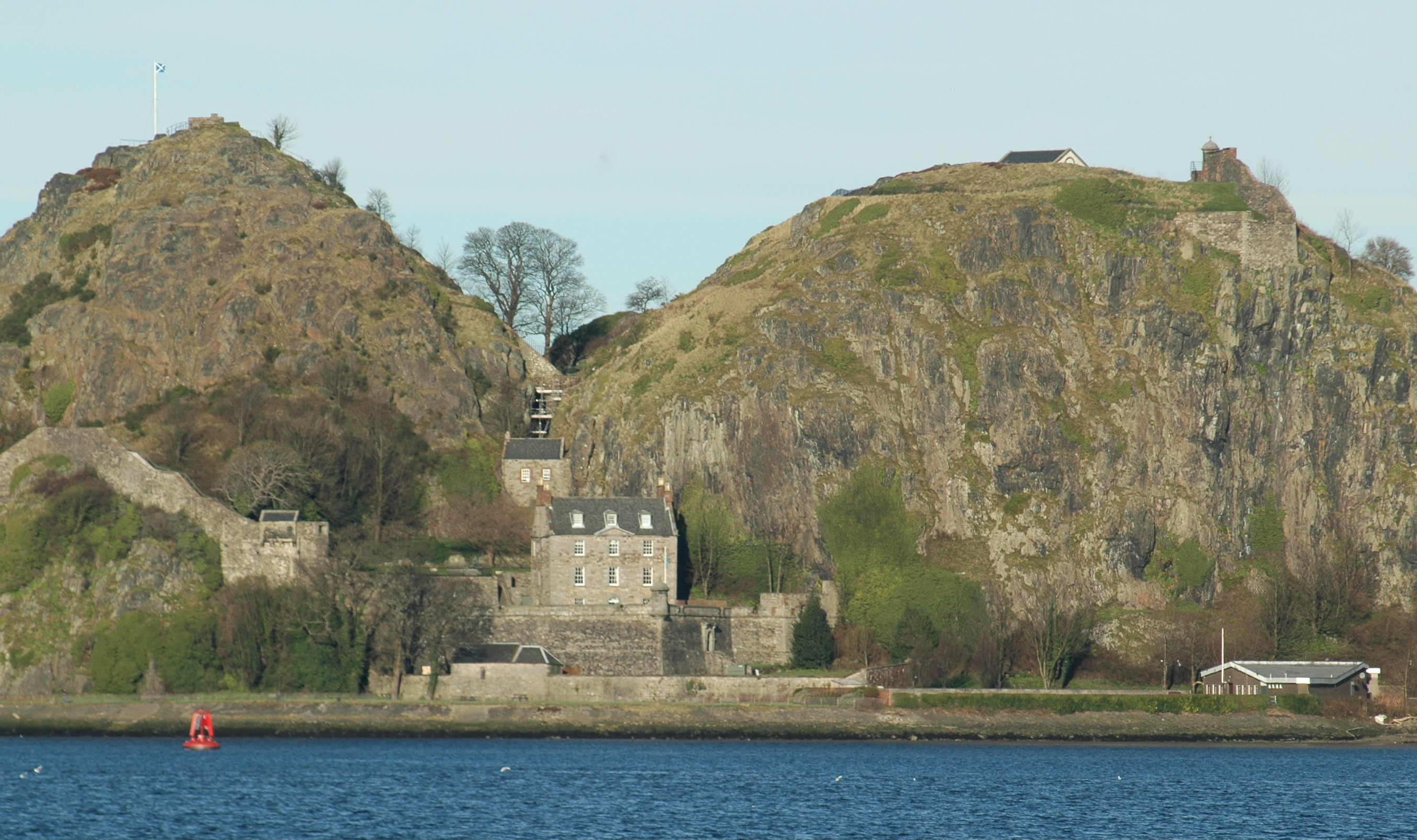
Sir James Campbell, the 3rd Baron of Auchinbreck, died in 1752, imprisoned in Dunbarton Castle for his part in the 1745 rising to restore the Stuarts. His will named daughters Elizabeth Woods and Mary Woods, as well as a Stuart daughter, and sons, including Gilbert Campbell. At least 6 of his children emigrated--for good reasons. The only reason the Baron didn't lose his head along with a large part of his lands in 1745/6, was because of his great age and thus because it could be claimed his mind had gone a little. However, he did forfeit the baronial seat--at Inveraray in Argyllshire, which is why these Campbells were sometimes referred to in their day as "of Argyll--meaning the location." Since it had originally come to the Auchinbreck line by grant of their superior lord the REAL "Argyll (Lords of Lochawe who became Earls of Argyll), it was forfeited back to the by then Duke of Argyll.

For about 300 years, however, Inveraray had been the property of the lairds, then baronets, then Barons of Auchinbreck and the last three generations of that line were closer to Cawdor than to Argyll. Peter Wallace's mother was Elizabeth Woods married to SAMUEL Wallace--not Peter Wallace Sr.--there was NO earlier Peter Wallace who was a father of the Peter Wallace of Rockbridge County. He is NEVER listed as "Jr." in either the Maryland, Pennsylvania or Virginia records. He and his brother Adam, were living in Cecil County, Maryland when Capt. Samuel Wallace, sea captain and merchant made his last voyage between Baltimore, Philadelphia, and Irish ports--and Glasgow (he made several voyages among these places in the 1720's) in 1725.

Peter Wallace and others were living with the "widowed Elizabeth Wallace" mother of Adam, when Adam died and left a widow and baby daughter and named his mother executor. Adam Wallace was a seaman who did serve in "Admiral Vernon's War" and apparently did die as a result of service in the "Battle of Cartagena." This is from Cecil County, Maryland and Lancaster County, PA records (this was the area of the Mason-Dixon line fight between Pennsylvania and Maryland and raiding parties carried off records back and forth with the ultimate result that some records have copies, now in both counties and states).

Dunshaughlin Castle in Meath, Ireland
There is a record for Martha Woods being married in 1739 in Lancaster County, PA but no record for younger sister Sarah, which supports an Augusta County record in which it is implied that Sarah married Joseph Lapsley in Virginia in about 1741. Since Augusta County was not formed until 1745, and Albemarle was formed only the year before that, the marriage probably was in the early Orange County or Goochland County records. To carry this all a bit further. Michael, Samuel and Elizabeth Woods--and several other brothers and one more sister, were all children of Sir John Woods and his cousin--Elizabeth WOODS, of Dunshaughlin (note the spelling--the parish still exists in County Meath) Castle in County Meath. It was Elizabeth Woods who inherited the castle--from her parents Sir Thomas Woods and Elizabeth PARSONS. 

More About MICHAEL WOODS and MARY CAMPBELL:
Marriage: 1704, Scotland

Children of MICHAEL WOODS and MARY CAMPBELL are:
19. i. MAGDALENA6 WOODS, b. 1706, Castle Dunshauglin, Ireland; d. 1810, McDowell Family Cemetery, Timber Ridge, Albemarle Co., VA.
20. ii. ARCHIBALD WOODS, SR., b. 11 May 1706, Castle Dunshauglin, Meath, Ireland; d. 1783, Roanoke Co., VA.
21. iii. MICHAEL WOODS, JR., b. Bet. 1709 - 1719, Dunshauglin Castle, Meath, Ireland; d. 11 Mar 1777, Buchanan, Botetourt Co., VA.
22. iv. HANNAH WOODS, b. 1710, Castle Dunshauglin, Meath, Ireland; d. Greenbrier, Albemarle Co., VA.
23. v. JOHN WOODS, b. 19 Feb 1711/12, Castle Dunshauglin, Meath, Ireland; d. 14 Oct 1791, Albemarle Co., VA.
vi. GEORGE WOODS, b. 1713, Dunshauglin Castle, Ireland.
24. vii. MARGARET WOODS, b. Bet. 1714 - 1720, Dunshauglin Castle, Meath, Ireland; d. Bet. 1756 - 1761, Thornhill, Albemarle Co., VA.
25. viii. WILLIAM WOODS, b. 02 Nov 1715, Castle Dunshanglin, Meath, Ireland; d. 12 Apr 1783, Greenbrier Co., VA.
26. ix. SAMUEL WOODS, b. 1718, Castle Dunshanglin, Meath, Ireland; d. 11 Mar 1777, Buchanan, Botetourt Co., VA.
27. x. CHARLES WOODS, b. Abt. 1719, Ireland; d. Bef. May 1761, Rockbridge Co., VA.
xi. ROBERT WOODS, b. 1719, Castle Dunshanglin, Ireland; d. 1779, Buffalo Creek, Augusta, GA.
28. xii. MARTHA WOODS, b. 1720, Dunshaughlin Castle, Meath, Ireland; d. 1790, Thornhill, Rockbridge Co., VA.
29. xiii. RICHARD WOODS, b. 1721, Meath, Ireland; d. Bet. Mar - Apr 1778, Buffalo Creek, Augusta Co., VA.
30. xiv. ANDREW WOODS, b. 1722, Castle Dunshauglin, Meath, Ireland; d. 1781, Botetourt Co., VA.
31. xv. SARAH WOODS, b. 1724, Castle Dunshanglin, Meath, Ireland; d. 1792, Greenbrier Co., VA.

Notes for WILLIAM WOODS:Took an active part in the Colonial wars, holding the rank of Colonel. (Mary Kinney research notes, 8/04/99)

Served a a private in Capt. George Gibson's company, Albemarle Co., Virginia troops. (From DAR ID No. 117679)

He received military land grants in Greenbrier Co., VA, Madison Co., KY and some in Scioto, OH. Five of his sons were commissioned in the Revolutionary War. (Source: "Wallace", by George Selden Wallace, Michie Co., Charlottesville, VA 1927)

More About WILLIAM WOODS:
Alt. Birthdate: 1705
Movement: In 1758 moved from Albemarle Co., VA
Occupation: Lieutenant in the frontier Indian wars
Probate: 16 Apr 1782, Greenbrier Co., VA

More About WILLIAM WOODS and SUSANNA WALLACE:
Marriage: 1732, Lancaster Co., PA

Children of SUSANNA WALLACE and WILLIAM WOODS are:
i. SUSANNAH7 WOODS, d. Died in childhood.
40. ii. ADAM C. WOODS, SR., b. 12 Aug 1742, Greenbrier Co., WV; d. 04 Aug 1826, Howard Co., MO.
41. iii. MARY WOODS, b. 14 Apr 1744, Albemarle Co., VA; d. 1810, Lincoln Co., KY.
42. iv. WILLIAM WOODS, b. 31 Dec 1744, Albemarle Co., VA; d. 1837, Albemarle Co., VA.
43. v. MICHAEL WOODS, b. 1746, Greenbrier Co., WV; d. 03 Jul 1809, Madison Co., Kentucky.
44. vi. JOHN WOODS, b. 1751, Albemarle Co., VA; d. 16 Oct 1815, Franklin Co., TN.
vii. ANDREW WOODS, b. 1753, Blair Park, Albemarle Co., VA; d. 1813, Franklin Co., Tennessee26; m. HANNAH REID27, Kentucky; b. 1754, Virginia; d. 10 Jul 1835, Franklin Co., TN28.


Genealogy Gophers: Free Genealogy Book Search Digital Archives: Free Book Search