Showing posts with label State: Colorado. Show all posts

Monday, October 26, 2020

The Northern Coal Field War and the Battle at the Hecla: Sheriff Sanford Buster

The Louisville Historian
Winter 2014
by Ron Buffo
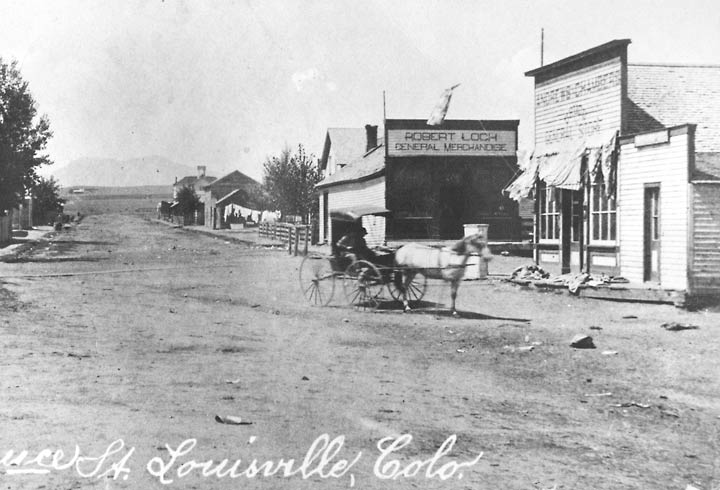

The discovery of massive coal deposits in Colorado beginning in the 1860s combined with the increased need for energy resources to fuel the industrial juggernaut of the United States created an opportunity for incredible economic growth. In order to utilize the subterranean energy, large numbers of workers were necessary to extract the coal and, beginning in the 1880s, the immigration of foreign laborers was encouraged and made real. Early immigration (1840-1860) brought people from Northern Europe and later immigration (1860-1890) added Southern and Eastern European countries as major contributors to the workforce in the United States. Colorado miners in the Southern fields worked primarily for the Colorado Fuel and Iron (CF&I) company owned by John D. Rockefeller whereas miners in the Northern fields worked for a variety of operators. The most prominent company in the Northern fields was the Rocky Mountain Fuel Company owned by John Roche. What the owners had in common was their great dislike of labor unions (particularly the United Mine Workers of America) and their concerted effort to stop any organizing or influence attempted by the unions. Giving in to the demands of organized labor such as increased pay, shorter work days and weeks, better safety conditions, and a check weigh man from the ranks of the workers only decreased the profits of the company. By 1910 the UMWA, after years of trying to negotiate with the coal companies in Northern and Southern Colorado, declared a strike in the Northern fields prompting the walkout of over 3,000 miners. The Southern fields would follow in 1913. (Following the strike declaration, mine owners proceeded to fence off the mine properties, install searchlights and machine guns on towers, hire professional detective agencies to secure the compounds, and provide onsite living accommodations for the strikebreakers and their families.)


After the 1910 strike declaration there would be four years of animosity, hatred, and violence between striking miners and mine operators, strikebreakers, Colorado National Guard (also known as the Militia), and detective agencies. The Ludlow Massacre on Monday, April 20, 1914 and the news of the deaths of four children and eleven women at the hands of the Colorado Militia helped to incite the Northern Field miners. Along with the three previous years of tension with the Baldwin-Felts Detective Agency the Northern Fields were ripe for violence. An explosive mixture was made up of spotlights shining into town at all hours of the night, armed detectives walking the streets of Louisville and Lafayette, gunfire being exchanged between the Hecla Compound and town, and the ever present “scabs” and their families. (The location of the Hecla was at the present location of the Louisville King Soopers at 1375 E. South Boulder Rd.) The most objective account we have of the events in Louisville leading up to and including April 27th, 1914 comes from the deposition of Boulder County Sheriff Sanford D. Buster. He had been Sheriff since January 1913, was well aware of the explosive situation in the coalfields in his jurisdiction, and was compelled to be fair-handed with the strikers and coal mine operators alike. Buster’s deposition shows a chronology of events beginning on Thursday the 23rd with his visit to the Gorham Mine in Marshall to investigate armed strikers where he found “a house full of men armed with rifles.” They said they were getting ready to defend themselves against “scabs” who were bent on killing them. From Marshall, Sheriff Buster went to nearby Superior, back to Marshall, and finally arrived in Boulder on Friday, April 24th at 2:15 a.m. Upon his arrival in Boulder, Buster was informed that shots were fired at the Gorham Mine so he quickly went back to Marshall but was not successful in finding the culprits. Buster went back and forth all Friday night the 24th and Saturday the 25th between Louisville, Marshall, and Superior in an attempt to stop potential violence. 
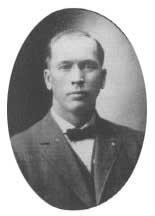

The Sheriff continued his diligent appraisal of the communities at the request of Governor Ammons and District Attorney George Carlson of the 8th Judicial District. (Carlson would win the election for Governor in November of 1914.) On Monday the 27th Buster received a phone message from Carlson telling him that the mine operators and the UMWA came to an agreement that turned over control of searchlights and machine guns at the various mine compounds to the Sheriff. This was an obvious attempt to defuse the tensions and Buster immediately sent deputies to the Mitchell, Gorham, Simpson, and Industrial mines. The Sheriff would personally take over the searchlight and machine gun at the Hecla. 

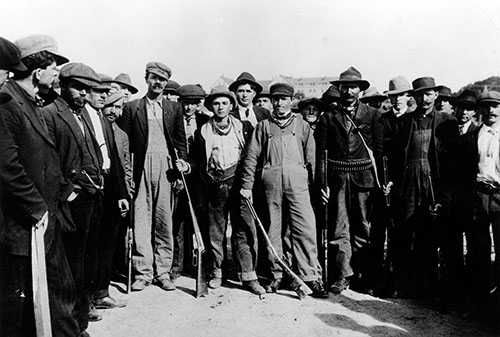
Buster left Boulder at 8:30 p.m. on the 27th and arrived at the Union Hall (just south of present day Blue Parrot Restaurant) at 9:00 p.m. To his amazement he found approximately 400 highly agitated miners and, after explaining the plan to secure the mines with deputies, was met with some agreement but also with a rousing call to arms by Joe Potestio, the local UMWA secretary.  3 Potestio said that this agreement was a ploy by the company to tie up the Sheriff and his men and then shoot up the town without restraint. The meeting ended around 10:00 p.m. and shortly after Buster was informed that there was shooting at the Vulcan mine in Lafayette. Without hesitation the Sheriff told Deputy Ivan Criss, Potestio, and local President Pat Powers that they were to accompany him to the Hecla on foot. Potestio refused to go and Powers was later sent back to call UMWA  leaders Edward Doyle and John Lawson. Buster and Criss made their way from the Union Hall to the Louisville Depot and proceeded north on the railroad tracks on their way to the Hecla Compound. What unfolded before their eyes was the appearance of scores of miners running, with rifles, from their houses toward the railroad tracks and firing at the Hecla. 


(These .30/.30 repeating rifles had been shipped to Colorado by the Union and handed out to the striking miners. It was a common occurrence in the months leading up to this day for striking miners and detectives who manned the Hecla Mine compound to trade gunfire, usually at night. The spotlight from the mine would be directed towards town for harassment purposes and would be met with gunshots from Louisville. Those families who lived on the northeast border of Louisville proper were forced to sleep in their cellars and some even relocated young children to other families for their protection. Mike Buffo was in his outhouse, located at the corner of South Street and La Farge Avenue, when a bullet from the Hecla penetrated it and creased the top of his hand. For years after the event, houses in town had visible bullet holes in their siding. Additionally, it was common practice for passengers on the Interurban train going to and from Boulder through Louisville to be ordered to lie on the floors of the train to avoid being shot during the random firefights taking place.) The Sheriff and his Deputy had made it half way to the Hecla when they were forced to head northeast across the field to the house of town marshal Al McDonald. Buster and Deputy Criss left McDonald’s house and proceeded northeast to the Hecla compound and, unfortunately, were caught in the crossfire between the striking miners in town and company detectives in the mine. The two men had to take refuge in a nearby house and were pinned down by the continuous gunfire until 3:30 a.m. when there was a lull in the action. From the house Buster was able to call the Hecla compound to ask them not to shoot into town and that he was coming to the mine. During this time striking miners had taken positions in an empty ditch bordering the north side of the mine site using it as a defensive trench and, perhaps, a jumping off point to attack the compound. The ditch was flooded by the farmer (Rosenkrantz) through his own initiative or coercion by a command by the compound guards. Three striking miners would be wounded during the “attack” on the Hecla from gunfire directed by Baldwin-Felts guards in the compound. 

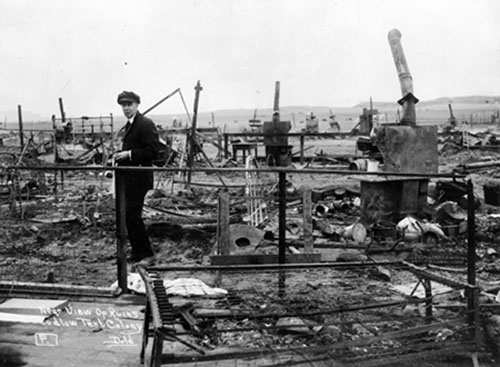
The gunfire began again at 4:00 a.m. with less intensity and Buster was able to go back and forth between the Rex #1 mine and the Hecla. The shooting stopped between noon and 12:30 on Tuesday the 28th and Buster was able to enter the Hecla compound to assess the damage. Photos show numerous bullet holes in the mine boarding house and company workers’ houses. Thousands of bullets had been expended the previous night and Buster would find two strikebreakers wounded inside the Hecla compound and one strikebreaker dying. Estimates at the time  reported that in excess of 25,000 rounds had been fired. 


After hearing about the events in Louisville, “concerned” citizens from Boulder made an attempt to recruit armed volunteers to help the Sheriff regain control of the situation. While that did not happen, reaction from the state was immediate with orders from Governor Ammons to send the National Guard from Canon City to Louisville the next day on April 28th. These were the very same soldiers who participated in the violence at Ludlow, so there was great anxiety in Louisville about what could happen here. Outside of Louisville the crew of the train carrying the 128 soldiers refused to continue, so the trainmaster and dispatcher took over. The train was fired upon and the Militia walked the rest of the way to town, marched through town, and encamped at the Hecla. In those first days following the violence, General John Chase, commander of the Colorado National Guard, closed all of the saloons in Louisville and an attempt was made to disarm the miners. Also, additional Colorado Militia members were brought to Louisville from Boulder and Longmont, bringing the total to 250 men. (Company D of the 3rd Colorado Cavalry out of Boulder had the dubious historical distinction of having participated in the Sand Creek Massacre in 1864, although these men in 1914 were far removed from that event.) 

On May 3rd, after a request from the Governor, the Twelfth U.S. Cavalry with 158 troops arrived from Fort Robinson, Nebraska and took over security detail from the Colorado Guard to the great relief of the citizens. They were greeted with the local brass band and scores of people from Louisville and Lafayette came out to see the troops who would stay for approximately one year. During that time the military command would confiscate weapons and ammunition and were able to bring a semblance of peace to the surrounding areas. The strike would continue until December 1914 with the result that the miners could return to work but without any of their demands being met. The length of the strike, biased publicity, and popular opinion against them made it difficult for the strikers to make much headway so most were simply happy to get their jobs back. After the Long Strike there would be more labor conflict, wages would slowly increase, working conditions remain extremely dangerous, and miners would continue to die and suffer horrific injuries. (Between 1900 and 1914 an average of 93 men would die in Colorado coal mine accidents per year. In 1910 there were an extraordinary 323 deaths. In 2013 there were 20 deaths in coal mine accidents in the United States.) 

Sheriff Sanford Buster showed tremendous courage in dealing with the volatile factions of strikers, detectives, and militia and it is remarkable that he didn’t lose his life when caught in the crossfire on that Monday night in 1914. He tried to remain as neutral as possible within the law and it is likely, had someone else been in his position, there would have been more injuries and loss of life. After being Sheriff for two terms, Buster was Deputy County Assessor and County Commissioner. He died in 1938. 

https://www.louisvilleco.gov

Sunday, August 14, 2016

Sheriff Sanford David Buster

Birth: Mar. 29, 1870

Death: May 20, 1938
*Sheriff Buster is noted for having been the first to “motorize” the Sheriff’s Office, in 1914 he purchased four Excelsior motorcycles for the deputies to use in performing their duties. And it looks like he may have known J.C. Penney! The Penney family lived in the same town Sanford was born, Hamilton, MO. It was, and still is, a small farming community where Penney's father was a Baptist preacher whom everyone knew. The Busters moved to the outskirts of Boulder, CO in Longmont when Sanford was 9. J.C. Penney ALSO moved to Longmont for health reasons as doctors feared he was on the verge of contacting TB. For a year, Penney worked for the Golden Rule dry goods store... the biggest one in the county... when Sanford lived in Allenspark, 30 miles apart, at the same time... more than likely being served by Penney before Penney moved to Wyoming to start his own business in 1899. Penney returned to Longmont in 1917 to open his J.C. Penney store on main street!


Sanford Buster was a farmer from Hygiene who made something of a career in local politics. Following his two terms as Sheriff, he served as deputy County Assessor and three terms as a County Commissioner. Sheriff Buster is noted for having been the first to "motorize" the Sheriff's Office, in 1914 he purchased four Excelsior motorcycles for the deputies to use in performing their duties. Sheriff Buster died in 1938. He and his wife Pearl are buried in Longmont's Mountain View Cemetery. Sanford and Pearl had the following children: Eston Louden, Sanford David Jr., Bernard Royal, Orion Ruth.

OBIT
Sanford D. Buster, prominent boulder county citizen, pioneer of the Longmont district, and former county commission and sheriff of Boulder county, died at his home near Hygiene Saturday, May 21, at 2:45 a.m. While he had been in poor health for some time and only recently returned to his home from the hospital, his death was sudden, and comes as a shock. During the night he suffered a heart attack and physicians were summoned, but before they could reach the bedside of the sufferer he had passed away.

Sanford David Buster was a native of Hamilton, Missouri, where he was born March 28, 1870, being 68 years, one month and 28 days of age at the time of his death. When the deceased was nine years old, the family came to Colorado, taking up their home at Pleasant View, southeast of Longmont, in 1870. The Buster children attended Pleasant View school and Sanford later graduated from the old Longmont college.

In 1893 Sanford Buster claimed as his bride, Miss Pearl Boyd, the wedding taking place in Erie. Some years later he moved into the Hygiene section and for the past 30 years the family has resided on the present Buster farm. In 1912 the deceased entered politics and was elected sheriff. He served with distinction and in 1914 was re-elected, serving in this capacity four years and declining the nomination for a third term. He returned to the farm after leaving office and in 1922 was elected county commissioner from the Longmont district and served in this capacity until 1934.

As a county commissioner Mr. Buster established an enviable reputation as a road builder, Boulder county roads being classed as the best in the state. It was through his efforts that the Longmont-Lyons road was oiled many years ago, the first road in northern Colorado to be so improved. Public Spirited Sanford Buster was interested in various public enterprises and for years was one of the directors of the the Boulder County Fair association; he was keenly interested in boys and girls rural club work, was instrumental in the construction of the club building at Roosevelt Park, and brought about the employment of a county agent for Boulder county.

The deceased was affiliated with the Congregational church, was a member of the A. F. & A. M., No. 14, Boulder, and the Boulder Knights Templar. Surviving relatives include his wife, Mrs. Pearl A. Buster; three sons, Eston L. Buster, Hygiene, Sanford D. Buster, Jr., San Francisco, and Bernard R. Buster, Milwaukee; one daughter Miss Orian R. Buster, Hygiene and one sister Mrs. Martin Gorce, Boulder. Three grandchildren also survive, Eston Louden Buster, Jr., Hygiene; Sanford David, Jr. and Phyllys Elaine, San Francisco. Funeral arrangements have not been completed.


William Loudon Buster (b.1838, Pulaski, KY) FATHER
Charles David Buster (b. 1809, Pulaski, KY) GRANDFATHER
Michael Sr. Buster (b. 1757, Russell, VA) GREAT-GRANDFATHER
William Jr. Buster (b. 1735, Albemarle, VA) 2ND GREAT-GRANDFATHER


Tuesday, July 5, 2016

Budd Leland Buster


*B-Western Hollywood actor, Budd Buster, was 1st cousin, 3 times removed to Cole Younger of the James-Younger gang. His great-grandmother, Lucy Younger, was Cole's father's sister!

Budd Leland Buster (14 June 1891 – 22 December 1965), briefly was an American actor known for western films. Since his first film credit in 1935, he appeared in 304 films. He was born in Colorado Springs, Colorado and died in Los Angeles, California. As Henchman Coffee, Buster appeared in Westward Ho in 1942 and his career begun in 1933. Buster also appeared on television. On Rotten Tomatoes, Buster's highest-rated film was in Bus Stop, a 1956 film. On the same website, his lowest-rated film was the 1953 It Came from Outer Space, with 81%. His final film appearance was in Guns of the Timberland in 1960.

Wiry, feisty Budd Buster was one of the most prolific…and talented…character actors to ever appear in B-westerns. Old timer, outlaw henchman, townsman, the leading lady’s father, military officer, scout, newspaper editor, store clerk, lawman, even sidekick a few times…Budd did it all in over 250 B-Westerns for over 20 years from 1933-1960, appearing in a staggering 32 movies in 1937. Other years from ‘35-‘46 he was in 20 or more! (Oddly, Budd took a several year hiatus from 1949 to the mid ‘50s.)

Budd, a name he adopted, was born Leland Buster in Colorado (probably near Colorado Springs) June 14, 1891 (some references list 1892 but in Budd’s own handwriting he listed 1891 on his 1917 WWI draft registration card.) His parents were John M. Buster and Anna (Annie) Moore Buster, both from Missouri. By the 1900 census the family, including Leland’s younger (by one year) sister, Demple, and his grandmother on his father’s side, was living in Colorado Springs. By 1920 Leland/Budd was married to Mary with two children, Mary Jane (4) and John (1), and was employed as a driver at a livery house in Ivywild, CO.

At some point it’s believed Budd got into vaudeville which led to film work by 1933, as one of his greatest talents was his ability to apply makeup, giving him wide latitude in portraying various characters. That expertise allowed him to play multiple roles in several films. In Bob Steele’s “Cavalry” (‘36 Republic) Budd had the titular role of Steele’s wagon boss sidekick as well as Abraham Lincoln in silhouette. In Montie Montana’s “Circle of Death” (‘35 Kent) Budd is a wagon train scout and a storekeeper. He’s a trading post operator as well as a waiter in the barroom in Bill Cody’s “Six Gun Justice” (‘35 Spectrum). For Hoot Gibson’s “Cavalcade of the West” (‘36 Diversion) Budd is a stage guard and an Indian. He was a rustler and a townsman in “Between Men” with Johnny Mack Brown (‘35 Supreme) This chameleonic ability also kept Budd in demand by national ad agencies who used him on national billboards for Studebaker, Eastside Beer and others. Studio-wise, Budd was everywhere, but PRC and Monogram might have gone out of business if not for Budd’s participation. As stated, Budd did it all. We’d have to devote an entire issue to Budd in order to cover all his roles. As for badmen, see him at his nefarious best in “Colorado Kid” (‘37 Republic) w/Bob Steele, a bank robber in “Desert Justice” (‘36 Atlantic) w/Jack Perrin, a rustler in “Silent Valley” (‘35 Reliable) w/Tom Tyler, “Texas Marshal” (‘41 PRC) w/Tim McCoy, “Billy the Kid Trapped” (‘42 PRC) w/Buster Crabbe, “Man’s Country” (‘38 Monogram) w/Jack Randall, “Overland Stagecoach” (‘42 PRC) w/Bob Livingston, a Nazi saboteur in “Cowboy Commandoes” (’43 Monogram) w/Range Busters, an underhanded foreman in “Brand of the Devil” (‘44 PRC) w/Dave O’Brien/Jim Newill, a crooked postmaster in “Border Badmen” (‘45 PRC) w/Buster Crabbe and, best of all, as a crazy old coot in a haunted mine in “Wild Horse Phantom” (‘44 PRC) w/Buster Crabbe.

Budd was even a bonafide sidekick to Jack Randall in Monogram’s “Covered Wagon Trails” (‘40), Crescent’s “Drums of Destiny” (‘37) w/Tom Keene and “Feud of the Range” (‘39 Metropolitan) w/Bob Steele. But perhaps the best role of Budd’s illustrious career was in “Trail of Terror” (‘43 PRC) w/Dave O’Brien and James Newill as the interested “protector” of saloon lady Patricia Knox much like Richard Barthelmess was for Marlene Dietrich a year earlier in “The Spoilers”.

Interesting to note Budd’s 27 year old son, John L. Buster, got into the act in two mid-‘40’s Buster Crabbe Westerns at PRC—he even sings in “Prairie Badmen” (‘46). It’s imperative we point out that character player George Selk (1893-1967), while bearing a slight passing resemblance to Budd, is not Budd using an alias nor is he in any way related. Selk was in films from ‘53-‘66 and is best noted for playing stableman Moss Grimmick on “Gunsmoke” in the ‘60s. Budd barely ventured into TV, but two of his last roles were on “Buffalo Bill Jr.: Black Ghost” (‘55) and “Gene Autry: Outlaw Warning” (‘54).

Budd passed away in 1965 due to a heart attack. He was 74 years old.


John M. Buster (b.1862, Clay, MO) FATHER

Charles Wallace Buster (b. 1833, Clay, MO,) GRANDFATHER

James Jarman Buster (b. 1798, Washington, VA) GREAT-GRANDFATHER

Michael Sr. Buster (b. 1757, Russell, VA) 2ND GREAT-GRANDFATHER

William Jr. Buster (b. 1735, Albemarle, VA) 3RD GREAT-GRANDFATHER

William Sr. Buster/Bustard (abt. 1694, UK )4TH GREAT-GRANDFATHER


*FROM ANCESTRY.COM

Born in Colorado in 1891, there's scuttlebutt that Budd worked briefly in some early films on the east coast, long before Hollywood was created. And he also appeared in vaudeville and road shows.  But all of that is suspect. From birth through the 1930 census, he's living in Colorado Springs or Ivywild, Colorado, both communities located in El Paso County. He's a "liveryman", "driver" and "breeder - kennels" in the 1920 and 1930 census and his World War I draft registration. And Colorado Springs City Directories note that Budd, his father John and another gent are owners of the Colorado Springs Auto and Carriage Livery Company. And in 1930, Budd built a Pee-Wee football field in Colorado Springs. More on all of this is below. 

There were a few articles on Budd at the Newspaper Archive:

Birthday party article in the April 27, 1905 Colorado Springs Weekly Gazette. Excerpts: "The Elk hotel was the scene of a ... children's party yesterday ... Dimple, the little daughter of Mr. and Mrs. J. M. Buster, celebrated her eleventh birthday anniversary. The guests were ... Leland Buster ..."

November and December, 1930 newspaper articles on Budd and Pee-Wee Football in his Colorado Springs, Colorado home town:

Headline: "'Pee-Wee' Football Invades Colorado." Excerpt: "Colorado Springs, Colo., Nov. 5. - Comes now miniature football. This sport world innovation is announced by Bud L. Buster, Colorado Springs dog fancier ..." 

Headline: "MINIATURE FOOTBALL MAKES COLORADIO [sic] BOW" Excerpt: "Bud Buster, of Colorado Springs, has constructed a half-size gridiron on which miniature teams can play ..."
1937 newspaper article about Budd working in the Bob Steele CAVALRY oater. Caution on this as it could have been lifted from a pressbook (and is more hype than reality; and may be the source of that scuttlebutt on Budd doing early east coast films, vaudeville and road shows): 

Excerpts: "Born, raised and educated in Colorado Springs, Colorado, Budd joined a stock company and road show stopping at his home town. Since then, he has made appearances in every state in the union in some stage production. Budd made his first motion picture, for Powers Company of New York, 'Frozen on Love's Trail,' back in 1909." and "Budd has collected more than 200 different costumes worn by him in some stage production or motion picture during his career."  

(Footnote: tradepapers have 1912 as the release year for 'Frozen on Love's Trail'.)

It's 1930 and Budd is nearly forty years old. He's still in Colorado, operating a kennel and building a Pee-Wee football stadium. His film career begins late 1933 - early 1934. The reasoning behind that move to Tinseltown and the movie business is lost in Hollywood history. 

Les Adams has him in about 300 sound films - of those, 254 are westerns and 18 are serials. He played all kinds of parts - henchie, old codger, townsman, father of the heroine, military officer, lawman, ranch owner, bank clerk, newspaper editor, wagon train scout ... you name it. He could also handle a team of horses, and you'd occasionally see him driving a buckboard, wagon or stage. While Budd seemed to be a 1940s fixture in sagebrush adventures at Monogram and PRC, he did about 65 films for Republic Pictures during the years 1936-1954 - and these were mostly cliffhangers and westerns. 

Perhaps Budd Buster's greatest talent was his ability to handle any kind of role by modifying his look via makeup or a costume change. And if the job required an older man or a younger man, Budd added a moustache or dark hair or grey hair, etc. That expertise with makeup - along with an extensive costume collection - allowed Budd to play multiple roles in a film. A few examples follow:

In Bob Steele's CAVALRY (A. W. Hackel/Republic, 1936), Budd portrayed the wagon train boss as well as Abraham Lincoln. In Montie Montana's solo starring effort, CIRCLE OF DEATH (Kent, 1935), Budd is the wagon train scout and a storekeeper. He's a townsman and a member of the rustler gang in the Johnny Mack Brown BETWEEN MEN (Supreme, 1935). In Hoot Gibson's CAVALCADE OF THE WEST (Diversion, 1936), Buster is a stage guard and an Indian. On a few occasions, Budd was the helper to the hero. Some examples: he sidekicked Tom Keene in DRUMS OF DESTINY (Crescent, 1937), assisted Bob Steele in FEUD OF THE RANGE (Metropolitan, 1939), and was Jack Randall's pal in COVERED WAGON TRAILS (Monogram, 1940). 

I have several favorite Budd Buster roles: he's the old, grizzled and dirty "desert rat" in the Tim McCoy FIGHTING RENEGADE (Victory, 1939); and he portrays a crazed miner in WILD HORSE PHANTOM (PRC, 1944), the Buster Crabbe and Fuzzy St. John comedy western with the flying bat zoomin' around a mine shaft. 

You may want to go to the In Search Of ... page on the Old Corral and then to the California Death Index. There you will find a record for: Budd L. Buster, born 6/14/1891 in Colorado, Mother's maiden name of Moore, and he passed away on 12/22/1965. There is a corresponding record in the Social Security Death Index (SSDI).

The Family Search website (free) and Ancestry.com (subscription) have more on Budd Buster and family. An unanswered question is whether his real name was Budd ... or was that a nickname that he later adopted. He does report his full name as "Budd Leland Buster" on his World War I and World War II draft registrations.

1900 census - 38 year old John M. Buster (born Missouri), his 28 year old wife Annie (born Missouri), 8 year old son Leland (born Colorado), 6 year old daughter Demple [sic] (born Colorado), 64 year old mother Mrs. G. A. Buster (born Kentucky), and a lodger reside in Colorado Springs, El Paso County, Colorado:
 https://familysearch.org/ark:/61903/1:1:MQMC-FY1

Ancestry had the 1900 census takers worksheet - the family is living at 220 South Conefos (?) Street, Colorado Springs. Father John M. Buster's occupation is "Transferman".

1910 census - living in Colorado Springs, El Paso County, Colorado are 45 year old John M. Buster (born Missouri), his 35 year old wife Anna (born Missouri), 19 year old son Badr [sic] Buster (born Colorado), and 15 year old daughter Dimple (born Colorado): https://familysearch.org/pal:/MM9.1.1/MK43-JC4

Ancestry had the 1910 census takers worksheet - the family is renting at 324 N. Nevada Avenue, Colorado Springs. Occupation of father John M. is "Keeper - Livery Stable". No occupation is listed for son "Badr Buster". Looking closely at the spelling of the first name, it is "Budd".

World War I draft registration dated June 5, 1917 - 25 year old Budd Leland Buster was born June 14, 1891 in Colorado Springs, Colorado. He is a self-employed "Liveryman" working in Colorado Springs. He, his wife and one child reside at 504 N. Spruce, Colorado Springs: https://familysearch.org/pal:/MM9.3.1/TH-1961-26425-9394-46?cc=1968530

Ancestry.com had about ten Colorado Springs city directories spanning the years 1907-1918. In those, Budd is sometimes Leland Buster, sometimes B. Leland Buster, etc. Additionally, Budd, his father John and another individual were owners of a livery business. From the 1916 Colorado Springs, Colorado City Directory: Buster, Williams & Buster (J. M. Buster, J. C. Williams, B. L. Buster), proprietors Colorado Springs Auto and Carriage Livery Company.

1920 census - 27 year old Leland Buster, 23 year old wife Mary, 4 year old daughter Mary Jane, and 1 year old son John, and the family is living in Ivywild, El Paso County, Colorado:https://familysearch.org/pal:/MM9.1.1/MX2R-H75

Ancestry had the 1920 census takers worksheet - they own their home but the address was difficult to read. Budd's occupation is "Driver - Tourist". 1920 census for Budd's parents - 58 year old John M. Buster (born Missouri) and his 58 year old wife Anna M. (born Missouri) are lodgers living in Colorado Springs, El Paso County, Colorado: https://familysearch.org/ark:/61903/1:1:MX2P-H8F

Ancestry had the 1920 census takers worksheet - John M. Buster's occupation is "Auto Livery - Tourist Business" and it looks like Anna is 50 years old, not 58. John and Anna are among dozens of lodgers and boarders at a hotel/rooming house at 112-20 Cascade Avenue, Colorado Springs.

1930 census - living in Ivywild, El Paso County, Colorado are 37 year old Bud L. Buster, 33 year old wife Mary, 14 year old daughter Mary Jane, and 11 year old son John:https://familysearch.org/pal:/MM9.1.1/X747-5CC

Ancestry had the 1930 census takers worksheet - they own their home but address was difficult to read. Budd's occupation is "Breeder ??? - Kennels".

1940 census - 48 year old Budd, 43 year old wife Mary A., and 21 year old son John L. are in Los Angeles: https://familysearch.org/pal:/MM9.1.1/K9C6-24R

1940 census takers worksheet has Budd, wife Mary and son John L., and their home address is 7167 Sunset Boulevard, Los Angeles. Both Budd and son John L. report their occupation as "Actor - Pictures", and wife Mary is a "Beauty operator - Beauty Salon". And in 1939, Budd worked 40 weeks and earned $1100.00: https://familysearch.org/pal:/MM9.3.1/TH-1961-27797-3308-38?cc=2000219&wc=MMYH-X1V:1535596176

1942 World War II draft registration - Budd Leland Buster was born June 14, 1891 in Colorado Springs, Colorado. Wife Mary is his contact and they live at 7167 Sunset Boulevard, Los Angeles. His occupation is "Actor - Free Lance": https://familysearch.org/pal:/MM9.3.1/TH-1-16389-63209-5?cc=1861144&wc=MMRW-1R1:n1009056979

Some Budd Buster tidbits:

There is an error in some Budd Buster biographies and filmographies - Budd Buster is not actor George Selk. George W. Selk was born May 15, 1893 in Nebraska and passed away on January 22, 1967. Selk's most remembered role was as stableman "Moss Grimmick" on TV's GUNSMOKE.

Budd's son John L. Buster appears in a few mid 1940s Buster Crabbe PRC westerns. He has a large role - including some singin' and guitar playin' - in the Buster Crabbe PRAIRIE BADMEN (PRC, 1946). The California Death Records database has a record on: John Buster, born 7/29/1918 in Colorado and he passed away 6/4/1974 in the Los Angeles area. U. S. Air Force veteran John L. Buster (1918-1974) is interred at Los Angeles National Cemetery, Los Angeles, California. If ol' Budd got listed on the ad/artwork or in the film's cast listing, his first name was often misspelled as "Bud" (with one D).

 Although some of the data is incomplete or inaccurate, the Internet Movie Database (IMDb) has information on Budd Buster (as of June, 2006, Budd's film work has been erroneously combined with actor George Selk): http://us.imdb.com/name/nm0124560/ and the IMDb record for Budd's son John L. Buster: http://us.imdb.com/name/nm0124564/

Jim Tipton's Find A Grave website has a photo of the marker for Budd L. Buster (1891-1965) who is interred at Pierce Brothers Valhalla Memorial Park, North Hollywood, Los Angeles County, California: 
http://www.findagrave.com/cgi-bin/fg.cgi?page=gr&GRid=7994222

Find A Grave has info on Budd's son, U. S. Air Force veteran John L. Buster (1918-1974), who is interred at Los Angeles National Cemetery, Los Angeles, California:
http://www.findagrave.com/cgi-bin/fg.cgi?page=gr&GRid=118820391

The U. S. Veterans Administration gravesite locator website at http://gravelocator.cem.va.gov/ has the following information on Budd's son, John L. Buster:
     PFC (Private First Class) US AIR FORCE
     WORLD WAR II, KOREA
     DATE OF BIRTH: 06/29/1918
     DATE OF DEATH: 06/04/1974
     LOS ANGELES NATIONAL CEMETERY
Genealogy Gophers: Free Genealogy Book Search Digital Archives: Free Book Search