Showing posts with label State: Virginia. Show all posts

Saturday, September 10, 2016

Indentured Servants in Colonial Virginia

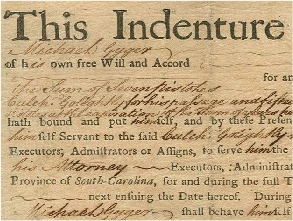
"Men, women, and sometimes children signed a contract with a master to serve a term of 4 to 7 years. In exchange for their service, the indentured servants received their passage paid from England, as well as food, clothing, and shelter once they arrived in the colonies."


*Side note: It is likely that William Bustard/Buster was an indentured servant as the first evidence which appears in Virginia about a William Buster who was recorded as being "transported" by a Susanna Page in 1701. It is also likely that William was a child or a young teen, at least 10 years of age as required by the English law, when he arrived, possibly working for the Pages until he was the legal age of 21, before he was set free to establish a life for himself. His 3rd-great grandchildren were also "bound out" in 1844. The practice of "involuntary servitude" did not end until the passing of the 13th Amendment, right alongside of American slavery. To read more about "binding out" children, read here.


Contributed by Brendan Wolfe and Martha McCartney 

Indentured servants were men and women who signed a contract (also known as an indenture or a covenant) by which they agreed to work for a certain number of years in exchange for transportation to Virginia and, once they arrived, food, clothing, and shelter. Adults usually served for four to seven years and children sometimes for much longer, with most working in the colony's tobacco fields. With a long history in England, indentured servitude became, during most of the seventeenth century, the primary means by which Virginia planters filled their nearly inexhaustible need for labor. At first, the Virginia Company of London paid to transport servants across the Atlantic, but with the institution of the headright system in 1618, the company enticed planters and merchants to incur the cost with the promise of land. As a result, servants flooded into the colony, where they were greeted by deadly diseases and often-harsh conditions that killed a majority of newcomers and left the rest to the mercy of sometimes-cruel masters. The General Assembly passed laws regulating contract terms, as well as the behavior and treatment of servants. Besides benefiting masters with long indentures, these laws limited servant rights while still allowing servants to present any complaints in court. By the end of the seventeenth century, the number of new servants in Virginia had dwindled, and the colony's labor needs were largely met by enslaved Africans.

Origins


Servitude had a long history in England, dating back to medieval serfdom. The Ordinance of Labourers, passed in June 1349, declared that all men and women under the age of sixty who did not practice a craft must serve anyone requiring their labor. Parliament updated the law in 1495 and 1563, with the latter version, the Statute of Artificers, still being in effect when the English founded Jamestown. Between 1520 and 1630, England's population more than doubled, from 2.3 million to 4.8 million, and Parliament hoped its 1563 statute might "banishe Idleness[,] advance Husbandrye," and so deal with the near-overwhelming number of poor and unemployed citizens. In fact, the founding of Virginia itself was partially in response to this problem. In his Discourse on Western Planting (1584), Richard Hakluyt (the younger) argued to Queen Elizabeth that new American colonies would energize England's "decayed trades" and provide work for the country's "multitudes of loyterers and idle vagabondes."

In England, an indenture, or contract for labor, was known as a "covenant merely personal," and could apply either to farm laborers or apprentices learning a trade. Contracts generally lasted a year, after which terms were renegotiated. As the merchant and adventurer Sir George Peckham noted in 1583, many English men and women willingly became servants "in hope thereby to amend theyr estates," and young children were sometimes bound to service by parents who might not otherwise be able to afford their upbringing. While there was not necessarily a strong stigma attached to indentured servitude, the institution—first in England and then in Virginia—temporarily transformed free men and women into chattel, or property to be bought and sold.


Land and Labor

The Virginia Company of London always had more land than labor to work it. At first, the company attempted to entice investors by offering them shares in the company that were redeemable for land. But when profits failed to materialize and the colony became infamous for its high mortality rate, the company began shipping servants to Virginia at its own expense and placing them on company-owned land. (An Englishman willing to risk his life in order to work someone else's acreage was not usually someone who could afford transatlantic passage.) Once the servants arrived, the company could rent them out to planters for a year at a time, requiring the planters to take responsibility for the workers' food, shelter, and health.

With the introduction of marketable tobacco, however, demand for labor skyrocketed. Private investors who, alongside the company, had shipped servants at their own expense continued to do so while the company rid itself of its role as rental agent. Instead, it sold servants directly to planters at a price based on the cost of passage. Planters, mariners, and merchants then fixed the servants' years of service based on the labor required to recoup their purchase price and subsequent care.


Servants, who ranged from convicted criminals to skilled workers, in time came to occupy the lowest rung on the social ladder in Virginia. While tenants kept half of what they earned, servants kept nothing and were almost entirely at the mercy of their masters for the terms of their indentures. Movement up the ladder was limited, even once a term of service had been completed, although servants with marketable skills had a greater chance of success. Few servants were like Robert Townshend, who arrived as an apprentice in 1620 and eventually served in the House of Burgesses.

In the summer of 1620, the Virginia Company of London announced that it would send to Virginia, at "publike charge," "eight hundred choise persons," half of whom were assigned to be tenants of company land. One hundred "yong Maides" were sent to "make wives for these Tenants," and one hundred boys to serve as apprentices. Finally, "one hundred servants [were] to be disposed amongst the old Planters, which they greatly desire, and have offered to defray their charges with very great thankes."

Soon, however, the company found it unnecessary to continue incurring the "publike charge" of transporting servants. Instead, it implemented a system by which it used the prospect of land to entice new colonists, and with them laborers. Headrights, first described in the so-called Great Charter of 1618, awarded 100 acres of land each to planters who had been in the colony since May 1616, and 50 acres each to anyone who covered the cost of transporting a new immigrant to Virginia. These newcomers, more often than not, were indentured servants, allowing successful planters simultaneous access to land and labor, with no upfront cost to the company. Merchants and mariners reaped a benefit, too, for they recruited prospective servants, bargained their indenture terms with them, and then sold the contracts to planters in Virginia. Merchants also accumulated headrights that could be used to acquire land. In time, these headrights, or land certificates, were bought and sold much like modern-day stock certificates.

Sometimes groups of investors collectively absorbed the cost of outfitting and transporting workers to the colony. Virginia Company of London stockholders were entitled to 100 acres per share, and high-ranking officials were furnished with indentured servants as part of their stipend. In some instances groups of investors promised to give land to their indentured servants after they fulfilled their contracts. The Society of Berkeley Hundred's investors offered their skilled servants parcels that ranged from 25 to 50 acres, to be claimed once they had fulfilled their contracts.


Various factors fueled the need for new servants.
One was demographics.
Approximately 50,000 servants—or three-quarters of all new arrivals—immigrated to the Chesapeake Bay colonies between 1630 and 1680. The ratio of men to women among servants in the 1630s was six-to-one. Between 1640 and 1680, the ratio dropped to four-to-one, but even then, many men could not find wives to marry and therefore could not establish families. As a result of this and the high mortality rate among new servants, company officials and English merchants were forced to constantly replenish the Virginia colony's servant population.

Another factor creating a need for new servants was the rapidly expanding tobacco market. It created substantial opportunities for would-be planters, but because tobacco was a demanding, labor-intensive crop, it also required a large number of laborers. At the same time, tobacco's acceptance as a medium of exchange prompted planters to enhance their productivity. Between the 1620s and the 1670s, the annual output of tobacco per hand rose from approximately 710 pounds to around 1,600 pounds; during the same period, shipping costs decreased. Although tobacco prices had begun to decline sharply by late in the 1620s and continued to fall, production remained profitable because planters were able to produce larger crops with fewer hands. Yet even as they technically required fewer servants, planters demanded more. That's because tobacco consumption rose in response to lower prices, and planters, eager to meet that demand, increased their production.


Contract Terms


As indentured servants poured into Virginia, they came to account for fully half of Virginia's population. Such rapid change caused problems, however, and the General Assembly passed numerous statutes designed to address them. These laws served several broad purposes, including regulation of servants' contract terms, behavior, and treatment.

Contract terms were important for several reasons. The assembly wished to protect masters from terms that did not fully recoup their cost of transporting servants from England to Virginia, in addition to their subsequent care. The assembly also faced the problem of servants who arrived without any contracts; the English custom of requiring a single year's service absent any other arrangement would not suffice in America, where the labor market was less stable than in England. Finally, the masters—who included most men who sat in the assembly—had an interest in prolonging terms of indenture because briefer service led to disruptive turnover, labor shortages, and an unstable workforce.

For these reasons, terms of service did not shorten even as tobacco production became more efficient and profitable. Instead, lengthy terms of service became customary and dictated by law. As early as 1619, the General Assembly required all servants to register with the secretary of state upon arrival and "Certifie him upon what termes or conditions they be come hither." In its 1642–1643 session, the assembly passed a law mandating that any servant arriving without an indenture and who was younger than twelve years old should serve for seven years, servants aged twelve to nineteen should serve for five years, and servants aged twenty and older should serve for four years. Legislation passed in the 1657–1658 session adjusted these ages: anyone under the age of fifteen should serve until he or she turned twenty-one, while anyone sixteen or older should serve for four years. By 1705, the law had been simplified, so that all non-indentured Christian servants older than nineteen should serve until they turned twenty-four. ("Christian servants" generally referred to non-blacks and non-Indians.) Lawmakers entrusted the county courts with judging the age of each servant. In the meantime, they required slightly different terms for Irish servants.

The assembly declined to dictate standard terms for privately negotiated indentures; as a result, contracts varied in length and specificity. On September 7, 1619, Robert Coopy, whose age went unnoted, signed an indenture for three years' service to the proprietors of Berkeley's Hundred requiring that he be "obedient" to his betters and that they "transport him (with gods assistance)" to Virginia and there "maintayne him with convenient diet and apparel." In a much shorter document, dated March 14, 1664, Lott Richards, a merchant from Bristol, England, sold "one Sarvant boy by name William [F]reeman being about eleven years old and haveing noe indenture" to John Barnes for a term of eight years. By 1755, Thomson Mason could simply fill out a form, which he did in order to indenture for four years William Buckland, a twenty-one-year-old carpenter and joiner, to his brother George Mason, who was overseeing the construction of Gunston Hall. Buckland's agreement was somewhat unusual in that, as a skilled worker, he was paid wages of £20 per year in addition to receiving "all necessary Meat, Drink, Washing, [and] Lodging."

Servants whose contracts had expired typically received "freedom dues," loosely described as a quantity of corn and clothing. The 1705 statute was the first to explicitly mention this "good and laudable custom," and required that male servants, "upon their freedom," be supplied with ten bushels of corn, thirty shillings (or the like value in goods), and a musket worth at least twenty shillings. Women were entitled to fifteen bushels of corn and the equivalent of forty shillings.

During the seventeenth century, freedom dues were negotiated as part of the indenture. Robert Coopy's contract, for instance, guaranteed him thirty acres of land at Berkeley's Hundred. John Barnes, who purchased William Freeman, was obliged only to pay the boy "his full due According to the Custom of this Country." Depending on the time and place, this might have included corn, clothing, and tools. In 1675, an indentured servant who charged his master with cheating him asked the General Court to free him "and pay him corne & clothes." The judges ruled in his favor, granting him "three Barrels of Corne att the Cropp." Occasionally the owners of indentured servants refused to release them or give them their freedom dues. At Jamestown, when a male indentured servant who had fulfilled his contract insisted on receiving his "corn and clothes," his master exploded in rage and struck him on the head with his truncheon.

Servants' Behavior


In addition to contract terms, the General Assembly concerned itself with servant behavior. In The Whole Duty of Man, a Protestant devotional work published anonymously in 1658, the English author reminds readers that all servants owe their masters, as a matter of conscience, "obedience," "Faithfulness," "Patience and Meekness," and "Diligence." In Virginia, at least, such ideals were not always met. For instance, burgesses were forced to pass laws in response to servants who ran away and to those who, while still under contract, hired themselves out to new masters under better terms. The 1642–1643 assembly passed a law—subsequently revised in 1657–1658—requiring that servants carry certificates and punishing any master who hired a servant without proper papers.

The assembly was also perennially concerned with "ffornication," especially when it resulted in female servants becoming pregnant. This led to a loss of the servants' labor, for which the law attempted to provide compensation to the master. An act passed in the 1642–1643 session and revised in 1657–1658 added time, in the case of pregnancy and so-called secret marriages, to the indentures of male and female servants both; it called for fines on any freemen involved. Sometimes servants were singled out in the context of broader morals laws, such as in "Against ffornication," passed in 1661–1662, which responded to servant pregnancies by requiring large fines to be paid to the local parish. If the master refused to pay, then the servants were to be whipped.


Another law, passed in 1662, stipulated that the children of such pregnancies were to be handed over to the church, which would be reimbursed for its trouble by the "reputed father." If the father of an illegitimate child were a master, then, according to a 1662 law, the maidservant would, upon completion of her indenture, be sold to the local parish for two years. This was to prevent female servants from avoiding work through pregnancy and then attempting to leave their children in the care of their masters. A number of these laws were combined and revised into "An act for punishment of ffornication and seaverall other sins and offences," passed by the assembly in 1696.

Servants' Treatment
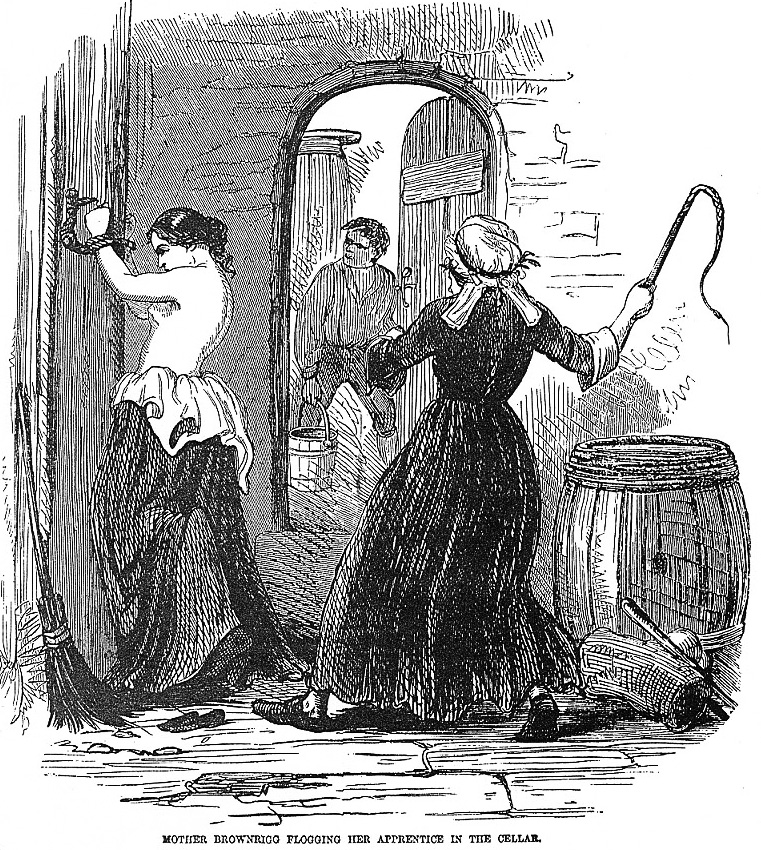
Servants ran away largely because their lives in Virginia tended to be nasty, brutish, and short. Although they often worked alongside their masters in tobacco fields, they usually lived apart and often under primitive conditions. They worked from dawn until dusk, six days a week through the growing season, which on tobacco and wheat farms could last from as early as February until as late as November. The mortality rate was very high, mostly due to what Virginians called the "summer seasoning," a time during which disease killed a majority of new arrivals. According to the Dutchman David Peterson DeVries, whovisited Virginia in March 1633, immigrants died "like cats and dogs," while the sick "want to sleep all the time, but they must be prevented from sleeping by force," lest they die.

In the meantime, servants—whether seasoned or unseasoned—were treated as property subject to overwork and beatings. For instance, in 1624 Alice Proctor, whom Captain John Smith termed a proper and civil gentlewoman, arranged for her runaway maidservant Elizabeth Abbott to be beaten, and the punishment was so severe that Abbott died. George Sandys, the colony's treasurer, allowed his servants to starve and languish for lack of medical treatment, while in 1649 a mistress was charged with thrashing her "mayd Servant … more Liken a dogge then a Christian," so that her head was "as soft as a sponge, in one place" and her back was possibly broken. Other female servants were victims of sexual assault. DeVries worried that servants were not treated with appropriate dignity. "I was astonished to observe of the English people, that they lose their servants in gambling with each other," he wrote. "I told them I had never seen such work in Turk or Barbarian, and that it was not becoming Christians."


Jane Dickenson was a servant living on the Martin's Hundred plantation with her husband, Ralph Dickenson, when Opechancanough's Indians attacked in 1622. After killing Ralph Dickenson, thePamunkey Indians held Jane Dickenson prisoner for ten months until Dr. John Pott, a Jamestown physician and future Virginia governor, ransomed her freedom for two pounds of beads. Pott claimed that Dickenson owed him both the remaining time on her late husband's contract and the time it would take her to reimburse him the ransom he paid for her release. In a petition dated March 30, 1624, Dickenson asked the General Court to free her, alleging that Pott's treatment of her "much differeth not from her slavery with the Indians."


On at least two occasions, servants banded together to protest the way they were treated. In 1661, forty servants in York County, angered by the lack of meat in their diets, conspired to rebel against their masters; in 1663, a group of nine indentured servants in Gloucester County plotted to arm themselves and march to Governor Sir William Berkeley's home, where they would demand their freedom. In both cases, the authorities were notififed before the plans could be carried out, and the conspirators were punished. According to Berkeley, four of the Gloucester County conspirators were hanged for their actions.

The General Assembly did pass legislation aimed at protecting servants from mistreatment. In a 1657 statute otherwise concerned with runaways, servants were granted the right to take to the courts complaints of "harsh and bad usage, or else for want of diett or convenient necessaries." In 1661, one act required "suffitient" diet and clothing to servants on their transatlantic voyage, while another prohibited "cruell" treatment once they arrived, with burgesses worrying that the "feare thereof" had discouraged some servants from coming to Virginia. In 1676, the assembly further directed masters not to make bargains with their servants in an attempt to trick or manipulate them into extended terms of service. Other acts aimed to protect the limited rights of Virginia Indian servants. Of course, these laws were neither preventative nor always enforced; rather, they reflected the harsh reality of servitude in Virginia, a reality that, as time passed, became less and less distinct from chattel slavery.


From Servitude to Slavery


"Servitude in Virginia's tobacco fields approached closer to slavery than anything known at the time in England," the historian Edmund S. Morgan wrote. "Men served longer, were subjected to more rigorous punishments, [and] were traded about as commodities" beginning in the 1620s. For much of the seventeenth century, those servants were white English men and women—with a smattering of Africans, Indians, and Irish—under indenture with the promise of freedom. By 1705, and the passage of "An act concerning Servants and Slaves," slavery had become ensconced at all levels of Virginia society and was well on its way to completely replacing indentured servitude as the primary source of bound labor in the colony.

Most historians have explained this shift by citing either social or economic shifts in Virginia beginning around the 1670s. Morgan and others, for instance, have argued that Bacon's Rebellion (1676–1677) was, in part, the result of discontent among former servants. By harnessing that discontent and, in the name of racial solidarity, pointing it in the direction of enslaved Africans, white elites could create a more stable workforce and one that was less likely to threaten their own interests. Other historians have observed that the flow of English servants began to dry up beginning in the 1660s and fell off dramatically around 1680, forcing planters to rely more heavily on slaves. Slavery did not end indentured servitude, in other words; the end of servitude gave rise to slavery.

The historian John C. Coombs has suggested a third possibility: "There was no 'trigger' cause for the conversion." Instead, slavery expanded gradually as the English empire grew, its role in the slave trade matured, and enslaved Africans became more available throughout Virginia. By the 1670s, slaves had begun to replace white indentured servants among the Virginia gentry—before both Bacon's Rebellion and the sharp decline in new servants. By 1690, slaves accounted for nearly all of the gentry's bound workforce but only 25 to 40 percent of the non-elite's. Over time, as the supply of enslaved Africans increased and their prices decreased, farmers and planters agreed that they preferred a slave for life to a servant who had the hope of freedom. Even so, indentured servants—particularly those with specialized skills—and convict servants continued to be imported to the colony throughout the eighteenth century.

Sunday, August 28, 2016

Major Claudius Buster legacy

Greenbrier County, West Virginia
This biography was submitted by Sandy Spradling,
E-mail address:  SSpradling@aol.com

This file may be freely copied by individuals and non-profit organizations for their private use. All other rights reserved. Any other use, including publication, storage in a retrieval system, or transmission by electronic, mechanical, or other means requires the written approval of the file's author. This file is part of the WVGenWeb Archives. If you arrived here inside a frame or from a link from somewhere else, our front door is at


History of Greenbrier County

J. R. Cole

Original print: Lewisburg, WV 1917, p. 125-127

MAJ. CLAUDIUS BUSTER (1733-1807)
Owner of the Ivy Tavern in Albemarle, VA. More information about THIS Claudius:

http://www.genealogy.com/forum/surnames/topics/buster/190/


THE OTHER MAJ. CLAUDIUS BUSTER (1764-1842)
Maj. Claudius Buster, son of John, born 1764, descended from one of the earliest Scotch and Irish families of Virginia, according to the Government reports of Revolutionary War pensions, issued in 1841, drew a pension for service with the Colonies. He was one of the most prosperous and most prominent men of his county, and died in 1842.

His grandson, George Washington Buster (1801-1867) was sheriff of Kanawha county and afterwards became the owner of the once famous resort, the Blue Sulphur Springs, where he died in 1868. These springs are yet in the possession of his descendants. His son, Charles Blackwell Buster, born October 22, 1838, in Charleston, W.Va., moved with his parents to the Blue Sulphur when a child. The Blue Sulphur was his home, although many times, for short periods, in business elsewhere, until elected county clerk of Greenbrier in 1884 necessitated his moving to Lewisburg. He had this office for twenty-four years, having continuously been elected to it until he retired from business in 1909, and has lived a quiet retired life in Lewisburg ever since. During the Civil War he served as a second lieutenant, Company B, Wise Legion; was in service six months and was then retired on account of ill health.


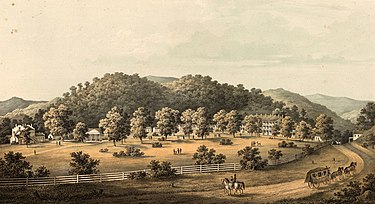
The Blue Sulphur Springs Pavilion is a historic Greek Revival structure in Blue Sulphur Springs, West Virginia, United States. The Pavilion is the only surviving structure from the Blue Sulphur Springs Resort, a 19th-century mineral spa, and was built to shelter the sulphur spring at the resort. The Pavilion consists of twelve columns holding up a square roof, and is primarily built with brick. It was built in 1834 along with the resort and was added to the National Register of Historic Placeson October 29, 1992.


The Pavilion began construction in 1834, but the year the Blue Sulphur Springs Resort opened June 1, 1838. The Blue Sulphur Springs Pavilion lies about 9 miles north of Alderson, West Virginia in a bucolic cattle pasture surrounded by mountains. The pavilion was originally built around 1834 by Dr. Alexis Martin in the Greek Revival style. Made of marble slabs five-feet wide, the sides enclosing the mineral spring are covered with brilliant pink sandstone. The pavilion was the heart of a nineteenth century resort complex, Blue Sulphur Springs, where Dr. Martin was the resident physician and administered the first mud baths. George Washington Buster owned the resort; it was named Blue Sulphur Springs for the iridescent color of the springs. The original resort included, along with the Pavilion, a three-story hotel with 200 rooms and a bathhouse. The resort was visited by several noteworthy guests in the 1840s, including Robert E. Lee, Henry Clay, and Presidents Andrew Jackson and Martin Van Buren. The resort was a prime spot for the promotion of relaxation and health, as the sulphur spring at the resort was considered to be a remedy for numerous diseases. 

Blue Sulphur Springs Resort began to decline in the 1850s due to competition from other resorts such as The Greenbrier and an economic downturn. The resort closed in 1859 and became Allegheny College, a school for Baptist ministers; the college closed in 1861. The resort buildings were used by both sides in the Civil War as a camp and hospital. In 1864, the Union Army burned the resort to prevent the Confederate Army from utilizing them; only the Pavilion survived the fire.

Charles's mother was Ann Chilton, born 1809, married in 1833, died in 1884, the daughter of Dr. Samuel and Lucinda Blackwell Chilton. Lucinda Blackwell was the daughter of Capt. Samuel Blackwell of the Revolution. The Chilton and Blackwell families repeatedly intermarried until they virtually became the same family.  Dr. Samuel Chilton was the son of Col. Charles Chilton, of Hereford, born 1741, and his mother was Elizabeth Blackwell. Col. Charles Chilton is likewise the ancestor of the famous Charleston Chilton family, to which belongs the present United States Senator, William E. Chilton. The Chilton family, back to the first settler from England, is given in full detail in McKenzies Colonial families of the United States, in which is also a cut and description of the Chilton coat of arms. The Blackwell family has been written up in the Times Despatch, October 1, 1910, and it gives a long line of ancestors.

Charles married Virginia W. Hamilton, daughter of Jacob and Delilah (Jarrett) Hamilton and the granddaughter of Maj. William Hamilton (his wife was a Miss Clemmons), who was one of the first settlers of Greenbrier, having been a soldier in the Revolution and having come from Augusta and settling near the Blue Sulphur Springs when there were no white men west of that Section. 

Five children were born of this marriage, two of whom are now living (as of 1917): 
  • Annie Hamilton Buster, who was married in 1890 to Louis Pitzer Housman, the son of Housman and Fannie Pitzer Housman; they now live in Pueblo, Col., and their children are Virginia Chilton, Robert Louis and Charles McFerrin. 
  • Emma Bernard Buster, who was married in 1895 to Henry Arthur Henderson, a civil engineer, of England, the son of Gen. John Henderson, of the English army, and Ellen Lushington Harris (see Burke's Peerage). Of this marriage three children were born; the eldest died in infancy. The two living are Cohn David Henderson and Eleanor Virginia Hamilton Henderson. 

  • Charles Blackwell married a second time to Mattie W. Cooper, the daughter of the Rev. A. W. Cooper, of the Methodist church, and Martha Gabbert, and from this marriage his children were Blackwell Chilton, born October 28, 1890, married August 27, 1910, to Mary Lillian Livesay; and 
  • Mary Evelyn Buster, born January 19, 1898

  • Charles Blackwell Buster has brothers and sisters as follows: 
  • Samuel, died young; 
  • Alexis Martin, born July 12, 1836, married Sarah Emma Hamilton, daughter of Maj. William Hamilton; 
  • Lucy Ann, born in 1840; Thomas Bernard, born 1845, and died in the service of the Confederacy as a member of Company B, Sixtieth Virginia Infantry, C. S. A.

  • Charles has always been an enthusiastic citizen of the best type, with a broad horizon of friends and acquaintances.  At present he lives quietly, enjoying the remembrance of a long life of local prominence and prestige. The two-volume work, Men of West Virginia, published in 1903, gives a great deal of space and detail of the life and family of Mr. Buster, with an excellent portrait of him.

William Buster/ Bustard (b.1694)
Major Claudius Buster (b.1733) Claudius Buster Jr.(b.1779) George Washington Buster (b.1801, VA) Charles Blackwell Buster (b.1838, VA)

Sunday, July 31, 2016

The Woods Clan: Mixing with the Busters

William Sr. had two of his sons marry into the Woods clan: William Jr. Buster, his oldest, married Jane Woods, and John, his third son, married Elizabeth Woods. William's grandson, Claudius Woods Buster- son of John- married his first cousin, Isabella Woods.


The Woods had altered their name from du Bois, whose ancestors came over from France sometime during the late 16th century, to the Anglican version of the name, which translates to "Woods". They were a family who came from a long line of nobility which gave them access to land grants and marrying into other noble families from England and Scotland during the two centuries prior to their last journey to the New World. Historically, the Woods WERE NOT IRISH NOR FULLY SCOTTISH despite living in Ireland, much like the Buster Clan. The Woods originated from France, to Yorkshire, England and then had immigrated to Meath, Ireland. Before the Woods made this migration, a significant attempt to establish English control in Ireland began by Henry VII in 1494. When the English king dismissed the earl of Kildare from his post as lord deputy, and Henry VII sent Sir Edward Poynings in his place with a full contingent of English administrators. Poynings summoned a parliament at Drogheda in December 1494 which passed legislation to assert English supremacy, including the forbiddance of marriage between English colonists and the Irish. These acts, subsequently known as the Statutes of Drogheda (or more informally as Poyning's Law), remained in force until 1782.


Interesting contuer arugument about the myths regarding Tropper Woods, and the Woods linage. Click here for full document


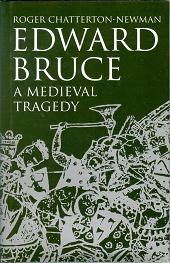
So, John Woods Sr. (1628-1710) married Isabella Bruce (1628-1686), who was of Scottish decent, and which the Bruce clan can trace their roots, back to Edward the Bruce, former high King of Ireland, brother of Robert the Bruce, King of Scotland. The Woods family members, who married in Ireland, only wedded others who were also of English, as well as Scottish, heritages, including the Campbells. Immigrating to Meath just before the mid 17th Century, they only produced two generations prior to leaving to the New World. They, like the Busters, WERE NOT SCOT-IRISH, nor hereditarily Irish despite living in a community with this mixture such as Ulster, because of their English roots as forbade by the English laws. Culturally, however, no doubt they picked up some Irish habits which included the language, the dialect, food, and music, which made their American descendants come to the conclusion that the Woods and Busters were of Irish decent. But based on Woods' Presbyterian and nobility status, one could envision the division still among the Gaelic and Celtic populace.

When politics infringed on them finically, with taxes that were increased in the early 18th century during a series of droughts that harbored little profit, and infringed religiously, especially being surrounded by the Anglican and Catholic churches, the pragmatic Woods migrated to America, first arriving in Pennsylvania, then to the Shenandoah Valley, Virginia. It was in America that the Woods finally could marry outside of the English laws. Because of their background, the Woods were a prominent family who had dinned with Thomas Jefferson's family in Albemarle, County. But don't be fooled by their privileged background into presuming that were not a hardy group. Living on the American frontier they toiled to survive and fought for their beliefs. And although they were not the typical Scot-Irish, but their migration in America followed the trails of the Scot-Irish and even German migrations.


MICHAEL MARION WOODS:
He came to Albemarle County about 1734 and settled near Woods Gap, now called Jarman's Gap in the Blue Ridge Mountains. He received land patents for 1,300 acres near Lickinghole, Mechum's River and Beaver Creek, embracing the present Mechum's Depot and Blair Park. At the same time he also purchased 2,000 acres from Charles Hudson on Ivy Creek. The first Presbyterian Church as built at Mountain Plains and named for Michael's home. His remains were buried about 100 yards from his home; however, during the Civil War the stone was broken. A chip was found which confirms his birth date.

His will mentions 3 sons and 3 daughters: Archibald, John, William, Sarah (wife of Joseph Lapsley of Rockbridge), Hannah (wife of William Wallace) and Margaret (wife of Andrew Wallace). Sons Archibald and John were the executors.

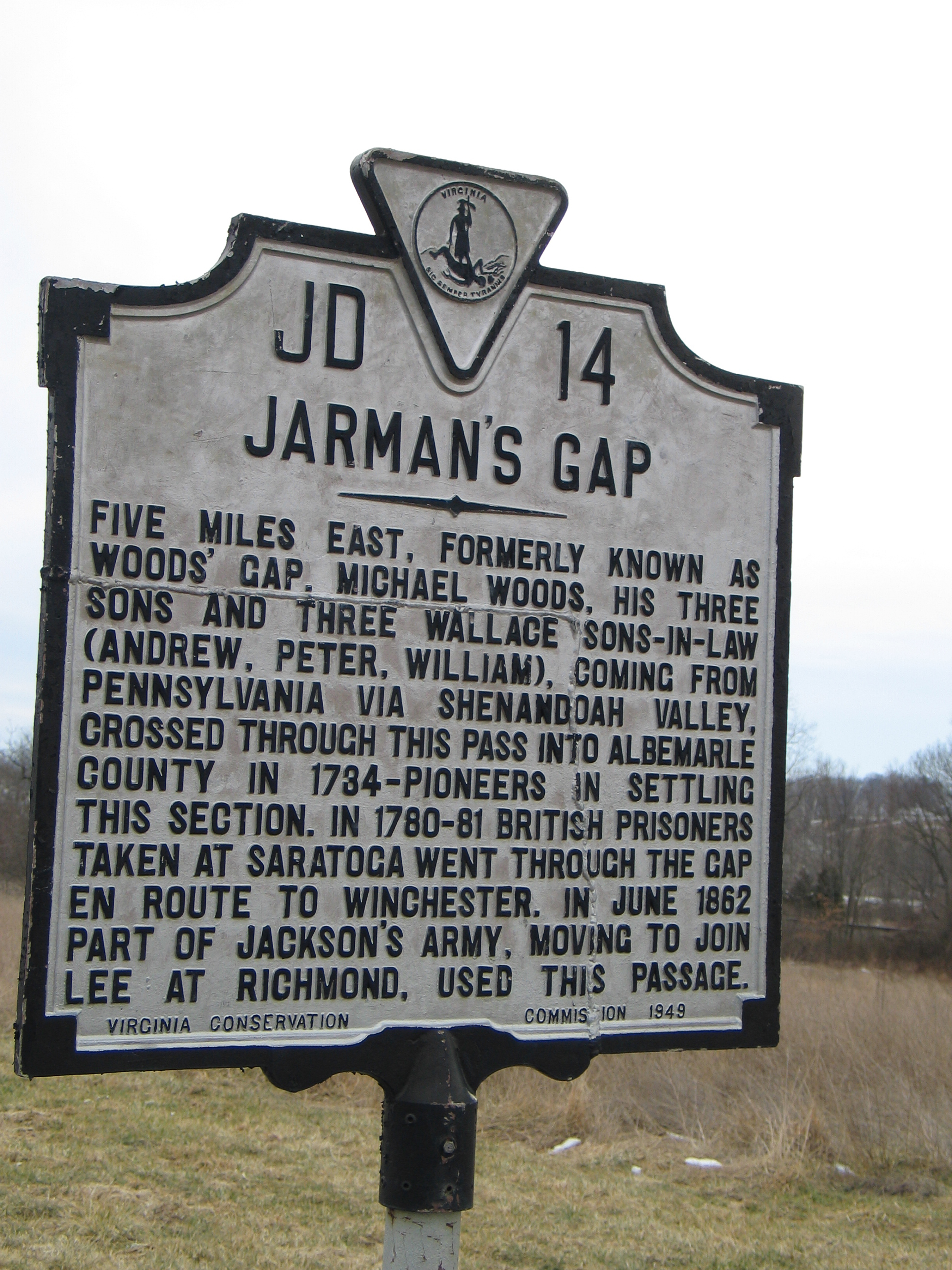
(JD14) JARMAN'S GAP

Five miles east is Jarman's Gap, formerly known as Woods' Gap. Through this pass Michael Woods, his three sons, and three sons in law (Andrew, Peter, William Wallace), coming from Pennsylvania via Shenandoah Valley, crossed into Albemarle County in 1734; pioneers in settling this section. In 1780 to 1781 British prisoners taken at Saratoga went through the gap en route to Winchester. In June, 1862 part of Stonewall Jackson's Confederate army, moving to join Lee at Richmond, crossed the mountain here. (Route 340, 1.2 miles north of Waynesboro).

From a book "Pioneer Strength, etc" page 26 is an account of the early Woods Family.

"The Woods family of Ireland in early 18th century became involved in a time of great movement. The family being dissenters and Presbyterians like many in the same place and time, longed to escape persecution and the religious bigotry of England. To make a new life in the American colonies became the dream in so many minds because it was a promise of freedom. This particular family named Woods are thought to be of pure English or Anglo-Scotch blood who, prior to 1650 were connected with the English Established Church. Life for them in Ireland was eventually unbearable. So it was that in 1742 did Michael Woods along with his brothers and sister set sail for the New World."

From "The Daily Progress" Charlottesville, Virginia, 1762-1962.
Michael Woods Led a Band of Settlers
Most of Albemarle's first settlers followed a gradual westward movement from the Tidewater.  Mighty Michael Woods did not.

Jarman's Gap

In 1734 this ancestor of countless local residents and scores of western pioneers brought a band across the Blue Ridge Mountains from the Valley of Virginia.  They had come from Pennsylvania traveling over 200 miles and are believed to have been the first whites to come through Woods' Gap - now Jarman's Gap - by the old Indian trail. There were 25 or 30 of them. Michael's wife, Mary Campbell, his sons and his sons-in-law and their families. They took up large holdings from Greenwood to Ivy. In 1737 Woods entered a claim for 1,300 acres on Mechum River and Lickinghole Creek. He also purchased 2,000 acres on the head waters of Ivy Creek.  Woods was born in the north of Ireland in 1684 and came to this country "sometime in the decade of 1720. Landing on the banks of the Delaware, he spent some years in Lancaster County, Pa., thence ascended the Valley of Virginia and crossed the Blue Ridge"  His home was near the mouth of Woods Gap and there he was buried in 1762 in the family burying ground a short distance from the dwelling. His will mentioned six children, three sons and three daughters. Historians say there is evidence that there were four other children, two sons and two daughters.

Miss Mary Rawlings, in her books "Ante-Bellum Albemarle," wrote that the family was Scotch or Scotch-Irish, a family of education and refinement.  One of Michael's daughters, Hannah, was married to William Wallace who settled on the Piedmont plantation in the Greenwood neighborhood. This land remains in the hands of the Wallace family. While many of the family descendants remained here, many more joined the westward movement. They went to the other areas of Virginia then being settled, and they went west and south-to Missouri, Kentucky, Mississippi, Tennessee and Ohio-where they were prominent in the early affairs and government of those areas. Of Michael Woods Home, Miss Rawlings wrote "the original name of the plantation was Mountain Plains, the Mountain Plains Church having been built on a part of the land and named in commemoration. "With the passing of the property to Chief Justice John Blair prior to 1788, the name of the home was changed and it has since been known as Blair Park."

CHRONICLES OF THE Scotch-Irish Settlement IN VIRGINIA EXTRACTED FROM THE ORIGINAL COURT RECORDS OF AUGUSTA COUNTY 1745-1800
AUGUSTA COUNTY COURT RECORDS. ORDER BOOK No. XXIV.
page 304
Samuel Smith vs. Beaty.--Mr. Michael Woods, formerly of Paxtunk, Pennsylvania. Account dated 1733. Thomas Renich, on 1st September, 1750, deposed: About 8 years ago, at his own house, he saw and spoke with said Smith and Robert Buchanan, the then Sheriff of Lancaster County. He heard Smith (then merchant at Connoy) say, &c., several accounts: Smith vs. James Cathey, 1737; Smith vs. Adam Thomson, 1736-7-8; Smith vs. William Robinson, 1739; Smith vs. Richard Woods, 1738; Smith vs. Mrs. Margaret McDowell, 1737; Smith vs. Mrs. Mary McDowell, 1737; Smith vs. Michael Woods, 1738-9; Smith vs. John Maxwell; Smith vs. Samuel Woods, 1734-5-8; Smith vs. Francis Beaty, 1735-6; Smith vs. John Christian, 1737; Smith vs. Robert Christian, 1733-4-5-6; Smith vs. Randell McDaniel; Smith vs. William Hutchinson; Smith vs. George Hutchinson. All sworn to by Samuel Smith, late of County of Lancaster, before a Justice, in Philadelphia, 13th October, 1743.

More About MICHAEL MARION WOODS:
Census: Bet. 1725 - 1726, Listed as paying tax in Donegal Twp., Lancaster Co., PA; tax rate of 2 shillings
Christening: 1684, Ulster, Ireland
Immigration: 1724, To Pennsyvania
Movement: 1732, To Virginia
Probate: Jun 1762, Albemarle Co., VA
Will: 24 Nov 1761, Albemarle Co., VA
Daughters of the American Revolution Magazine about Michael Capt "of Botetourt" Woods

More About MARY CAMPBELL:
Alt. Name: Margaret
Cause of Death (Facts Pg): Killed by Indians; the first white woman killed in the Shenandoah Valley
Christening: Cannongate, Edinburgh
Title (Facts Pg): Lady
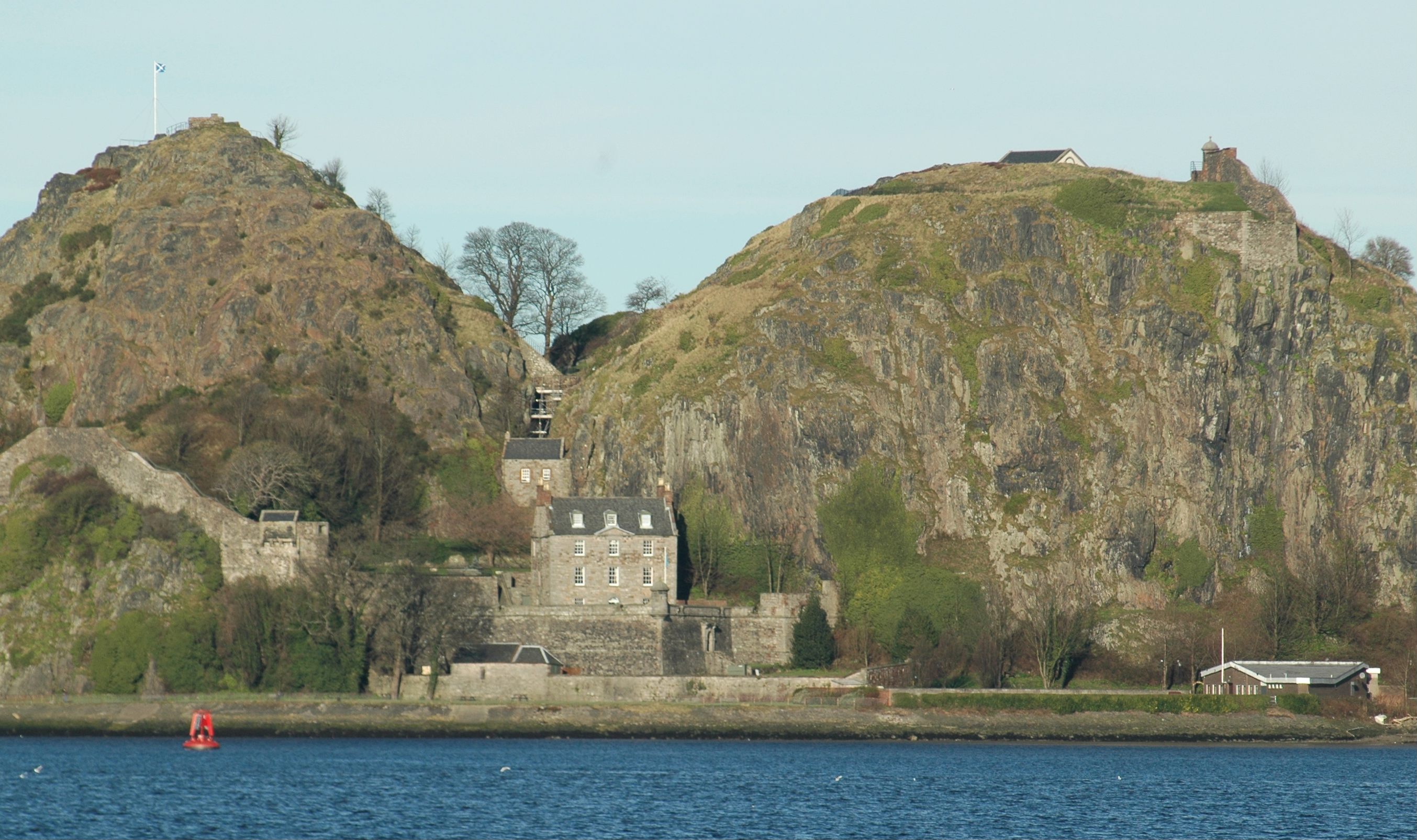
Dunbarton Castle

Sir James Campbell, the 3rd Baron of Auchinbreck, died in 1752, imprisoned in Dunbarton Castle for his part in the 1745 rising to restore the Stuarts. His will named daughters Elizabeth Woods and Mary Woods, as well as a Stuart daughter, and sons, including Gilbert Campbell. At least 6 of his children emigrated--for good reasons. The only reason the Baron didn't lose his head along with a large part of his lands in 1745/6, was because of his great age and thus because it could be claimed his mind had gone a little. However, he did forfeit the baronial seat--at Inveraray in Argyllshire, which is why these Campbells were sometimes referred to in their day as "of Argyll--meaning the location." Since it had originally come to the Auchinbreck line by grant of their superior lord the REAL "Argyll (Lords of Lochawe who became Earls of Argyll), it was forfeited back to the by then Duke of Argyll.

For about 300 years, however, Inveraray had been the property of the lairds, then baronets, then Barons of Auchinbreck and the last three generations of that line were closer to Cawdor than to Argyll. Peter Wallace's mother was Elizabeth Woods married to SAMUEL Wallace--not Peter Wallace Sr.--there was NO earlier Peter Wallace who was a father of the Peter Wallace of Rockbridge County. He is NEVER listed as "Jr." in either the Maryland, Pennsylvania or Virginia records. He and his brother Adam, were living in Cecil County, Maryland when Capt. Samuel Wallace, sea captain and merchant made his last voyage between Baltimore, Philadelphia, and Irish ports--and Glasgow (he made several voyages among these places in the 1720's) in 1725.

Peter Wallace and others were living with the "widowed Elizabeth Wallace" mother of Adam, when Adam died and left a widow and baby daughter and named his mother executor. Adam Wallace was a seaman who did serve in "Admiral Vernon's War" and apparently did die as a result of service in the "Battle of Cartagena." This is from Cecil County, Maryland and Lancaster County, PA records (this was the area of the Mason-Dixon line fight between Pennsylvania and Maryland and raiding parties carried off records back and forth with the ultimate result that some records have copies, now in both counties and states).

Dunshaughlin Castle in Meath, Ireland
There is a record for Martha Woods being married in 1739 in Lancaster County, PA but no record for younger sister Sarah, which supports an Augusta County record in which it is implied that Sarah married Joseph Lapsley in Virginia in about 1741. Since Augusta County was not formed until 1745, and Albemarle was formed only the year before that, the marriage probably was in the early Orange County or Goochland County records. To carry this all a bit further. Michael, Samuel and Elizabeth Woods--and several other brothers and one more sister, were all children of Sir John Woods and his cousin--Elizabeth WOODS, of Dunshaughlin (note the spelling--the parish still exists in County Meath) Castle in County Meath. It was Elizabeth Woods who inherited the castle--from her parents Sir Thomas Woods and Elizabeth PARSONS. 

More About MICHAEL WOODS and MARY CAMPBELL:
Marriage: 1704, Scotland

Children of MICHAEL WOODS and MARY CAMPBELL are:
19. i. MAGDALENA6 WOODS, b. 1706, Castle Dunshauglin, Ireland; d. 1810, McDowell Family Cemetery, Timber Ridge, Albemarle Co., VA.
20. ii. ARCHIBALD WOODS, SR., b. 11 May 1706, Castle Dunshauglin, Meath, Ireland; d. 1783, Roanoke Co., VA.
21. iii. MICHAEL WOODS, JR., b. Bet. 1709 - 1719, Dunshauglin Castle, Meath, Ireland; d. 11 Mar 1777, Buchanan, Botetourt Co., VA.
22. iv. HANNAH WOODS, b. 1710, Castle Dunshauglin, Meath, Ireland; d. Greenbrier, Albemarle Co., VA.
23. v. JOHN WOODS, b. 19 Feb 1711/12, Castle Dunshauglin, Meath, Ireland; d. 14 Oct 1791, Albemarle Co., VA.
vi. GEORGE WOODS, b. 1713, Dunshauglin Castle, Ireland.
24. vii. MARGARET WOODS, b. Bet. 1714 - 1720, Dunshauglin Castle, Meath, Ireland; d. Bet. 1756 - 1761, Thornhill, Albemarle Co., VA.
25. viii. WILLIAM WOODS, b. 02 Nov 1715, Castle Dunshanglin, Meath, Ireland; d. 12 Apr 1783, Greenbrier Co., VA.
26. ix. SAMUEL WOODS, b. 1718, Castle Dunshanglin, Meath, Ireland; d. 11 Mar 1777, Buchanan, Botetourt Co., VA.
27. x. CHARLES WOODS, b. Abt. 1719, Ireland; d. Bef. May 1761, Rockbridge Co., VA.
xi. ROBERT WOODS, b. 1719, Castle Dunshanglin, Ireland; d. 1779, Buffalo Creek, Augusta, GA.
28. xii. MARTHA WOODS, b. 1720, Dunshaughlin Castle, Meath, Ireland; d. 1790, Thornhill, Rockbridge Co., VA.
29. xiii. RICHARD WOODS, b. 1721, Meath, Ireland; d. Bet. Mar - Apr 1778, Buffalo Creek, Augusta Co., VA.
30. xiv. ANDREW WOODS, b. 1722, Castle Dunshauglin, Meath, Ireland; d. 1781, Botetourt Co., VA.
31. xv. SARAH WOODS, b. 1724, Castle Dunshanglin, Meath, Ireland; d. 1792, Greenbrier Co., VA.

Notes for WILLIAM WOODS:Took an active part in the Colonial wars, holding the rank of Colonel. (Mary Kinney research notes, 8/04/99)

Served a a private in Capt. George Gibson's company, Albemarle Co., Virginia troops. (From DAR ID No. 117679)

He received military land grants in Greenbrier Co., VA, Madison Co., KY and some in Scioto, OH. Five of his sons were commissioned in the Revolutionary War. (Source: "Wallace", by George Selden Wallace, Michie Co., Charlottesville, VA 1927)

More About WILLIAM WOODS:
Alt. Birthdate: 1705
Movement: In 1758 moved from Albemarle Co., VA
Occupation: Lieutenant in the frontier Indian wars
Probate: 16 Apr 1782, Greenbrier Co., VA

More About WILLIAM WOODS and SUSANNA WALLACE:
Marriage: 1732, Lancaster Co., PA

Children of SUSANNA WALLACE and WILLIAM WOODS are:
i. SUSANNAH7 WOODS, d. Died in childhood.
40. ii. ADAM C. WOODS, SR., b. 12 Aug 1742, Greenbrier Co., WV; d. 04 Aug 1826, Howard Co., MO.
41. iii. MARY WOODS, b. 14 Apr 1744, Albemarle Co., VA; d. 1810, Lincoln Co., KY.
42. iv. WILLIAM WOODS, b. 31 Dec 1744, Albemarle Co., VA; d. 1837, Albemarle Co., VA.
43. v. MICHAEL WOODS, b. 1746, Greenbrier Co., WV; d. 03 Jul 1809, Madison Co., Kentucky.
44. vi. JOHN WOODS, b. 1751, Albemarle Co., VA; d. 16 Oct 1815, Franklin Co., TN.
vii. ANDREW WOODS, b. 1753, Blair Park, Albemarle Co., VA; d. 1813, Franklin Co., Tennessee26; m. HANNAH REID27, Kentucky; b. 1754, Virginia; d. 10 Jul 1835, Franklin Co., TN28.


Genealogy Gophers: Free Genealogy Book Search Digital Archives: Free Book Search